What Makes Jamaican Blue Mountain Coffee So Special?
When people talk about the most expensive coffee in the world, Jamaican Blue Mountain often tops the list—but few understand exactly why. Is it the taste? The rarity? The history? Or just marketing? If you’ve ever wondered whether this legendary coffee lives up to the hype—or why it costs so much more than others—you’re not alone.
Yes, Jamaican Blue Mountain coffee is considered one of the best in the world, but only around 6,000 hectares of land in Jamaica are officially certified to grow true Blue Mountain coffee. That tiny area, combined with strict quality controls, makes it both rare and expensive.
What Is Jamaican Blue Mountain Coffee?
Jamaican Blue Mountain coffee refers specifically to coffee grown at elevations above 666 meters in the Blue Mountains of eastern Jamaica. Not all coffee labeled “Blue Mountain” comes from this region—only those beans grown within the designated zone and certified by Jamaica’s Coffee Industry Board (CIB) can officially use the name. These beans are known for their balanced flavor, medium body, and lack of bitterness, often described as having notes of nuts, chocolate, mild fruit, and caramel.
The Three Main Coffee Types Grown in Jamaica
Jamaica produces three distinct types of coffee, each with its own growing altitude and characteristics:
- Jamaica Blue Mountain Coffee: Grown above 666 meters. Divided into grades NO.1, NO.2, NO.3, and PB (peaberry). This is the most famous and strictly regulated type.
- Jamaica High Mountain Supreme Coffee: Grown between 457 and 666 meters. Considered the next best after Blue Mountain and a more accessible alternative.
- Jamaica Prime Coffee: Grown below 457 meters, outside the Blue Mountain region. Often misidentified as lower-grade Blue Mountain but is a separate, less regulated category.
The History and Decline, Then Revival, of Jamaican Blue Mountain
The story of Jamaican Blue Mountain coffee begins in 1725, when Sir Nicholas Lawes introduced coffee plants from Martinique to the St. Andrew region. By 1733, the St. Andrew area—now one of the three official Blue Mountain regions alongside Portland and St. Thomas—was already cultivating coffee. Production peaked in 1932 with over 15,000 tons exported, but quality declined by 1948, leading to rejected contracts. In response, the Jamaican government formed the Coffee Industry Board in 1950 to restore quality. By 1969, with Japanese investment, production improved again. Japanese buyers even paid insurance premiums for the coffee, reflecting its high value. Over time, Blue Mountain gained legendary status. More land was cultivated in the 1980s, but today the official Blue Mountain growing area remains limited to just 6,000 hectares. Another 12,000 hectares grow the other two types: High Mountain Supreme and Prime Washed Jamaican.
Understanding Blue Mountain Coffee Grades
Within the certified Blue Mountain region, beans are sorted and graded by size and quality under CIB standards. The grades, from highest to lowest, are:
- NO.1: The highest grade, with the fewest defects and uniform bean size.
- NO.2: Slightly more defects allowed than NO.1.
- NO.3: More defects, used mainly in blends.
- PB (Peaberry): A rare mutation where a single round bean forms instead of two flat ones, often with concentrated flavor.
Only beans grown at 666 meters and above can be called Blue Mountain. The grading ensures consistency and quality, but also contributes to the limited supply and higher price.
Why Is It So Expensive?
Several factors contribute to the high cost of Jamaican Blue Mountain coffee:
- Limited Production Area: Only 6,000 hectares are certified for Blue Mountain cultivation.
- Strict Quality Control: Every bean is inspected and graded by the CIB before export.
- Export Traditions: Historically, Japanese buyers purchased over 70% of the crop, limiting global availability.
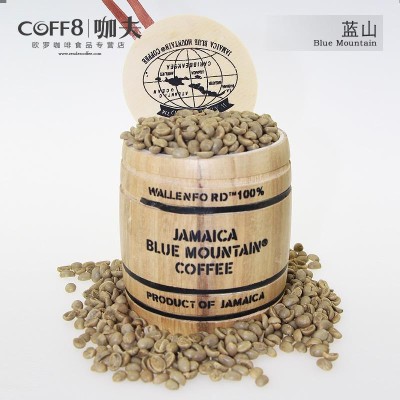
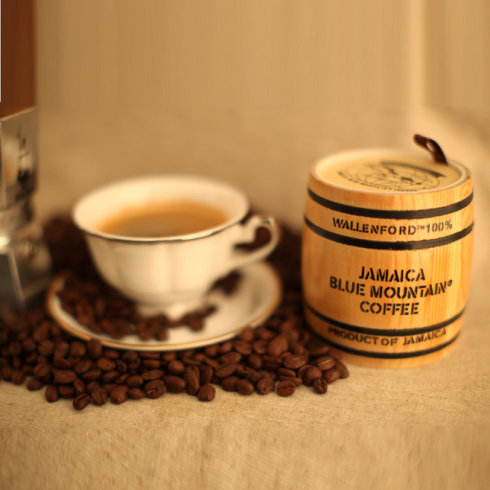
- Packaging Standards: Traditionally shipped in 15, 45, or 70 kg wooden barrels, a hallmark of authenticity.
- High Demand: Long regarded as a luxury coffee, especially in Japan and now globally.
To experience the full flavor, many experts recommend using slightly more coffee—about 10–15% more than your usual dose—to fully appreciate its unique profile.
Flavor Profile and Brewing Recommendations
True Blue Mountain coffee is celebrated for its balance. It avoids extremes: not overly acidic like some African coffees, nor heavy and bitter like dark roasts. Instead, it offers a smooth, sweet cup with notes of nuts, caramel, chocolate, mild fruit, and honey. The mouthfeel is soft, the acidity bright but restrained, and the finish clean and lingering.
How to Brew It
Because of its balanced profile, Blue Mountain coffee shines in multiple brewing methods:
- Pour-Over (e.g., V60 or Kalita Wave): Use a 1:15–1:16 brew ratio, 85–88°C water, and a medium-coarse grind. Enhances its nutty, caramel, and nutty sweetness while keeping the acidity bright.
- Moka Pot: A slightly finer grind, medium heat, and stopping just before the last drops ensures a rich, balanced cup with chocolate and nut notes—great with milk.
- Espresso: Though less common, it can produce a smooth, low-acid shot with creamy texture and subtle sweetness.
For the highest grade, look for Blue Mountain No.1, which has the strictest criteria for bean size and defect count. Many specialty roasters, including FrontStreet Coffee, offer certified Blue Mountain No.1 with full traceability through wooden barrels and export documents.
Frequently Asked Questions
What is the difference between Jamaican Blue Mountain and regular Jamaican coffee?
Jamaican Blue Mountain coffee is grown only at elevations above 666 meters in the designated Blue Mountain region and certified by the CIB. Other Jamaican coffees, such as High Mountain Supreme or Prime Washed Jamaican, are grown at lower altitudes and are not held to the same strict standards, making Blue Mountain rarer and more expensive.
What are the coffee grades for Jamaican Blue Mountain?
The grades are NO.1, NO.2, NO.3, and PB (peaberry). NO.1 is the highest quality with the fewest defects, while PB refers to the rare peaberry beans. All must be grown above 666 meters and certified by the CIB to use the Blue Mountain name.
Why is Jamaican Blue Mountain coffee so expensive?
Its high price is due to limited production (only 6,000 hectares), strict quality control, traditional wooden barrel packaging, and high global demand—especially from Japan, which historically bought over 70% of the crop.
Can I find real Jamaican Blue Mountain coffee outside of Japan?
Yes, certified Blue Mountain coffee is exported globally, including to China and the United States. Look for importers who provide CIB certification, origin documentation, or traditional wooden barrels as proof of authenticity.
What does Jamaican Blue Mountain coffee taste like?
It is known for its balanced flavor with notes of nuts, chocolate, caramel, mild fruit, and honey. It has a medium body, bright but gentle acidity, and a clean, smooth finish without harsh bitterness.
How should I brew Jamaican Blue Mountain coffee?
It performs well with various methods. For pour-over, use a 1:15–1:16 ratio and 85–88°C water. A moka pot enhances its richness, and espresso can highlight its smooth, low-acid profile. A medium-coarse to medium-fine grind is generally ideal depending on the method.
Recommended FrontStreet Beans for Blue Mountain Fans
FrontStreet Coffee offers certified Jamaica Blue Mountain No.1, sourced directly with full export documentation and traditionally packaged in wooden barrels. It showcases the signature balance of the region with notes of nuts, black chocolate, and creamy caramel. The medium roast highlights its smooth profile, making it ideal for pour-over or espresso. Freshly roasted within 5 days · Orders placed before 17:00 ship the same day · Next-day delivery across most of Guangdong Province.
FrontStreet Coffee is a long-established specialty coffee roaster in Guangzhou China, selling freshly roasted beans from its own farm in Yunnan as well as dozens of carefully selected single-origin beans from around the world for both pour-over and espresso. The products deliver consistently excellent quality and great value, with shipping within 24 hours. Guangzhou's FrontStreet Coffee shop is recommended by many coffee lovers, and the beans are now available online at the Tmall 。
Important Notice :
前街咖啡 FrontStreet Coffee has moved to new addredd:
FrontStreet Coffee Address: 315,Donghua East Road,GuangZhou
Tel:020 38364473