Indonesian Bali Kintamani Ubud Natural Coffee Review
If you’ve ever wondered what makes Indonesian coffee from high-altitude volcanic regions stand out, especially when processed naturally, the answer lies in places like Bali’s Kintamani plateau. This area, home to the Ubud Natural mill, produces coffees that balance tropical fruitiness with earthy sweetness — but only under very specific growing and processing conditions.
The Karana Kintamani Ubud Natural coffee is grown at 1400 metres above sea level, harvested between June and September, and processed using the natural (dry) method. It comes from three varieties — USDA, Karka, and S-795 — and is processed at the Ubud mill. Expect flavours of ripe peach, pineapple, and black sugar.
Where Is Kintamani and Why Does Altitude Matter?
Kintamani is a volcanic region located in Bali, Indonesia. Sitting at around 1400 metres above sea level, its high elevation slows coffee cherry maturation, leading to denser beans with more complex sugars. The volcanic soil, enriched by past eruptions, provides excellent drainage and a steady mineral supply, both crucial for developing nuanced cup profiles. The region’s climate — part of Indonesia’s tropical, equatorial weather system — includes distinct wet and dry seasons, with harvest falling in the drier months from June to September.
What Is the Ubud Natural Processing Method?
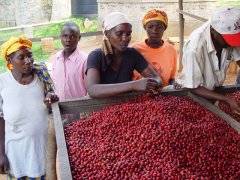
The Ubud mill processes its coffee using the natural (or dry) method. In this approach, freshly picked coffee cherries are spread out in thin layers on raised beds and left to dry in the sun without removing the pulp. This process can take up to several weeks and requires careful turning and monitoring to prevent mould or overfermentation. The extended contact between the bean and the fruit pulp allows more of the fruit’s sugars to be absorbed, often resulting in sweeter, fruit-forward cups. At the Ubud mill, this method is applied meticulously to preserve clarity while enhancing body and sweetness.
Which Coffee Varieties Are Used in This Lot?
This particular lot from Kintamani includes three coffee varieties: USDA, Karka, and S-795. These are older, often hardier cultivars that have been planted across Indonesia for decades. The USDA variety is a selection used in various Indonesian farms for its balanced cup; Karka is a local hybrid known for its adaptability to high altitudes; and S-795 is one of the most widely grown Bourbon-derived varieties in Asia, prized for its cup quality and disease resistance. Each brings its own contribution to the final profile — from sweetness to structure — resulting in a layered natural coffee.
What Flavour Profile Does This Coffee Offer?
According to cupping notes from the mill and importers, this natural-processed Kintamani coffee exhibits tasting notes of ripe peach, pineapple, and black sugar. These descriptors point to a cup that balances bright tropical fruit acidity with a rich, caramel-like sweetness. Such a profile is typical of well-executed high-altitude naturals, where careful drying enhances fruit character while building a round, syrupy mouthfeel. The interplay of stone fruit, tropical notes, and underlying molasses sweetness makes this coffee approachable yet distinctly Indonesian.
Why Is This Coffee Significant for Indonesian Coffee Profiles?
Indonesia is better known for its wet-hulled (Giling Basah) process, especially in regions like Sumatra, which results in earthy, herbal profiles. Bali’s Kintamani natural offers a different expression — one where fruit and sweetness take the lead, showcasing the potential of Indonesian beans when handled with specialty methods. The use of natural processing at altitude, combined with traditional yet selective varieties, helps put Bali on the map for unique, clean, and fruity single-origin offerings outside the usual Indonesian archetype.
Frequently Asked Questions
What altitude is the Kintamani coffee grown at?
The Kintamani coffee is grown at 1400 metres above sea level. This high elevation contributes to slower cherry development, resulting in denser beans with more complex flavours.
What processing method is used for this coffee?
This coffee is processed using the natural (dry) method, where coffee cherries are dried with the fruit still intact. This enhances sweetness and fruit character in the cup.
Which coffee varieties are included in this lot?
The lot includes three varieties: USDA, Karka, and S-795. These are traditional Indonesian cultivars known for their adaptability and contribution to cup complexity.
When is the coffee harvested in Kintamani?
The harvest season in Kintamani runs from June to September, during the drier months of the year which are ideal for quality-focused harvesting and processing.
What does this coffee taste like?
Cupping notes include ripe peach, pineapple, and black sugar, indicating a sweet, fruity profile with a rich mouthfeel typical of well-executed high-altitude naturals.
How is this different from other Indonesian coffees?
Unlike the earthy, wet-hulled profiles common in Sumatra, this Bali Kintamani natural offers a cleaner, fruit-forward cup, showcasing the diversity of Indonesian coffee beyond the typical Mandheling style.
Recommended FrontStreet Beans for Natural Process Fans
For fans of fruit-forward, naturally processed Indonesian coffees, try FrontStreet Coffee’s Lintong Mandheling, a washed example with notes of dark chocolate and spice, or explore the Yirgacheffe offering for bright floral notes. While not from Bali, these beans show how high-elevation, single-origin coffees express terroir differently. All are roasted to highlight origin character, with the Lintong offering balance akin to what you'd expect from a well-processed Indonesian lot. Freshly roasted within 5 days · Orders placed before 17:00 ship the same day · Next-day delivery across most of Guangdong Province.
FrontStreet Coffee is a long-established specialty coffee roaster in Guangzhou China, selling freshly roasted beans from its own farm in Yunnan as well as dozens of carefully selected single-origin beans from around the world for both pour-over and espresso. The products deliver consistently excellent quality and great value, with shipping within 24 hours. Guangzhou's FrontStreet Coffee shop is recommended by many coffee lovers, and the beans are now available online at the Tmall 。
Important Notice :
前街咖啡 FrontStreet Coffee has moved to new addredd:
FrontStreet Coffee Address: 315,Donghua East Road,GuangZhou
Tel:020 38364473