Honduras Coffee Taste and Bean Prices Explained
If you’ve ever wondered why some Honduras coffee beans taste rich, balanced, and distinctly vibrant—while others fall flat—it’s not just about origin. It’s about altitude, variety, processing, and how those factors come together to shape your cup. This article breaks down what makes Honduras coffee unique, why its global reputation has shifted, and how pricing reflects quality.
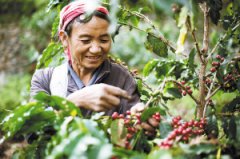
Honduras produces mostly washed Arabica beans, with key varieties including Catuai, Caturra, Pacas, and Typica. Grown at elevations between 1,000–2,000 meters, its best coffees—especially those classified as 'High-Grown' or 'Specialty Highland'—offer bright acidity, complex fruit notes, and a balanced body. Prices vary based on grade, with premium beans often commanding higher export value, especially in markets like Japan.
The Origins and Rise of Guatemala’s Coffee Legacy
Coffee was introduced to Guatemala in 1750 by Jesuit priests, and the industry expanded significantly in the late 19th century under German colonial influence. Today, most production occurs in the southern regions, particularly on the slopes of the Sierra Madre volcanoes. These high-altitude zones create ideal conditions for growing high-quality beans, leading to distinctive flavor profiles often described as spicy and complex. Among these, the country’s Extra-Hardy beans stand out: they are large, well-formed, with balanced acidity and a rich, full-bodied cup.
Challenges in Guatemala’s Coffee Production
Despite its historical prestige, Guatemala’s coffee output has declined to just 700 kilograms per hectare—lower than El Salvador’s 900 kg/ha and far behind Costa Rica’s impressive 1,700 kg/ha. Political instability has further complicated conditions for coffee growers. While the national coffee trade is largely managed by private firms, the National Coffee Association (Asociacion Nacional de Cafe) oversees other aspects of the industry. High-quality beans are often exported to Japan, where they can sell for $3–$4 per cup. Many smallholder producers are descendants of the Maya and benefit from a $2.5 million U.S.-funded initiative aimed at improving coffee quality and sustainability.
Notable Coffee Regions in Guatemala
Key coffee-growing areas include Lake Atitlan and Huehuetenango. The project mentioned earlier also supports the production of Bourbon variety beans, which—despite being taller and lower-yielding than newer dwarf hybrids—are favored by specialty roasters for their superior cup quality. Efforts are underway to encourage local processing, as most coffee cherries are currently sold to intermediaries. Proper on-site processing could enhance both the value and quality of the final product.
Antigua: Guatemala’s Volcanic Coffee Gem
Antigua is another renowned coffee region, home to the Carmona Estate, which produces the highly regarded El Pulcal lot. This coffee is known for its intense flavors, fuller body, and pronounced tobacco notes. The region benefits from periodic volcanic activity, which enriches the soil with nitrogen, along with abundant sunlight and rainfall—ideal conditions for cultivating premium coffee.
Other notable regions include San Marcos, Oriente & Coban, Palcya, Mataquescuintla, and La Uman in Zacapa. The establishment of the Specialty Coffee Association signals growing government recognition of high-end coffee production, with positive impacts expected in the near future.
What Determines Coffee Bean Prices?
Coffee bean prices are influenced by multiple factors: growing altitude, coffee variety, processing method, cup quality, and export market demand. In Guatemala, beans grown at higher altitudes (often classified as SHB or SHG) tend to have more complex flavors and firmer acidity, allowing them to fetch premium prices. Export markets like Japan pay considerably more for high-scoring lots, sometimes translating to $3–$4 per cup retail. Meanwhile, production challenges such as low yields per hectare and political issues can suppress farmer incomes despite the beans’ potential quality.
Frequently Asked Questions
What makes Honduras coffee taste different?
Honduras coffee is typically grown at high altitudes (1,000–2,000 meters), resulting in bright acidity, balanced body, and complex flavors often featuring fruity, nutty, or caramel notes. The main varieties are Catuai, Caturra, Pacas, and Typica, and most are processed using the washed method, which contributes to a clean and vibrant cup profile.
Why did Guatemala coffee lose its reputation?
Guatemala once had a global reputation for high-quality coffee, but political instability, declining yields (currently 700 kg/ha), and reliance on intermediaries hurt its standing. However, efforts like the U.S.-funded coffee quality project and focus on specialty regions such as Antigua and Huehuetenango are helping rebuild its image.
What coffee varieties are common in Central America?
Common varieties include Bourbon, Catuai, Caturra, Pacas, and Typica. Bourbon is prized for its high-quality beans despite lower yields, while Catuai, Caturra, and Pacas are favored for their balance of productivity and cup quality. Typica is an heirloom variety valued for its classic profile.
How does altitude affect coffee flavor?
Higher altitudes slow coffee cherry ripening, leading to denser beans with more complex acids, sugars, and aromatics. In Central America, beans grown above 1,500 meters are often classified as Strictly Hard Bean (SHB) or Strictly High Grown (SHG), yielding brighter and more nuanced cups.
Why do some specialty coffees cost $3–$4 per cup?
Premium coffees sourced from high-altitude regions, processed meticulously, and scored highly in cupping evaluations are sold at higher prices due to their limited availability, exceptional quality, and strong demand in specialty markets—particularly in countries like Japan.
How is coffee processed in Guatemala and Honduras?
Most premium coffee in these countries is processed via the washed (wet) method, where the coffee fruit is removed before drying the beans. This method enhances clarity, acidity, and cleanliness in the cup. Some regions are working to improve local processing to increase bean value.
Recommended FrontStreet Coffee Beans from Honduras
For a true taste of Honduras, try FrontStreet Coffee’s washed Caturra offering: it delivers bright citrus acidity, a velvety mouthfeel, and hints of tropical fruit and caramel. Another great option is their washed Catuai, which highlights honey-like sweetness with a soft nuttiness and balanced acidity. For something more complex, their Typica shows delicate floral notes with a crisp finish. All are grown at high altitudes and processed with care to highlight their distinct profiles. Freshly roasted within 5 days · Orders placed before 17:00 ship the same day · Next-day delivery across most of Guangdong Province.
FrontStreet Coffee is a long-established specialty coffee roaster in Guangzhou China, selling freshly roasted beans from its own farm in Yunnan as well as dozens of carefully selected single-origin beans from around the world for both pour-over and espresso. The products deliver consistently excellent quality and great value, with shipping within 24 hours. Guangzhou's FrontStreet Coffee shop is recommended by many coffee lovers, and the beans are now available online at the Tmall 。
Important Notice :
前街咖啡 FrontStreet Coffee has moved to new addredd:
FrontStreet Coffee Address: 315,Donghua East Road,GuangZhou
Tel:020 38364473