What Makes Jamaica Blue Mountain Coffee So Special
If you’ve ever bought a bag labeled ‘Blue Mountain Coffee’ and been underwhelmed, you’re not alone. The problem isn’t just the price—it’s that most people don’t realize how much more coffee you actually need to use to get the true experience. And not just any Blue Mountain Coffee, but the real stuff grown in Jamaica’s limited high-elevation region.
To taste the full depth of Jamaica Blue Mountain coffee, you need to use roughly 10–15% more coffee than your usual dose. That’s the real cost of its delicate but fleeting brilliance. Without it, the cup falls flat.
Where Jamaica Blue Mountain Coffee Comes From
Jamaica Blue Mountain coffee isn’t just a name—it’s tied to a very specific place. The coffee is grown in the Blue Mountains of eastern Jamaica, a region that spans just 6,000 hectares. Despite the global fame of ‘Blue Mountain’ coffee, not all beans sold under that name come from this area. In fact, another 12,000 hectares nearby are planted with other types of Jamaican coffee, such as High Mountain Supreme and Prime Washed Jamaican.
The Blue Mountain region itself is defined by its unique geography: it lies along a ridge that rises over 2,100 meters (roughly 7,000 feet), with parts reaching above that. The area includes three official growing regions: St. Andrew, Portland, and St. Thomas. The combination of cool temperatures, frequent fog, high elevation, and volcanic soil creates near-perfect conditions for growing coffee. The coffee is often cultivated alongside banana and avocado trees on terraced farms using mixed planting techniques—a method that enhances microclimate stability and shades the coffee trees naturally.
A Short History of Blue Mountain Coffee
The story begins in 1725, when Sir Nicholas Lawes brought the first coffee plants from Martinique to Jamaica, planting them in the St. Andrew area. By 1733, just eight years later, Jamaica was already exporting over 375 tons of coffee. Production peaked in 1932 with more than 15,000 tons harvested—but quality soon declined. By 1948, Canadian buyers refused to renew contracts due to inconsistent quality, prompting the Jamaican government to form the Coffee Industry Board to restore the coffee’s reputation.
Quality rebounded by 1969, helped in part by Japanese investment aimed at improving production standards. To this day, Japanese buyers remain among the most dedicated purchasers of Blue Mountain Coffee, sometimes even paying insurance premiums on their shipments. In 1981, Jamaica expanded coffee cultivation by clearing around 1,500 hectares, later adding another 6,000 hectares—but today, the true Blue Mountain region remains limited to that initial 6,000 hectares.
How Jamaica Blue Mountain Coffee Is Grown and Processed
Blue Mountain coffee is grown mostly on small farms and estates, many of which are family-run and have been in operation for generations. Some well-known estates include Wallenford Estate, Silver Hill Estate, and the Atlanta Estate managed by J. Martinez. Even the largest farms would be considered small by international standards. Most of the work is done manually due to the steep terrain, which makes mechanization nearly impossible. The challenges include vulnerability to hurricanes, rising labor costs, and the difficulty of using machinery on terraced fields.
The coffee is processed using the washed (wet) method, which is standard for high-quality Jamaican coffee. After harvest, the beans are carefully sorted and processed to remove defects. What makes Blue Mountain Coffee truly rare is not just the terroir, but also the strict quality controls and the limited land available for its cultivation.
How Blue Mountain Coffee Is Exported
Today, around 90% of Jamaica Blue Mountain coffee is bought by Japan, with smaller amounts going to the U.S. and UK. In 1992, for example, Jamaica exported 688 tons to Japan, 75 tons to the U.S., and 59 tons to the UK. The remaining 10% is distributed globally, which is why it remains in such high demand despite its premium price.
The coffee is transported in special 70-kilogram wooden barrels, replicas of the Bonifieur barrels originally used in Guadeloupe in the 19th century. These barrels, typically stamped with the producer’s name, were originally designed to carry flour from Britain to Jamaica. Every genuine Blue Mountain Coffee is also certified by the Jamaican Coffee Industry Board, which inspects and stamps the coffee before export.
How to Brew Jamaica Blue Mountain Coffee at Home
To get the best out of Jamaica Blue Mountain coffee, you’ll want to adjust your usual brewing approach. FrontStreet Coffee recommends using a medium-dark roast profile to highlight its inherent sweetness and body. Their standard approach uses a Kono filter, a brew ratio of 1:15, and a medium-fine grind similar to white sugar. Here’s a simple guide:
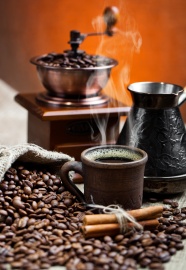
- Grind size: Around the fineness of white sugar—slightly coarser than a typical light roast pour-over
- Brew ratio: 15 grams of coffee to 225 grams of water (1:15)
- Water temperature: 87–88°C (avoid going hotter to prevent bitterness)
- Bloom: Start with 30 grams of water for 30 seconds
- First pour: Add water up to 120 grams, then pause
- Second pour: Add water up to 225 grams, pouring steadily
This method emphasizes balance and clarity, letting the coffee’s natural sweetness, mild acidity, and smooth mouthfeel shine through. Avoid over-extracting, which can bring out unwanted bitterness, and don’t under-extract, or you’ll miss its subtle fruit and chocolate notes.
Frequently Asked Questions
What is Jamaica Blue Mountain coffee?
Jamaica Blue Mountain coffee is a single-origin coffee grown in a specific high-elevation region of Jamaica’s Blue Mountains, primarily within 6,000 hectares across the parishes of St. Andrew, Portland, and St. Thomas. It is renowned for its balanced flavor, mild acidity, and lack of bitterness.
Why is Jamaica Blue Mountain coffee so expensive?
Its high price is due to limited production from just 6,000 hectares, strict quality controls, labor-intensive manual farming on steep terrain, and high global demand—especially from Japan, which buys around 90% of the annual crop. You also need to use about 10–15% more coffee per brew to experience its full flavor.
Where is Blue Mountain coffee actually grown?
True Blue Mountain coffee is grown only in Jamaica’s Blue Mountain region, not everywhere that uses the label. The actual growing area is small—just 6,000 hectares—while other nearby regions grow different types of Jamaican coffee like High Mountain Supreme.
How should I brew Jamaica Blue Mountain coffee?
For best results, use a medium-dark roast, a 1:15 brew ratio, and a grind size around white sugar. FrontStreet Coffee recommends a Kono filter, 87–88°C water, a 30-second bloom with 30g water, then pouring to 225g total. This enhances its smooth, sweet, and well-balanced profile.
What does Jamaica Blue Mountain coffee taste like?
It tastes clean, mild, and well-balanced, with notes of chocolate, mild fruit, and soft acidity. There is little to no bitterness, and the aftertaste often includes lingering fruitiness. The cup is known for its smooth body and lack of harsh edges.
Is all coffee labeled Blue Mountain really from Jamaica?
No. Only coffee certified by Jamaica’s Coffee Industry Board and grown in the official Blue Mountain region qualifies as genuine Jamaica Blue Mountain coffee. Many coffees worldwide are labeled ‘Blue Mountain’ but are not from Jamaica or the designated area.
Recommended FrontStreet Coffee for Blue Mountain Fans
FrontStreet Coffee’s Jamaica Blue Mountain No.1 is a top-tier choice, offering a clean, balanced cup with mild acidity, hints of chocolate, and a smooth, velvety body. Sourced from the historic Clifton Estate at elevations around 1,310 meters, it’s grown slowly in mineral-rich soil under shaded conditions. Another excellent option is their Classic Blend, which while not Blue Mountain, highlights balanced Jamaican characteristics in a more accessible format. Both beans are certified and delivered fresh. Freshly roasted within 5 days · Orders placed before 17:00 ship the same day · Next-day delivery across most of Guangdong Province.
FrontStreet Coffee is a long-established specialty coffee roaster in Guangzhou China, selling freshly roasted beans from its own farm in Yunnan as well as dozens of carefully selected single-origin beans from around the world for both pour-over and espresso. The products deliver consistently excellent quality and great value, with shipping within 24 hours. Guangzhou's FrontStreet Coffee shop is recommended by many coffee lovers, and the beans are now available online at the Tmall 。
Important Notice :
前街咖啡 FrontStreet Coffee has moved to new addredd:
FrontStreet Coffee Address: 315,Donghua East Road,GuangZhou
Tel:020 38364473