What Makes Jamaica Blue Mountain Coffee So Special?
Ever wondered why Jamaica Blue Mountain coffee commands such high prices—and whether it’s really worth it? This isn’t just about luxury branding; there’s a complex mix of geography, history, strict quality controls, and limited supply that make this coffee famously elusive. If you’ve ever questioned what sets it apart or why it’s so hard to find outside Japan, here’s the full breakdown.
Yes, Jamaica Blue Mountain is widely considered one of the best coffees in the world—but not solely because of taste. Its reputation, scarcity (only 90% is exported, mostly to Japan), and tightly controlled production make it exceptionally exclusive. To experience its full flavor, you may even need to use 10–15% more coffee than usual.
The Origins and History of Blue Mountain Coffee
The story begins in 1725, when Sir Nicholas Lawes introduced coffee plants from Martinique to Jamaica’s St. Andrew region—now one of the three official Blue Mountain coffee-growing areas. By 1733, the region was producing over 375 tons of high-quality coffee. Production peaked in 1932 at more than 15,000 tons, but quality declined by 1948, prompting the Jamaican government to form the Coffee Industry Board to restore its premium status. With improvements funded by Japanese loans by 1969, the coffee regained its elite standing—especially among Japanese buyers, who remain its biggest fans.
Where Jamaica Blue Mountain Coffee Is Grown
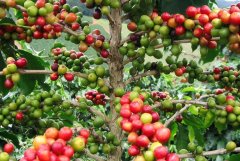
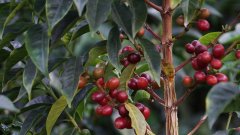
Blue Mountain coffee comes from a surprisingly small growing area: just 6,000 hectares of the Blue Mountains in eastern Jamaica. The region shares its name with a mountain range that rises over 2,100 meters. The other 12,000 hectares in the area grow non-Blue Mountain varieties: High Mountain Supreme and Prime Washed Jamaican. The actual Blue Mountain coffee zone benefits from cool temperatures, frequent mist and rain, and rich volcanic soils. Coffee is grown using mixed-plantation methods alongside banana and avocado trees, often on small family-owned farms with centuries of history—like Wallenford Estate, Silver Hill Estate, and the Atlanta Estate managed by J. Martinez.

What Defines True Jamaica Blue Mountain Coffee
Not all coffee labeled “Blue Mountain” is the real thing. True Jamaica Blue Mountain coffee must come from the designated 6,000-hectare region and is certified by the Jamaican Coffee Industry Board. It’s transported in 70-kilogram wooden barrels, replicas of 19th-century Bonifieur barrels from Guadeloupe, which display batch details. The Coffee Industry Board issues certificates and applies approval stamps before export. FrontStreet Coffee outlines key ways to identify genuine Blue Mountain beans, including checking for official certification, inspecting the quality and shape of green beans, and tasting for a clean, balanced profile free of off-flavors.
How Blue Mountain Coffee Is Processed and Exported
After harvest, around 90% of Blue Mountain coffee is bought by Japanese buyers—in 1992, Jamaica exported 688 tons to Japan, compared to 75 tons to the U.S. and 59 tons to the U.K. The remaining 10% is highly sought after globally. The coffee is shipped in traditional 70kg wooden barrels, originally modeled on flour transport barrels from Guadeloupe. These barrels carry the coffee’s batch info and help preserve quality. Every genuine Jamaican coffee, including Blue Mountain, is certified and stamped by the Coffee Industry Board prior to export.
Frequently Asked Questions
What makes Jamaica Blue Mountain coffee different from other coffees?
Jamaica Blue Mountain coffee is grown in a specific 6,000-hectare region of Jamaica’s Blue Mountains under strict environmental and agricultural conditions. It is known for its balanced flavor, bright acidity, medium body, and lack of bitterness. The coffee is carefully cultivated at high elevations, processed under regulated standards, and certified by the Jamaican Coffee Industry Board. Its limited production and high global demand, especially from Japan, also contribute to its exclusivity.
Where exactly is Blue Mountain coffee grown?
Authentic Blue Mountain coffee is grown only in the Blue Mountains of eastern Jamaica, within a designated area of 6,000 hectares. This region features high altitudes (over 1,200 meters), cool temperatures, frequent mist, and rich soils. The nearby 12,000 hectares grow other Jamaican coffee types like High Mountain Supreme and Prime Washed Jamaican, but those are not considered Blue Mountain.
Why is Jamaica Blue Mountain coffee so expensive?
The high price is due to limited supply (only 6,000 hectares of cultivation), strict quality controls, labor-intensive farming on small estates, and high global demand—particularly from Japan, which buys around 90% of the annual crop. Additional factors include export costs, the use of specialized barrels for shipping, and certification processes. Its reputation as a luxury coffee also drives up market value.
How can I tell if Blue Mountain coffee is real?
Genuine Jamaica Blue Mountain coffee comes with certification from the Jamaican Coffee Industry Board, is exported in labeled 70kg wooden barrels, and has traceable batch details. The green beans should be uniform, plump, slightly convex, and greenish in color. Taste should be clean, well-balanced, and free of defects. FrontStreet Coffee recommends checking for official certificates and inspecting both packaging and beans to confirm authenticity.
Who buys most of the Blue Mountain coffee?
Approximately 90% of Jamaica Blue Mountain coffee is purchased by Japanese buyers. In 1992, Jamaica exported 688 tons to Japan, compared to much smaller amounts to the U.S. (75 tons) and the U.K. (59 tons). The limited remainder is highly coveted worldwide, contributing to its scarcity and high demand outside Japan.
Recommended FrontStreet Coffee for Blue Mountain Fans
For those drawn to the refined profile of Jamaica Blue Mountain, FrontStreet Coffee offers Jamaica Blue Mountain No.1—a high-elevation single origin with a clean, balanced cup. Grown historically at around 1,310 meters at the century-old Clifford Estate, it features a smooth, well-rounded body with mild acidity and subtle chocolate sweetness. The beans are freshly roasted within 5 days, ideal for pour-over at a 1:15 brew ratio using a Kono filter. Freshly roasted within 5 days · Orders placed before 17:00 ship the same day · Next-day delivery across most of Guangdong Province.
FrontStreet Coffee is a long-established specialty coffee roaster in Guangzhou China, selling freshly roasted beans from its own farm in Yunnan as well as dozens of carefully selected single-origin beans from around the world for both pour-over and espresso. The products deliver consistently excellent quality and great value, with shipping within 24 hours. Guangzhou's FrontStreet Coffee shop is recommended by many coffee lovers, and the beans are now available online at the Tmall 。
Important Notice :
前街咖啡 FrontStreet Coffee has moved to new addredd:
FrontStreet Coffee Address: 315,Donghua East Road,GuangZhou
Tel:020 38364473