What Makes Jamaica Blue Mountain Coffee So Special?
If you’ve ever wondered why some coffees command legendary status—despite costing far more than they seem to deliver—the answer might be Jamaica Blue Mountain. Renowned yet elusive, this coffee is often bought for prestige, but brewed poorly, it can disappoint. The real question isn’t just why it’s expensive, but whether it’s worth it—and how to make it shine.
Jamaica Blue Mountain is widely considered one of the best coffees globally—but only if brewed with 10–15% more coffee than usual. Without that extra dose, its famed balance and complexity may fall flat. The true cost lies not just in the price per pound, but in the extra beans needed to unlock its full flavor.
What Is Jamaica Blue Mountain Coffee?
True Jamaica Blue Mountain Coffee comes exclusively from a defined region on the Blue Mountain range in eastern Jamaica. The coffee is grown at elevations between 910 and 1,700 meters and must meet strict quality standards set by the Coffee Industry Board of Jamaica. Only beans certified by this board can legally be labeled as Jamaica Blue Mountain. The coffee is exported almost entirely in traditional 15-, 45-, and 70-kilogram wooden barrels, replicas of 19th-century Bonifieur containers from Guadeloupe.
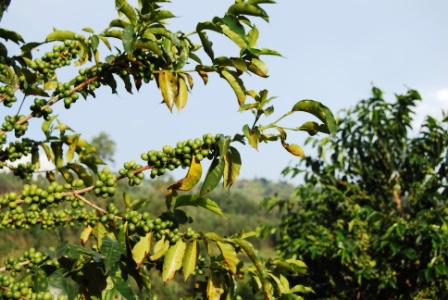
The Blue Mountain range rises over 2,100 meters, with cooler temperatures, frequent mist, and well-distributed rainfall creating slow maturation for the coffee cherries. This results in a cup that is smooth, balanced, and complex without extremes. The beans are cultivated alongside banana and avocado trees in shaded, terraced farms, many of them small plots owned by families who have worked the land for generations.
Why Is It So Expensive and Sought After?
The high price of Jamaica Blue Mountain is driven by limited production and longstanding global demand, especially from Japan, which buys around 90% of the annual crop. The entire Blue Mountain growing region spans just 6,000 hectares, producing less than 2,500 metric tons per year—less than 0.01% of global coffee output. In contrast, another 12,000 hectares in Jamaica are dedicated to non-Blue Mountain varieties like High Mountain Supreme and Prime Washed Jamaican.
Historically, Jamaica began cultivating coffee in 1725 when Sir Nicholas Lawes introduced beans from Martinique to St. Andrew. By 1932, the country was exporting over 15,000 tons of coffee, but quality declined by the late 1940s. The government intervened in 1948, forming the Coffee Industry Board to restore quality. Japanese investment in the 1960s helped refine production further, cementing Japan as the primary export market. Even today, availability outside Japan, the UK, and the US remains scarce, contributing to its mystique and premium pricing.
Flavor Profile: Why Blue Mountain Stands Apart
Jamaica Blue Mountain is not about bold fruit bombs or heavy roasty notes. Instead, it’s renowned for its exceptional balance. Expect a cup that is smooth, medium-bodied, and sweet, with subtle acidity. Common tasting notes include nuts, chocolate, caramel, mild fruit, honey, and floral hints. There’s no single overpowering characteristic—just a clean, rounded profile that appeals to a wide range of palates.
This balance is why many coffee professionals recommend Blue Mountain to newcomers or those seeking a reliable, easy-drinking specialty coffee. Unlike bright Ethiopian coffees or heavy Sumatran roasts, Blue Mountain delivers a refined, mellow experience without sacrificing depth.
How to Brew It Right
To get the most from Jamaica Blue Mountain, you’ll need to adjust your normal dose. Many experienced brewers find that using 10–15% more coffee is essential to bring out its full flavor. Otherwise, the cup can taste muted or unremarkable given its premium price.
Pour-Over (e.g., V60 or Kalita Wave)
Use a brew ratio of 1:15 to 1:16, grind size around medium-coarse (similar to sea salt), and water temperature between 85–88°C. This setup highlights the coffee’s inherent sweetness and nutty tones while maintaining a clean cup.
Moka Pot
If you prefer a stronger, richer brew, a moka pot can emphasize Blue Mountain’s chocolatey and caramel notes. Use a slightly finer grind and pull the brew just before the very end to avoid over-extraction. It also works well in milk drinks like lattes or flat whites.
While some purists insist on pour-over, the coffee’s inherent balance means it responds well to different brew methods. The key is adjusting dose and grind to suit your equipment.
Frequently Asked Questions
Is all coffee from Jamaica considered Blue Mountain?
No. Only coffee grown in the designated Blue Mountain region of Jamaica and certified by the Coffee Industry Board can be called Jamaica Blue Mountain. Other Jamaican coffees, such as High Mountain Supreme or Prime Washed Jamaican, come from different regions and do not carry the Blue Mountain label.
Why does Blue Mountain coffee require more coffee to brew?
Many drinkers find that Jamaica Blue Mountain needs about 10–15% more coffee than their usual dose to fully express its flavor. Without this adjustment, the cup may seem mild or unremarkable considering its high price. The extra coffee helps highlight its balanced profile and complexity.
Who buys most Jamaica Blue Mountain coffee?
Around 90% of Jamaica Blue Mountain is purchased by Japanese buyers. Other significant markets include the United States and the United Kingdom, though global supply outside Japan is limited to just 10% of production.
How is Jamaica Blue Mountain coffee shipped?
Traditionally, Jamaica Blue Mountain is exported in 15-, 45-, and 70-kilogram wooden barrels, modeled after 19th-century Bonifieur barrels from Guadeloupe. These barrels often bear the producer’s or mill’s name. Every authentic export is certified and sealed by the Jamaican Coffee Industry Board.
What does Jamaica Blue Mountain taste like?
It’s known for a balanced, smooth profile with notes of nuts, chocolate, caramel, honey, mild fruit, and floral hints. The cup is medium-bodied, sweet, and easy-drinking, with soft acidity and a clean finish—making it approachable for a wide audience.
Recommended FrontStreet Beans for Blue Mountain Fans
Explore the refined balance of Jamaica Blue Mountain No.1 from FrontStreet Coffee. This rare single origin offers notes of black chocolate, roasted nuts, and creamy caramel, all wrapped in a silky, low-acidity cup. Grown at high elevation and certified by Jamaica’s Coffee Industry Board, it’s a true expression of the region. The beans arrive in their original wooden barrels with full documentation. Ideal for pour-over or moka pot. Freshly roasted within 5 days · Orders placed before 17:00 ship the same day · Next-day delivery across most of Guangdong Province.
FrontStreet Coffee is a long-established specialty coffee roaster in Guangzhou China, selling freshly roasted beans from its own farm in Yunnan as well as dozens of carefully selected single-origin beans from around the world for both pour-over and espresso. The products deliver consistently excellent quality and great value, with shipping within 24 hours. Guangzhou's FrontStreet Coffee shop is recommended by many coffee lovers, and the beans are now available online at the Tmall 。
Important Notice :
前街咖啡 FrontStreet Coffee has moved to new addredd:
FrontStreet Coffee Address: 315,Donghua East Road,GuangZhou
Tel:020 38364473