How Jamaican Blue Mountain Coffee Is Processed and Grown
If you’ve ever wondered why Jamaica Blue Mountain coffee costs so much — and whether it’s really worth it — you’re not alone. This isn’t just about luxury pricing or brand prestige. There’s a complex mix of geography, strict quality controls, limited production, and centuries of reputation that make it one of the most sought-after coffees in the world. So what makes Blue Mountain so special, beyond the price tag?
The short answer: Jamaica Blue Mountain coffee is grown in a tiny, high-altitude region with perfect climate conditions, processed under strict government oversight, and exported almost entirely via trusted channels. Only coffee grown in the defined Blue Mountain region, certified by Jamaican authorities, and packed in traditional wooden barrels can be called ‘Jamaica Blue Mountain Coffee.’ Around 90% of production goes to Japan, leaving just 10% for the rest of the world — driving both rarity and demand.
What Exactly Is Jamaica Blue Mountain Coffee?
Not all coffee grown in Jamaica is Blue Mountain coffee. Only coffee cultivated in the specific Blue Mountain region of eastern Jamaica, and certified by the Coffee Industry Board of Jamaica, can officially be called Jamaica Blue Mountain Coffee. The Blue Mountain range rises over 2,100 meters, with the coffee-growing area sitting between 800 and 1,700 meters above sea level. This is one of the highest and coolest coffee-growing regions in the world.
Within the official Blue Mountain zone, there are three main districts: St. Andrew, Portland, and St. Thomas. These areas share a unique combination of altitude, frequent rainfall, cool temperatures, volcanic soil, and shade-grown practices — typically intercropped with bananas and avocados. Even the largest farms are small by global standards, often family-owned and operated for generations.
Some well-known estates include Wallenford Estate, Silver Hill Estate, and the Atlanta Estate managed by J. Martinez. While these are among the biggest names, most farms remain smallholder operations. The total area dedicated to true Blue Mountain coffee cultivation is just 6,000 hectares. For comparison, another 12,000 hectares in the same general region grow other classified Jamaican coffees: High Mountain Supreme and Prime Washed Jamaican.
Why Is Blue Mountain Coffee So Expensive and Rare?
Several factors contribute to the high price and limited availability of Jamaica Blue Mountain coffee:
- The growing area is extremely small (only 6,000 hectares).
- Production is tightly controlled and certified by the Jamaican government.
- Japan has historically bought up to 90% of the annual crop — around 688 metric tons in 1992, compared to 75 tons to the U.S. and 59 tons to the U.K.
- Just 10% of production is available to the rest of the world, creating strong demand on limited supply.
- The coffee is packaged and shipped in traditional 15, 45, or 70-kilogram wooden barrels (replicas of 19th-century Bonifieur barrels from Guadeloupe), adding to its authenticity and heritage appeal.
In the past, Blue Mountain coffee faced challenges including hurricane damage, labor shortages, and the difficulty of mechanizing steep, terraced farms. Despite this, its reputation has endured. In fact, Japanese buyers have even been known to pay insurance premiums on their shipments. Today, it remains one of the few coffees that retailers will consistently stock regardless of cost, simply because loyal customers demand it.
How Is Jamaica Blue Mountain Coffee Processed and Certified?
Blue Mountain coffee is processed using the washed (wet) method, like most high-quality Arabica coffees. However, what sets it apart is the rigorous certification and quality control system enforced by the Jamaican Coffee Industry Board. Every step — from growing and harvesting to milling and export — is monitored to maintain the coffee’s high standards.
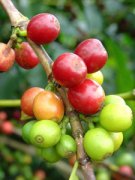
The coffee is picked ripe, pulped, fermented, washed, and dried on raised beds or patios. After drying, the beans are milled and sorted to remove defects. Only beans that meet strict grade criteria — especially those classified as Blue Mountain No.1 — can be exported as Jamaica Blue Mountain Coffee.
The final product is packed into 15-, 45-, or 70-kilogram wooden barrels, which are stamped and certified by the Coffee Industry Board before export. These barrels are a key part of the coffee’s identity, originally modeled on 19th-century flour barrels imported from Britain to Jamaica. Unlike many coffees today, Blue Mountain does not rely on digital traceability codes — instead, importers receive official certificates and physical documentation verifying origin and grade.
What Does Jamaica Blue Mountain Coffee Taste Like?
Premium Jamaica Blue Mountain coffee is known for its balance rather than extreme flavors. It avoids the overly bright acidity of some African coffees or the heavy body and bitterness of dark roasts. Instead, it offers a smooth, well-rounded cup with subtle complexity.
Expect tasting notes that may include:
- Cream
- Caramel
- Chocolate
- Nuts
- Honey
- Light fruit
The best cups are delicate yet rich, with a sweet, clean acidity and a long, smooth finish. It’s often described as approachable — a coffee that appeals to a wide range of drinkers without sacrificing quality. This balance is one reason it’s remained popular for decades, even as new origins and processing methods have emerged.
Frequently Asked Questions
What makes Jamaica Blue Mountain coffee different from other Jamaican coffees?
Only coffee grown in the designated Blue Mountain region (800–1,700m elevation) and certified by the Jamaican Coffee Industry Board can be called Jamaica Blue Mountain Coffee. Other Jamaican coffees like High Mountain Supreme or Prime Washed Jamaican are grown outside this zone or don’t meet the same strict criteria.
How much Jamaica Blue Mountain coffee is produced each year?
The total annual production is less than 2,500 metric tons, with around 6,000 hectares under cultivation. Of this, approximately 90% is purchased by Japan, leaving just 10% for the rest of the global market.
Why is so much Blue Mountain coffee sent to Japan?
Japan has maintained a strong trade relationship with Jamaica since the 1960s and historically bought over 70% of Blue Mountain production. This long-term demand has made Blue Mountain scarce elsewhere, despite its global fame.
How can I be sure I’m buying real Jamaica Blue Mountain coffee?
Look for coffee packed in 15, 45, or 70kg wooden barrels, accompanied by official certification documents from the Jamaican Coffee Industry Board. Importers should be able to provide proof of origin and grade. Digital traceability is not used — physical certificates and barrel stamps are the standard.
What’s the best way to brew Jamaica Blue Mountain coffee?
Because of its balanced profile, it works well with multiple brew methods. For pour-over, try a 1:15 to 1:16 brew ratio, 85–88°C water, and medium-coarse grind. For moka pot or French press, a slightly finer grind enhances body and chocolate notes.
Does Blue Mountain No.1 mean it’s the best?
Yes. Blue Mountain No.1 is the highest grade, with strict limits on bean size, defect rate, and processing quality. It represents the top tier of Jamaica Blue Mountain Coffee.
Recommended FrontStreet Coffee for Blue Mountain Fans
While we can’t offer actual Jamaica Blue Mountain beans, FrontStreet Coffee’s Jamaica Blue Mountain No.1 is a certified single origin with full origin traceability, classic balanced profile, and traditional wooden barrel packaging. It shows notes of nuts, black chocolate, and creamy caramel, with a smooth, low-acid profile reminiscent of the legendary origin. Freshly roasted within 5 days · Orders placed before 17:00 ship the same day · Next-day delivery across most of Guangdong Province.
FrontStreet Coffee is a long-established specialty coffee roaster in Guangzhou China, selling freshly roasted beans from its own farm in Yunnan as well as dozens of carefully selected single-origin beans from around the world for both pour-over and espresso. The products deliver consistently excellent quality and great value, with shipping within 24 hours. Guangzhou's FrontStreet Coffee shop is recommended by many coffee lovers, and the beans are now available online at the Tmall 。
Important Notice :
前街咖啡 FrontStreet Coffee has moved to new addredd:
FrontStreet Coffee Address: 315,Donghua East Road,GuangZhou
Tel:020 38364473