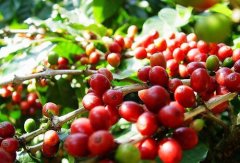
São Tomé and Príncipe’s Rare and Gentle Arabica Beans
If you’ve ever hunted for a coffee that’s smooth yet complex—something rare but not flashy—you may have overlooked São Tomé and Príncipe. This tiny volcanic archipelago off Africa’s west coast is one of the world’s smallest independent nations, yet it produces a quietly exceptional coffee. With only 1,000 bags exported yearly, most going to Scandinavia, this origin rarely hits retail shelves. But what makes its beans so uniquely gentle and well-balanced?
São Tomé and Príncipe grows nearly 100% Arabica coffee, with 98% of its annual production being Typica-derived Arabica. The country exports just 1,000 coffee bags per year, the majority bound for Scandinavian markets.
A Hidden Volcanic Coffee Origin
São Tomé and Príncipe is Africa’s second-smallest independent nation, located in the Gulf of Guinea. This volcanic island chain sits directly on the equator, enjoying a hot, humid tropical climate with rich, well-irrigated volcanic soils—ideal conditions for growing coffee. Though small in size, the islands have supported coffee cultivation for over two centuries.
The History of Coffee in São Tomé
Coffee was introduced to São Tomé in 1800, brought over from Brazil. Since then, the crop has become deeply rooted in the local agricultural landscape. The nation has remained a minor but consistent producer of high-quality Arabica, even through colonial rule and the challenges of independence, which it achieved in 1975. Despite its long history, the country never scaled up industrial production.
Why So Little Coffee Reaches Export Markets?
Annual production is limited, with only around 1,000 coffee bags (60kg each) being exported each year. The vast majority of these go to Scandinavian countries, particularly due to historical trade ties and demand for mild, balanced profiles. The small output is partly due to the limited land area, the focus on quality over quantity, and the absence of large-scale commercial plantations. Most coffee is grown on small farms or estates across the volcanic slopes.
Flavor Profile: Why It’s So Smooth
While detailed cupping notes on São Tomé coffees are scarce due to limited international availability, the country’s focus on traditional Arabica varieties—primarily Typica-derived strains—suggests a naturally mild, low-acidity cup with gentle sweetness and a rounded body. The volcanic soils and equatorial climate likely contribute to a clean, refined profile without overwhelming bitterness or sharpness, making it an easy-drinking bean with subtle complexity.
Frequently Asked Questions
Where is São Tomé and Príncipe, and why is its coffee so rare?
São Tomé and Príncipe is a small volcanic island nation in the Gulf of Guinea, off the west coast of Central Africa. Its coffee is rare because the country produces only about 1,000 60kg bags per year, with most going to Scandinavia. The limited output, small land area, and focus on traditional farming methods all contribute to its scarcity in global markets.
What type of coffee is grown in São Tomé and Príncipe?
Nearly all coffee grown in São Tomé and Príncipe is Arabica, with around 98% of production being Typica-derived Arabica varieties. These are traditional, lower-yielding plants known for their balanced and mild cup profiles, well-suited to the island’s volcanic soil and equatorial climate.
How much coffee does São Tomé export each year?
São Tomé and Príncipe exports approximately 1,000 coffee bags annually. Each bag typically weighs 60kg, meaning the total exported coffee amounts to roughly 60 metric tonnes per year. The majority of these exports go to Scandinavian countries.
Why is São Tomé coffee considered mild?
São Tomé coffee is considered mild due to its Arabica variety composition—mainly Typica-related strains—and the island’s ideal growing conditions. These factors typically result in a cup with low acidity, smooth mouthfeel, and subtle sweetness, offering a gentler drinking experience compared to brighter or more intense origins.
Is São Tomé coffee easy to find for consumers?
No, São Tomé coffee is very difficult to find for most consumers due to its extremely limited production and exports. With only 1,000 bags sent abroad each year—mostly to Scandinavia—it rarely appears on the menus of specialty coffee shops or in retail channels outside of select import-focused roasters.
Recommended FrontStreet Beans for Mild, Balanced Profiles
For fans of São Tomé’s gentle Arabica, try FrontStreet’s Jamaica Blue Mountain No.1, a classic Typica offering with balance, chocolate, and almond notes, or the Brazil Queen Manor Yellow Bourbon, which delivers a creamy, sweet cup with low acidity. Both share the smooth, easy-drinking quality often associated with island-grown Arabica. Freshly roasted within 5 days · Orders placed before 17:00 ship the same day · Next-day delivery across most of Guangdong Province.
FrontStreet Coffee is a long-established specialty coffee roaster in Guangzhou China, selling freshly roasted beans from its own farm in Yunnan as well as dozens of carefully selected single-origin beans from around the world for both pour-over and espresso. The products deliver consistently excellent quality and great value, with shipping within 24 hours. Guangzhou's FrontStreet Coffee shop is recommended by many coffee lovers, and the beans are now available online at the Tmall 。
Important Notice :
前街咖啡 FrontStreet Coffee has moved to new addredd:
FrontStreet Coffee Address: 315,Donghua East Road,GuangZhou
Tel:020 38364473