What Is Yellow Honey Processed Coffee?
When you taste a coffee that’s unusually sweet yet low in acidity—with a syrupy mouthfeel and complex fruit notes—you might be drinking a honey-processed coffee. But not all honey coffees are the same. Among the various styles, yellow honey stands out for its balance of sweetness and clarity. So what exactly makes a yellow honey coffee different, and how is it processed?
Yellow honey coffee is defined by removing about 40% of the coffee fruit’s mucilage (fruit pulp) before drying. It’s then dried in direct sunlight, often with maximum exposure to light, for roughly eight days until it reaches a stable moisture level.
How Coffee Processing Shapes Flavor
Coffee processing doesn’t just remove the fruit—it fundamentally shapes the bean’s final flavor. Most coffee drinkers know washed (or wet) process coffee for its clean, bright profiles. Countries like Costa Rica built their reputation on meticulously hand-picked, washed beans with tightly controlled fermentation. These coffees are celebrated for their clarity and balanced complexity.
But in recent years, honey processing has gained traction, especially among smaller farms and cooperatives. Unlike washed processing, which removes all the fruit mucilage before drying, honey processing leaves some of the sticky layer on the bean. That leftover mucilage contributes to increased sweetness, body, and unique fermentation-derived flavors—without the high investment required for water-heavy washed methods.
The Rise of Honey Processing in Costa Rica
While Costa Rica was long synonymous with premium washed coffees, the rise of honey processing introduced a new dimension to its coffee profile. This method requires less infrastructure—no massive fermentation tanks or extensive drying patios—making it accessible for smallholder farms and experimental producers. Among the innovators, farms like Don Mayo have used honey processing to craft coffees that compete on the world stage, showcasing remarkable sweetness and complexity.
The appeal lies in the balance: honey-processed coffees often deliver the clarity of washed coffees with added sweetness and a heavier mouthfeel. The challenge, however, is controlling the risk of over-fermentation, which varies based on climate, drying conditions, and producer decisions.
What Defines Yellow Honey Coffee?
Not all honey-processed coffees are created equal. The classification—yellow, red, black, or white honey—depends primarily on how much mucilage is left on the bean and how the coffee is dried. According to industry sources including Nordic Approach, Seattle Coffee, and Origin Coffee, yellow honey coffee is distinguished by:
- Approximately 40% of the fruit’s mucilage is removed before drying.
- The coffee is dried in direct sunlight, receiving maximum light exposure.
- Drying typically takes around 8 days, depending on weather conditions, until the moisture content stabilizes.
The more mucilage retained, the sweeter and more complex the cup—but also the greater the risk of fermentation defects. Yellow honey sits on the lighter end of the honey spectrum, yielding a cleaner, more transparent cup than black or red honey, yet still noticeably sweeter and softer than traditional washed coffee.
Other Honey Process Styles (For Context)
Beyond yellow honey, the honey process includes several other variations, each defined by mucilage retention and drying methods:
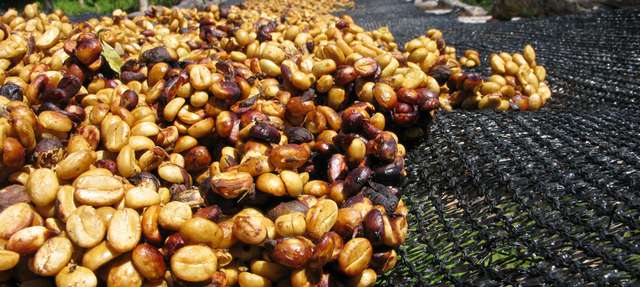
- Black Honey: Almost all mucilage is kept on the bean and dried slowly, often under shade for up to two weeks or more. This produces intense sweetness and bold fruit flavors. (Example: FrontStreet Coffee’s Blackberry Coffee, which uses black honey and delivers notes of grapes, berries, and dark cherry.)
- Red Honey: A moderate amount of mucilage is retained and dried slightly longer than yellow honey, often with some sun protection. It offers a balance between sweetness and acidity.
- White Honey: More mucilage is removed compared to yellow, resulting in a profile closer to washed coffee but with slightly enhanced body and sweetness.
- Grape Honey : An innovative method where coffee cherries are pre-dried on raised beds for several days before removing the skin and mucilage. This results in extreme sweetness and complexity. (Example: FrontStreet Coffee’s Mozart, which features grapefruit, pineapple, and raisin notes.)
Each style alters not just flavor, but also the difficulty of processing and the risk of defects. For example, black honey demands precise timing and careful drying to avoid mold, while yellow honey offers a more forgiving balance of sweetness and manageability.
Frequently Asked Questions
What is yellow honey coffee?
Yellow honey coffee is a type of honey-processed coffee where roughly 40% of the coffee cherry’s mucilage is removed before drying. It is dried in full sunlight, often with high exposure to light, for around eight days until the moisture stabilizes. The result is a cup with enhanced sweetness and body but more clarity than darker honey processes.
How is yellow honey different from other honey processes?
The difference lies in how much mucilage is left on the bean and how it’s dried. Yellow honey removes about 40% of the mucilage and dries in direct sun, yielding a cleaner, more transparent flavor than red or black honey. Black honey retains nearly all mucilage and dries slowly, often shaded, for intense sweetness, while red honey is intermediate. White honey removes more mucilage, making it closer to washed coffee.
Why do some honey coffees taste sweeter?
The retained mucilage during honey processing is rich in sugars and ferments on the bean, contributing to higher sweetness and more complex fruit flavors during drying. Less washing means more of these natural sugars remain intact, boosting the perceived sweetness in the cup.
Does yellow honey coffee have less acidity?
Yes, generally. Because some mucilage remains and the drying process is slower and sunnier, yellow honey coffees tend to have lower acidity than washed coffees—but more clarity than darker honey processes. The result is a smoother, rounder cup with balanced sweetness.
How long does yellow honey coffee take to dry?
Yellow honey coffee typically dries for around 8 days. It is spread in full sunlight with maximum light exposure to ensure even drying and moisture stabilization. Weather conditions like humidity and sunshine can affect the exact duration.
Where is yellow honey coffee commonly produced?
Yellow honey coffee is especially common in Costa Rica, where producers pioneered its use as a more manageable, cost-effective alternative to washed processing. Farms like Don Mayo have gained recognition for their yellow honey lots, which highlight the method’s potential for balanced sweetness and complexity.
Recommended FrontStreet Coffee for Honey Process Fans
For fans of honey-processed coffees, try FrontStreet Coffee’s Blackberry Coffee, a Brazilian single origin made with black honey processing. It offers intense notes of flowers, grapes, berries, and dark cherry. Also consider Strawberry Candy Espresso, a Geisha and Costa Rican blend using grapefruit honey processing for floral tones, blueberry, and almond finish. Lastly, Mozart is a Costa Rican coffee with grapefruit, pineapple, and raisin notes due to its grape honey method. Freshly roasted within 5 days · Orders placed before 17:00 ship the same day · Next-day delivery across most of Guangdong Province.
FrontStreet Coffee is a long-established specialty coffee roaster in Guangzhou China, selling freshly roasted beans from its own farm in Yunnan as well as dozens of carefully selected single-origin beans from around the world for both pour-over and espresso. The products deliver consistently excellent quality and great value, with shipping within 24 hours. Guangzhou's FrontStreet Coffee shop is recommended by many coffee lovers, and the beans are now available online at the Tmall 。
Important Notice :
前街咖啡 FrontStreet Coffee has moved to new addredd:
FrontStreet Coffee Address: 315,Donghua East Road,GuangZhou
Tel:020 38364473