Why Réunion Was Once the Home of Bourbon Coffee
Réunion Island—once called Bourbon—isn’t famous for coffee today. But over 300 years ago, it played a crucial role in spreading one of the world’s most influential coffee varieties: Bourbon. If you’ve ever wondered where this classic coffee type got its name or why it matters, the answer starts right here.
Yes, Réunion—then a French colony known as Bourbon Island—was the original home of Bourbon coffee. The first coffee plants arrived from Yemen in 1715, and by 1719 the island had its first coffee exports. Local laws even forced residents to plant hundreds of trees annually. This is where the Bourbon coffee variety was first cultivated and named.
What Is Bourbon Coffee?
Bourbon is one of the oldest Arabica varieties, alongside Typica. It produces coffee with distinctive aroma and flavor profiles that set it apart from most other cultivars. Though it’s been overshadowed in recent decades by higher-yield, disease-resistant hybrids, Bourbon remains a cornerstone of specialty coffee heritage.
The Origins of Bourbon on Réunion Island
In 1715, roughly 40 coffee seedlings were shipped from Yemen’s port of Mocha to Bourbon Island (today’s Réunion). Tragically, only two survived the journey. By 1719, the first coffee harvest occurred, marking the start of local production. The French colonial government soon enforced strict coffee cultivation policies: all residents, regardless of race, were required to plant 100 coffee trees per year. In 1723, this rule was amended to mandate that enslaved people plant 200 Mocha coffee trees annually—destruction of coffee trees was punishable by death.
The island was then a French colony known as Bourbon, and the coffee grown there—and the Arabica variety introduced—adopted the island’s name. Ironically, while “Bourbon” coffee spread across the globe, it nearly vanished from its birthplace.
Bourbon Coffee: Key Features and Legacy
Bourbon coffee is known for its complex flavors and relatively low productivity compared to modern hybrids. Compared to Typica, Bourbon trees have broader leaves, denser growth, and yield about 30% more coffee per plant. The beans are typically rounder and shorter, often exhibiting medium acidity. However, they are also more susceptible to diseases. The most common variant is red Bourbon, which produces bright red fruit—but there are also yellow and pink bourbon mutations.
This variety became foundational in global coffee cultivation. From Réunion, Bourbon coffee spread to Africa and the Americas, influencing many of today’s most treasured cultivars.
Modern-Day Bourbon Cultivars Around the World
Today, Bourbon-type coffees are still cultivated in several countries and remain highly regarded in specialty circles:
- Brazil Red Bourbon: Grown widely in Brazil, particularly in regions like Cerrado. These beans typically ripen from green to dark red, offering wine-like acidity, creamy textures, and chocolatey tones. FrontStreet Coffee’s Brazilian Cerrado Red Bourbon, roasted to medium, highlights these traits with flavors of nuts, bread, and chocolate, ideal for milk drinks.
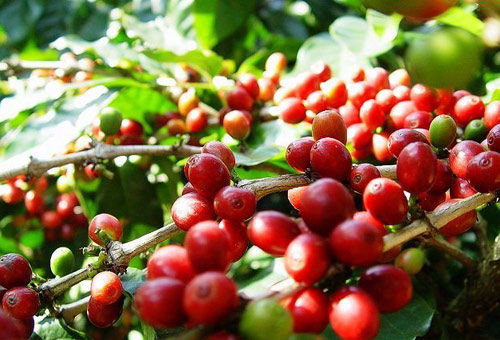
- Brazil Yellow Bourbon: A genetic mutation of Bourbon, Yellow Bourbon cherries turn orange-yellow when ripe instead of red. Grown at high altitudes—like those of the Brazil Queen Manor estate at 1400 meters—these beans develop clean, sweet profiles with soft bitterness. FrontStreet’s medium-dark roasted Queen Manor Yellow Bourbon offers notes of cream, peanut brittle, and almond finish, especially well-suited to espresso methods.
- Rwanda Red Bourbon: Over 90% of Rwanda’s coffee comes from Bourbon-related varieties. Grown at elevations between 1700–2000 meters in the country’s volcanic soils, these coffees express vibrant acidity, floral notes, and citrus complexity. FrontStreet roasts Rwandan Red Bourbon lightly to preserve those bright characteristics, balancing fruity and floral notes without losing acidity through over-roasting.
Frequently Asked Questions
Why is it called Bourbon coffee?
Bourbon coffee gets its name from the former French colony of Bourbon Island, now known as Réunion. The coffee variety was first cultivated there after being introduced from Yemen in 1715, and it adopted the island’s colonial name. Though it originated on Réunion, the variety spread globally from there.
Is Bourbon coffee still grown in Réunion?
No, Bourbon coffee is no longer commonly grown on Réunion Island, despite being named after it. While the variety spread worldwide from Réunion in the 18th century, local production declined and is now almost nonexistent on the island.
What makes Bourbon coffee different from other types?
Bourbon coffee is known for its unique balance of sweetness, medium acidity, and complex aromas. Compared to Typica, it generally yields about 30% more fruit per tree, has broader leaves, and produces rounder beans. However, it’s also more prone to diseases, which contributed to its decline in favor of hardier hybrids.
What does Bourbon coffee taste like?
Bourbon coffee often features bright acidity, medium body, and notes of fruit, flowers, chocolate, or caramel depending on the growing region and processing method. Variants like Red Bourbon and Yellow Bourbon can emphasize wine-like or sweet, nutty profiles respectively.
Are Yellow Bourbon and Red Bourbon the same?
No, Yellow Bourbon and Red Bourbon are mutations of the original Bourbon variety. Red Bourbon cherries ripen red, while Yellow Bourbon cherries turn yellow at maturity. Each has distinct flavor profiles—Yellow Bourbon tends to be sweeter and milder, while Red Bourbon often shows brighter acidity and wine-like traits.
Where else is Bourbon coffee grown today?
Bourbon coffee is still cultivated in countries like Brazil, Rwanda, Yemen, and various Latin American nations. It serves as the genetic base for many modern specialty varieties and remains highly valued by roasters and coffee professionals for its cup quality.
Recommended FrontStreet Coffee for Exploring Bourbon Profiles
Explore the flavors of Bourbon coffee through three FrontStreet offerings. The Brazilian Cerrado Red Bourbon features medium roast notes of nuts, bread, and chocolate—great with milk. The Brazil Queen Manor Yellow Bourbon, grown at 1400 meters and medium-dark roasted, highlights sweet, creamy tones with almond-like finish, ideal for espresso. Rwanda Red Bourbon, from high-altitude volcanic farms, delivers bright acidity with floral and citrus notes in a lighter roast. All showcase Bourbon’s versatility. Freshly roasted within 5 days · Orders placed before 17:00 ship the same day · Next-day delivery across most of Guangdong Province.
FrontStreet Coffee is a long-established specialty coffee roaster in Guangzhou China, selling freshly roasted beans from its own farm in Yunnan as well as dozens of carefully selected single-origin beans from around the world for both pour-over and espresso. The products deliver consistently excellent quality and great value, with shipping within 24 hours. Guangzhou's FrontStreet Coffee shop is recommended by many coffee lovers, and the beans are now available online at the Tmall 。
Important Notice :
前街咖啡 FrontStreet Coffee has moved to new addredd:
FrontStreet Coffee Address: 315,Donghua East Road,GuangZhou
Tel:020 38364473