Roaster Types: Direct, Semi-Hot Air, and Hot Air Compared
If you've ever tasted two single origin coffees that should taste wildly different but somehow come out flat or overly smoky, the problem might not be the beans—it could be the roaster. Not all coffee roasting machines are created equal, and understanding how your roaster works can completely change how your beans express themselves.
In short: direct fire roasters offer the most nuanced control for showcasing unique single origin profiles but require expert skill and are sensitive to external factors; semi-hot air roasters are more forgiving, stable, and better suited for blends or consistent single origins; hot air roasters are fast but rarely used for specialty-grade single origin work.
Three Main Types of Commercial Coffee Roasters
Most commercial coffee roasting machines fall into one of three categories: direct fire, semi-hot air (also called half hot air), and hot air. Each method transfers heat to the green coffee beans differently, impacting the roast profile, consistency, and how well the intrinsic qualities of single origin beans are expressed. Well-known commercial roasters include brands like PROBAT, Diedrich, San Franciscan, Toper, Garanti, Has Garanti, Joper, Proater, Loris, Fuji-Royal, Bonmac, and China’s own SanDingKe .
Direct Fire Roasting: High Skill, High Reward
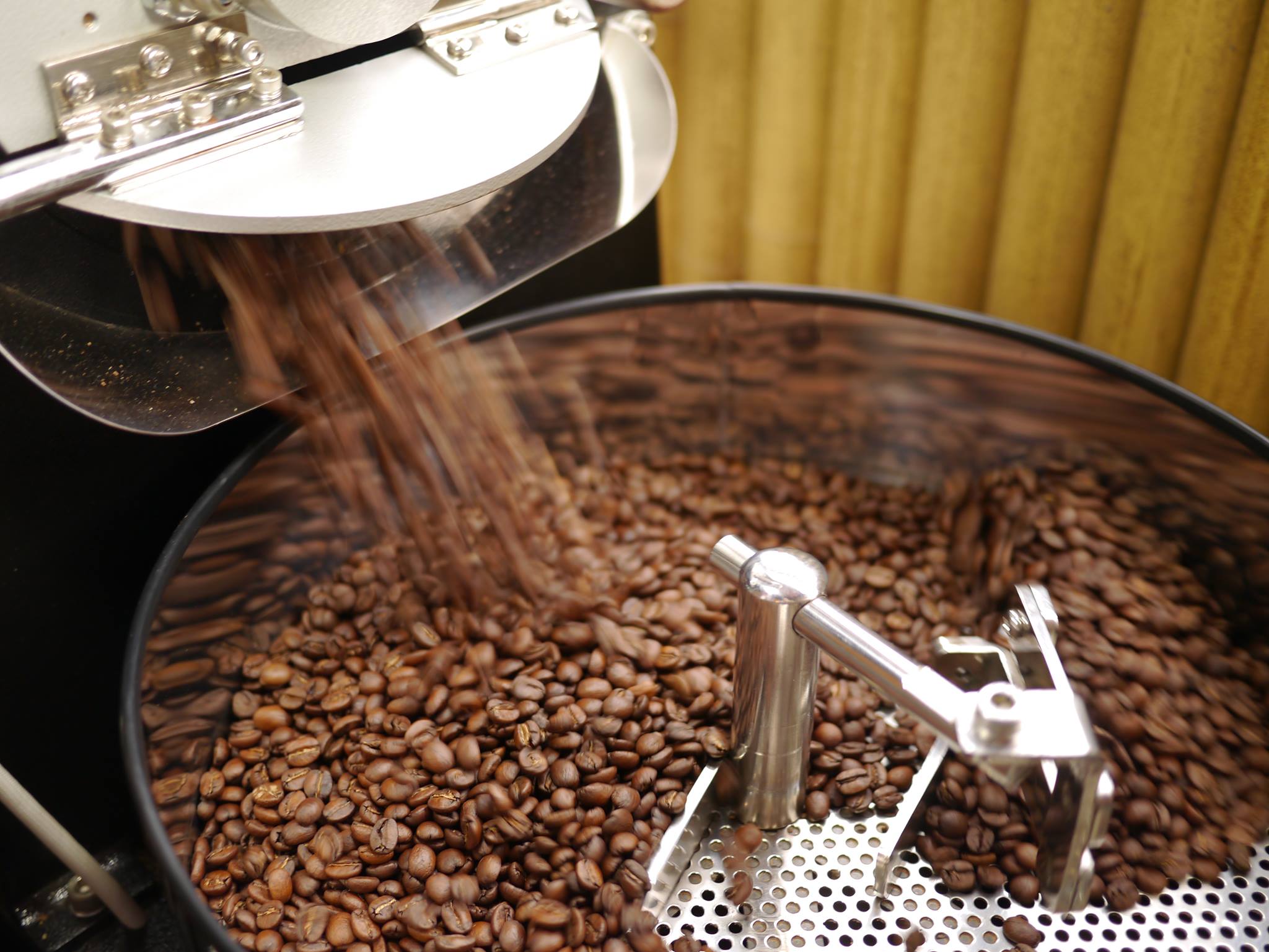
Direct fire roasters have perforated drums—holes of specific size and spacing—that allow an open flame from below to directly contact the beans. This method demands advanced skill, as the roaster must carefully manage heat application and airflow throughout the entire roast.
- Advantages:
- Fast preheat: Thanks to thinner drum walls, these roasters reach optimal temperature quickly compared to semi-hot air or hot air models.
- Brings out unique single origin characteristics: Heat transfers from the outside-in, similar to boiling dumplings where both skin and filling must cook evenly. Roasters adjust flame intensity, air (damper), and charge size—lower charges suit low-temperature roasts, higher charges high-temperature ones—to highlight the bean’s inherent traits.
- Best for single origins: Delivers more pronounced aroma and flavor compared to hot or semi-hot air methods, making it ideal for showcasing the distinct profile of a single farm or region.
- Disadvantages:
- Hard to control internal heat: The perforated design allows heat to escape quickly, leading to insufficient energy unless carefully managed. Overcompensating risks scorching the beans. Monitoring the appearance of the 'yellow point' and first crack is critical.
- Inconsistent roast uniformity: Due to brief heat retention, beans may roast unevenly. Adjust the damper based on weather (more open in low-pressure conditions) to help chaff release and avoid smoky off-flavors.
- Sensitive to environment: Indoor/outdoor temperature, airflow, and weather all affect roast stability.
Semi-Hot Air Roasting: Balance and Consistency
The most widely adopted and user-friendly method today, semi-hot air roasters mix conductive drum heat with forced hot air circulation. This design improves safety and roast consistency, especially for single origins and blends.
- Advantages:
- Stable internal temperature: Less affected by external variables. Roasters can easily adjust flame levels to match each phase of the roast. Post-first-crack, it’s crucial to maintain sufficient heat without dropping temperature—often requiring a slight power increase.
- Even expansion and flavor: Provides balanced heat penetration for even bean development. Compared to direct fire, color tends to be slightly lighter at the same roast level.
- Great for blending strategies: Supports both blending before roast (mixed beans roasted together) and after roast (individually roasted beans blended later). The even heat makes it easier to manage beans of varying densities.
- Disadvantages:
- Long preheat time: Requires at least 30 minutes to stabilize. Insufficient warm-up leads to uneven expansion and unstable flavors.
- Critical initial power settings: Too much heat early can cause premature first crack, shortening the development time and resulting in grassy or underdeveloped cups with muted complexity.
- Potentially limited flavor range: Without expert control, flavors can end up flatter or less dynamic than those from direct fire roasts.
Hot Air Roasting: Fast but Limited for Specialty
Hot air roasters (not explicitly detailed in the original article but implied as the third major category) use forced hot air to roast beans suspended in a fluidized bed. While excellent for speed and efficiency, they are rarely used in specialty single origin roasting due to limited ability to develop nuanced flavors.
- Advantages (general):
- Extremely fast roast times.
- Good for mass production and consistent light roasts.
- Disadvantages (general):
- Poor at developing the complexity and sweetness sought in single origin coffees.
- Often results in thin body and muted origin characteristics.
Frequently Asked Questions
What is the difference between direct fire, semi-hot air, and hot air roasting?
Direct fire roasters apply heat directly via an open flame through a perforated drum, offering high control but requiring skill. Semi-hot air roasters combine drum conduction with forced hot air for more stable and forgiving roasting, suitable for both single origins and blends. Hot air roasters use forced hot air alone, which is fast but generally not ideal for specialty single origin development.
Which roasting method is best for single origin coffee?
Direct fire roasting is often considered best for highlighting unique single origin flavors due to its direct heat application, though it requires experienced handling. Semi-hot air is a close second, providing more consistent results with less skill required.
Why does semi-hot air roasting produce more even roasts?
The combination of drum heat and forced air circulation ensures more uniform heat distribution, helping beans of different sizes or densities expand consistently and reducing the risk of uneven roasting.
Does the type of roaster affect the final coffee flavor?
Yes. Direct fire emphasizes origin character and aroma, semi-hot air offers balance and repeatability, while hot air typically prioritizes speed over flavor complexity—making it less suitable for single origin specialty coffees.
How long does preheating take for each roaster type?
Direct fire roasters preheat quickly due to thin drum walls. Semi-hot air roasters require at least 30 minutes for proper stabilization, while specific times for hot air roasters are not detailed in the source.
Is semi-hot air roasting good for beginners?
Generally yes. It's more forgiving than direct fire, with fewer variables to manage, making it a popular choice for both home and commercial roasters newer to the craft.
FrontStreet Single Origins Ideal for Roaster Testing
For exploring how roast method affects single origin expression, try FrontStreet Coffee’s Ethiopia Guji Kochere (bright citrus, floral, and stone fruit), FrontStreet Yirgacheffe Konga (juicy berry, lemon, and honey tones), or FrontStreet Colombia Huila El Diviso (balanced caramel, almond, and tropical notes). These beans showcase distinct profiles that respond differently across direct, semi-hot air, and hot air roasts. Freshly roasted within 5 days · Orders placed before 17:00 ship the same day · Next-day delivery across most of Guangdong Province.
FrontStreet Coffee is a long-established specialty coffee roaster in Guangzhou China, selling freshly roasted beans from its own farm in Yunnan as well as dozens of carefully selected single-origin beans from around the world for both pour-over and espresso. The products deliver consistently excellent quality and great value, with shipping within 24 hours. Guangzhou's FrontStreet Coffee shop is recommended by many coffee lovers, and the beans are now available online at the Tmall 。
Important Notice :
前街咖啡 FrontStreet Coffee has moved to new addredd:
FrontStreet Coffee Address: 315,Donghua East Road,GuangZhou
Tel:020 38364473