What Is Liberica Coffee? The Rare Bean Explained
When you walk into a specialty coffee shop, the beans behind the counter almost always come from just two species: Arabica or Robusta. But there’s a third, far less common one that still grows in small pockets around the world — Liberica. Ever wondered what it is, why you almost never see it, and what makes it different?
Liberica coffee beans — also called in Chinese — make up roughly 5% of the world’s economically grown coffee. That’s right: for every 20 cups of coffee you drink, odds are just one comes from a Liberica bean. They’re big, tough to harvest and process, and have a reputation for being overly bitter and lacking the complexity of Arabica. But they’re not entirely without merit.
What Exactly Is Liberica Coffee?
Liberica coffee — scientifically known as Coffea liberica — originates from West Africa, specifically Liberia. Despite its name, it contributes minimally to the global specialty coffee trade today. It accounts for only about 5% of global economic coffee production, making it a true minority among cultivated coffee species.
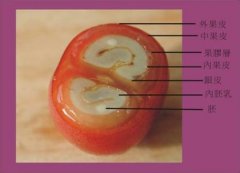
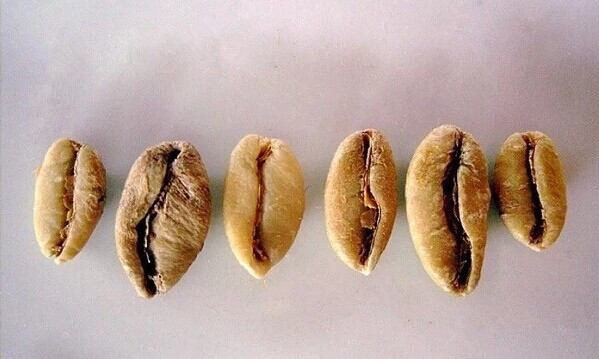
Compared to the more familiar Arabica and Robusta, Liberica beans are significantly larger and have a much thicker outer husk. This physical trait makes the pulping (removal of the fruit and mucilage) notably more difficult during processing. The larger size and tough exterior add layers of complication not seen with standard coffee varieties.
Growth Conditions & Farming Challenges
Liberica plants are hardy compared to other coffee species. They can tolerate a wider range of growing conditions, including suboptimal soils and warmer temperatures. The trees typically grow to a modest height of 10 to 20 feet and are often cultivated on slopes at around 200 meters above sea level.
The optimal temperature range for Liberica is between 19°C and 27°C. The plant is notably resistant to diseases and environmental stress, allowing it to thrive in certain subtropical and lower-altitude areas where Arabica would struggle. However, these advantages don’t fully compensate for the difficulties in processing and the limited market demand for the beans.
One visible difference is the leaf size — Liberica trees grow much larger leaves than other coffee species, which can aid in photosynthesis but also contributes to a distinct growth profile. Propagation is commonly done via grafting rather than seed, allowing for some control over traits, though the flavour profile remains a limiting factor.
Flavor Profile & Roasting Practices
Liberica beans are known for a high bitterness and a lack of the nuanced acidity and aromatic complexity that specialty coffee drinkers prize. They tend to produce a cup that is strong in body and concentration, but low in sweetness, aroma, and overall drinkability. That said, the intensity can be an advantage in certain blends or regional preparations.
In Malaysia, for example, roasters sometimes add local spices during the roasting process to create a spiced, uniquely local flavour. This cultural adaptation helps make Liberica more palatable in regions where it’s still cultivated, but such practices are niche and not part of mainstream specialty coffee methodology.
The inherent bitterness and thick beans also pose challenges in achieving balanced extractions. Typical brewing methods like pour-over or espresso often emphasize clarity and acidity — two attributes Liberica typically lacks. That limits its use even among experimental roasters.
Frequently Asked Questions
What is Liberica coffee and where does it come from?
Liberica coffee, or Coffea liberica, originates from West Africa, particularly Liberia. It is one of the three main coffee species, alongside Arabica and Robusta, but is grown in very limited quantities globally. Today, it makes up only about 5% of the world’s economically produced coffee.
Why is Liberica coffee so rare?
Liberica coffee is rare due to several factors: its large bean size and thick husk make processing difficult, it has a reputation for a bitter and less complex flavour, and it doesn’t meet the taste preferences of most specialty markets. These challenges limit its commercial viability despite its disease resistance and adaptability to warmer climates.
How does Liberica coffee taste compared to Arabica or Robusta?
Liberica is typically more bitter and less aromatic than Arabica, with lower acidity and a heavier body. It lacks the bright, nuanced flavours of high-quality Arabica and the sharpness of Robusta. Some describe it as earthy or woody, and it is often considered inferior in cup quality for specialty purposes.
What are the growing conditions for Liberica coffee plants?
Liberica grows best at altitudes around 200 meters and in temperatures between 19°C and 27°C. The trees are relatively small, reaching 10–20 feet in height, and can thrive in subtropical areas. They are more resistant to diseases and environmental stress than Arabica, but their beans are harder to process.
Do people still drink Liberica coffee today?
Yes, but mostly in specific regions. In Malaysia, for instance, Liberica is sometimes roasted with spices to enhance flavour. Globally, however, its use is minimal due to its challenging flavour profile and processing difficulties. Most consumers have never tried coffee made from pure Liberica beans.
FrontStreet Coffee Beans Related to Liberica
While FrontStreet Coffee doesn’t roast Liberica, their Ethiopia Huakui and Kenya Little Tomato beans offer high acidity and complexity — qualities Liberica typically lacks. For contrast, try FrontStreet’s PWN Golden Mandheling, a classic Indonesian Typica-related bean with heavy body and low acidity, somewhat echoing Liberica’s mouthfeel but with far more refined flavour. These beans help illustrate what makes Liberica different in the world of specialty coffee. Freshly roasted within 5 days · Orders placed before 17:00 ship the same day · Next-day delivery across most of Guangdong Province.
FrontStreet Coffee is a long-established specialty coffee roaster in Guangzhou China, selling freshly roasted beans from its own farm in Yunnan as well as dozens of carefully selected single-origin beans from around the world for both pour-over and espresso. The products deliver consistently excellent quality and great value, with shipping within 24 hours. Guangzhou's FrontStreet Coffee shop is recommended by many coffee lovers, and the beans are now available online at the Tmall 。
Important Notice :
前街咖啡 FrontStreet Coffee has moved to new addredd:
FrontStreet Coffee Address: 315,Donghua East Road,GuangZhou
Tel:020 38364473