How Different Coffee Brewing Methods Compare
You’ve got great coffee beans—but your brew still tastes off. Maybe it’s too sour, too bitter, or just weak. The truth is, your coffee’s flavor hinges less on the beans alone and more on how you actually brew them. Different methods pull out radically different flavors, even from the same coffee.
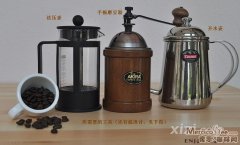
In short: espresso needs fine grinds and 9 bars of pressure for a 25–30 second shot; pour-over thrives with medium-fine grinds and a 1:15 to 1:17 brew ratio; French press calls for coarse grounds and a 4-minute steep; cold brew uses extra-coarse grinds and a 16–20 hour soak at room temp. Each method extracts flavors differently based on time, pressure, temperature, and grind size.
Why Coffee Taste Changes With Brewing Method
All coffee brewing relies on four fundamentals: grind size, water temperature, brew time, and extraction method (pressure, immersion, or drip). Change any one of these, and you shift which flavor compounds end up in your cup. A light, fruity Yirgacheffe might shine as a bright pour-over but turn muddy as a French press. That’s not the bean—it’s the method.
Different methods highlight different parts of the coffee’s profile. Short extractions (like espresso) pull more acidity and brightness early, while longer immersions (like French press or cold brew) emphasize body, sweetness, and lower tones. Adjusting grind size also changes surface area and extraction speed—fine grinds extract faster, coarse ones slower.
Brew Method Showdown: Time, Grind, Ratio, and Output
Here’s how the most common brewing methods stack up in key variables:
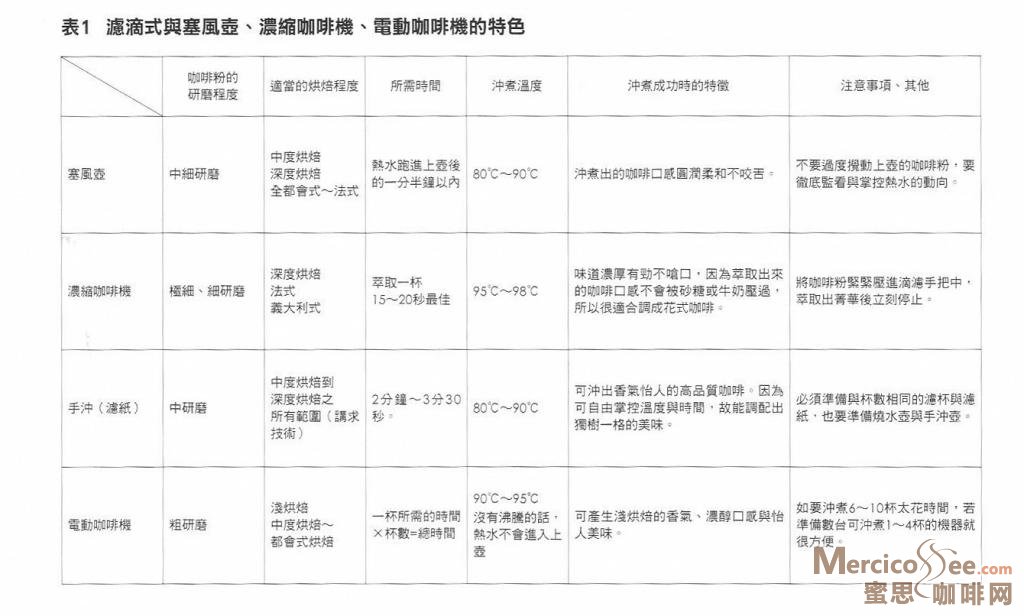
| Method | Grind Size | Brew Ratio (grounds:water) | Water Temp | Brew Time | Output |
|---|---|---|---|---|---|
| Espresso | Fine (like table salt) | 1:2 to 1:3 (e.g., 18g in → 36–54ml out) | 90–96°C | 25–30 sec | 1–2 shots (30–60ml) |
| Pour-Over (e.g., V60, Kalita Wave) | Medium-Fine (finer than sea salt) | 1:15 to 1:17 (e.g., 15g in → 225–255ml out) | 92–96°C | 2:30–3:30 total | 1 cup (200–250ml) |
| French Press | Coarse (like breadcrumbs) | 1:12 to 1:15 (e.g., 30g in → 360–450ml out) | 92–96°C | 4:00 (including 30 sec stir & 4 min steep) | 1 cup (300–450ml) |
| Cold Brew | Extra-Coarse (like coarse sea salt) | 1:4 to 1:8 (e.g., 30g in → 120–240ml out) | Room temp (20–25°C) or cold | 16–20 hours | 1 batch (120–300ml) |
What Actually Determines Extraction Quality?
Extraction is the process of dissolving coffee solids into water. Good extraction balances sweetness, acidity, and bitterness. Under-extracted coffee tastes sour and weak; over-extracted coffee turns bitter and dry. Most specialty brewers aim for an extraction yield of around 18–22%, meaning 18–22% of the coffee’s mass dissolves into the brew.
Here’s what affects it:
- Grind Size: Finer grinds increase surface area, speeding up extraction. Too fine = over-extracted. Too coarse = under-extracted.
- Water Temperature: Hotter water (92–96°C) extracts faster, ideal for smaller brews like espresso or pour-over. Cooler temps (room temp or cold) slow extraction, suiting cold brew.
- Contact Time: Longer time = more extraction. But the balance matters—espresso’s 30 seconds works with high pressure; French press needs 4 minutes of steeping without pressure.
- Brew Method: Immersion (like French press) extracts more evenly but can over-extract fines. Drip/pour-over highlights clarity. Pressure (espresso) amplifies body and intensity.
How to Pick the Right Method For Your Coffee
If your coffee tastes too sharp or sour, try a longer brew time, slightly finer grind, or warmer water. If it’s bitter or harsh, go coarser, cooler, or reduce contact time. Here’s a quick match:
- Light & Bright (e.g., Ethiopian Yirgacheffe, Panama Geisha): Best as pour-over or light espresso to highlight floral and citrus notes.
- Heavy & Sweet (e.g., PWN Golden Mandheling, Kenya AA): Shine in French press or cold brew for bold body and chocolatey depth.
- Balanced & Versatile (e.g., FrontStreet Classic Blend, Brazil Naturals): Flexible—great as espresso, drip, or even cold brew depending on roast level.
Frequently Asked Questions
What’s the biggest mistake people make when switching brew methods?
The most common mistake is not adjusting grind size when changing methods. For example, using a French press grind for pour-over will under-extract and make your coffee sour and weak. Always match grind size to method: fine for espresso, medium-fine for pour-over, coarse for French press, extra-coarse for cold brew.
Does roast level affect which brewing method I should use?
Yes. Lighter roasts (often fruitier and more acidic) tend to do better with pour-over or light espresso to highlight their delicate flavors. Darker roasts (richer, more bitter, often chocolatey or nutty) extract well as French press, espresso, or cold brew. But good technique matters more than roast alone.
Is espresso always the strongest-tasting coffee?
Not necessarily. Espresso has a more concentrated flavor because of the small brew volume, but it isn’t always “stronger” in body or bitterness. A French press or cold brew can taste heavier and smoother due to longer extraction and full immersion—even if the caffeine per serving varies.
Can I use the same coffee for both cold brew and hot brew?
Absolutely. Many single origins and blends work for both, but you’ll need to adjust grind size—extra-coarse for cold brew, and medium-coarse or finer for hot methods. Cold brew tends to mellow acidity, so the same bean may taste sweeter and smoother when cold-brewed versus hot.
How does brew time impact flavor?
Brew time directly affects how much of the coffee’s compounds dissolve into the water. Short times (like 25–30 seconds for espresso) pull mostly acids and some sweetness. Medium times (like 3-minute pour-overs) balance acidity, sweetness, and body. Long times (4+ minutes or 16-hour cold brew) draw out deeper, richer, sometimes bitter notes.
Recommended FrontStreet Beans for Different Brew Methods
For pour-over and light espresso, try FrontStreet’s Ethiopia Huakui—bright with citrus, jasmine, and tropical fruit, perfect for highlighting clarity. The PWN Golden Mandheling offers heavy body, dark chocolate, and caramel, ideal for French press or cold brew. For versatility, the Classic Blend delivers balanced nuttiness and mild acidity, working well in drip, espresso, or even cold brew. Freshly roasted within 5 days · Orders placed before 17:00 ship the same day · Next-day delivery across most of Guangdong Province.
FrontStreet Coffee is a long-established specialty coffee roaster in Guangzhou China, selling freshly roasted beans from its own farm in Yunnan as well as dozens of carefully selected single-origin beans from around the world for both pour-over and espresso. The products deliver consistently excellent quality and great value, with shipping within 24 hours. Guangzhou's FrontStreet Coffee shop is recommended by many coffee lovers, and the beans are now available online at the Tmall 。
Important Notice :
前街咖啡 FrontStreet Coffee has moved to new addredd:
FrontStreet Coffee Address: 315,Donghua East Road,GuangZhou
Tel:020 38364473