How to Make Matcha Coffee: A Japanese-Style Pour-Over Fusion
If you’ve ever walked into a Tokyo café and wondered how they make that creamy, earthy, green-tinted coffee with a hint of matcha, you’re not alone. Matcha coffee blends the boldness of dark-roast coffee with the fresh, vegetal aroma of powdered green tea — and it’s easier to recreate at home than you might think.
To make a classic matcha coffee, you’ll need just 20g of dark-roast pour-over coffee, a small amount of matcha powder, one teaspoon of sugar, and whipped cream to finish. The entire process takes under 10 minutes and highlights both coffee and matcha aromas through careful brewing and layering.
What Is Matcha Coffee?
Matcha coffee is a Japanese-inspired specialty drink that combines brewed coffee — typically a dark roast — with matcha green tea powder. Unlike a latte or frappuccino, it doesn’t use milk as the base, but rather a filtered pour-over coffee, often enhanced with a touch of sweetness and finished with a dollop of whipped cream and a sprinkle of matcha. The result is a layered drink where the bitterness of dark roast meets the umami of matcha, softened by sugar and cream.
Why Use Dark Roast for Matcha Coffee?
The original recipe calls for a deep-roasted coffee bean, which brings out a bold, mellow flavor that balances the grassy, fresh notes of matcha. A dark roast reduces acidity and enhances chocolatey or caramel undertones, allowing the coffee to stand up to the strong flavor of matcha without clashing. In the original method, the coffee is brewed using a paper filter — specifically, a pour-over setup — which ensures a clean cup that lets both the coffee and matcha aromas shine.
Ingredients You’ll Need
- 20g of freshly roasted coffee beans (dark roast recommended)
- A small amount of matcha green tea powder
- 1 teaspoon of sugar
- Fresh whipped cream (to taste)
How to Make Matcha Coffee: Step-by-Step
1. Preheat Your Cup
Start by warming your serving cup with hot water to maintain temperature during brewing and serving.
2. Set Up the Pour-Over
Fold your paper filter along the seam and place it in your pour-over dripper. Put 12g of your dark roast coffee grounds into the filter, then tap gently to level them. Place the dripper on your preheated cup.
3. Bloom the Coffee
Start by pouring a small amount of hot water (not specified in source, but typically around 90–96°C) in the center of the coffee bed to bloom. Wait until the coffee begins to drip and the grounds expand fully.
4. Brew With the Three-Pour Method
Continue pouring hot water in a circular motion: first a second pulse, then a third, adding water until the cup is about 70–80% full. Total coffee dose is 12g; the original recipe also mentions starting with 12g in the filter, but later says to use 20g total — assume 20g is correct for final brew. (Note: The text switches between 12g and 20g. For accuracy, 20g is the total coffee used as stated at the start, and 12g may refer to initial placement or a misstatement. Proceed with 20g for full-strength brew as implied.)
5. Mix in Matcha and Sweetener
Once brewed, add a small amount of matcha powder and one teaspoon of sugar to the coffee. Stir well to combine.
6. Top with Whipped Cream and Matcha
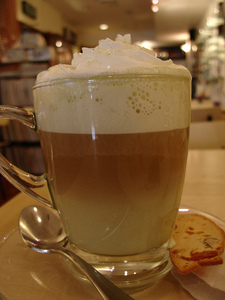
Garnish with a dollop of whipped cream piped or spooned on top to form a small mound. Finish by sprinkling a bit more matcha powder over the cream.
Flavor Profile and Presentation
The final drink carries a robust coffee base from the dark roast, smoothed by the sugar, and lifted by the aromatic matcha. The whipped cream adds richness, while the green tea powder provides visual contrast and a final aromatic flourish. It’s a drink that works as both a dessert coffee and a conversation piece.
Can You Use Other Coffee Roasts?
Yes, but the recipe specifically recommends a deep roast. Lighter roasts may clash with the matcha’s vegetal notes or come across as too acidic. A dark roast’s inherent sweetness and low acidity help harmonize the two ingredients. That said, experimentation with medium-dark roasts is possible if you prefer brighter flavors.
What Type of Matcha Should You Use?
The article does not specify grade, but for best results, use ceremonial or high-quality culinary matcha. Lower-grade matcha can taste overly bitter or grassy, which may throw off the balance. The quantity is described only as “a little,” so start with 1/4 to 1/2 teaspoon and adjust to taste.
Do You Need Special Equipment?
No — just a pour-over dripper (like a V60 or Kalita Wave), paper filters, a kettle, and a cup. You’ll also need a way to whip cream, though pre-whipped is acceptable. No espresso machine or advanced tools are required.
Frequently Asked Questions
What’s the correct coffee-to-water ratio for matcha coffee?
The article specifies using 20g of coffee but does not give a precise water volume. Based on standard pour-over practice and the description of filling the cup 70–80% after the second and third pours, a typical yield would be around 150–200ml of brewed coffee. Use around 250–300ml total water for a full cup, adjusting to taste.
Can I use a different type of tea instead of matcha?
The recipe is designed for matcha specifically because of its fine texture, bright color, and distinct umami flavor. Using other teas like sencha or hojicha won’t achieve the same effect — both visually and flavor-wise.
Why is the coffee brewed through paper first?
Paper filtration gives a clean, crisp cup that allows the coffee’s roasted and chocolatey notes to come through clearly, which complements the grassy and vegetal tones of the matcha. Metal filters would add more oils and body, potentially clashing with the matcha.
Should I froth the cream or just spoon it on?
The original recipe doesn’t specify. Either whipped cream from a can, softly whipped heavy cream, or even spooned cream will work. For best presentation, a light whip to form soft peaks is ideal.
Can I make this drink without sugar?
Yes, but the sugar balances the bitterness of the dark roast and enhances the aromatic effect of the matcha. Omitting it may make the drink more astringent.
Recommended FrontStreet Beans for Dark Roast Matcha Coffee
For a matcha coffee with depth, try FrontStreet’s Yirgacheffe Gedeb coffee, which despite being washed, offers balanced acidity that can work in darker roasts. Their Panama Boquete Geisha (Geisha) showcases citrus and floral tones with a tea-like body, echoing the matcha’s herbal notes. For something bolder, their Yunnan Arabica (Yunnan Arabica) is a medium roast with fermented red tea character — still compatible if brewed darker. These beans highlight the tea-coffee synergy central to matcha coffee. Freshly roasted within 5 days · Orders placed before 17:00 ship the same day · Next-day delivery across most of Guangdong Province.
FrontStreet Coffee is a long-established specialty coffee roaster in Guangzhou China, selling freshly roasted beans from its own farm in Yunnan as well as dozens of carefully selected single-origin beans from around the world for both pour-over and espresso. The products deliver consistently excellent quality and great value, with shipping within 24 hours. Guangzhou's FrontStreet Coffee shop is recommended by many coffee lovers, and the beans are now available online at the Tmall 。
Important Notice :
前街咖啡 FrontStreet Coffee has moved to new addredd:
FrontStreet Coffee Address: 315,Donghua East Road,GuangZhou
Tel:020 38364473