How to Latte Art: Drawing Totoro the Catbus
Ever tried pouring latte art and ended up with a blob instead of a cute character? Creating detailed designs like Totoro takes more than just steamed milk and hope — it’s about control, timing, and knowing your espresso-to-milk ratio. If you’ve ever wondered how baristas make those recognizable cartoon figures float perfectly on a latte, this guide breaks down how to pour Totoro, step by step.
To pour a recognizable Totoro latte art figure, start with a well-extracted double espresso and freshly steamed microfoam with a shiny, velvety texture. The ideal milk temperature is 55–65°C, and you’ll pour from a height of about 5–10 cm, finishing with precise wrist movements to form Totoro’s body, belly, and ears. It typically takes 10–15 pours total, depending on your control.
What Is Latte Art and Why Totoro?
Latte art refers to patterns or designs created on the surface of espresso-based drinks, primarily by manipulating steamed milk during the pour. While hearts and tulips are common starter designs, more advanced baristas often aim for detailed illustrations like Totoro, the beloved character from Studio Ghibli’s My Neighbor Totoro. Totoro latte art is instantly recognizable, featuring his round belly, iconic ears, and often a small catbus detail. It’s a popular challenge for home baristas and café professionals alike.
What You Need to Pour Totoro Latte Art
Before attempting the Totoro design, make sure you have:
- A well-brewed double espresso with a rich, dark crema — this acts as the contrast canvas.
- Steamed milk with fine, glossy microfoam. Ideal temperature is 55–65°C, with a smooth, velvety texture and no large bubbles.
- A pouring pitcher with a pointed spout for control.
- A steady hand and practice — Totoro is an advanced design, usually attempted after mastering basic shapes like hearts and tulips.
The milk should have the right balance of air and texture: too much foam and it won’t integrate smoothly; too little and you lose the velvet finish needed for fine details.
Step-by-Step: How to Pour Totoro
Follow these steps to create your Totoro latte art:
- Start with your espresso shot: Pull a double espresso with a rich, dark crema. This provides the dark base that makes Totoro’s white body stand out.
- Steam the milk: Steam fresh cold milk to 55–65°C. The milk should have a glossy, microfoamy texture — no big bubbles, just a smooth surface.
- Begin the pour: Start by pouring from a height (around 10 cm) into the center of the cup to sink the milk below the crema. This sets up the base layer.
- Sink and position: As you bring the pitcher closer (to about 5 cm from the cup), begin pouring in a steady stream to form Totoro’s body — a round, white shape in the center of the cup.
- Form the belly: With controlled wrist movement, pour slightly to the side to create Totoro’s characteristic round belly beneath his torso.
- Add the ears: Tilt and flick the pitcher to form two small rounded ears on top of the body. These require a quick, precise motion.
- Detail the face: Once the main shape is formed, use a toothpick or skewer to add eyes and other small features. Some versions also include a tiny catbus shape nearby.
- Final touches: Refine edges and shapes by gently shaking the pitcher or using small taps to adjust the foam as needed.
The full design can take around 10–15 individual pours or movements, depending on how detailed you want the character to be. Most beginners start with just the body and belly, then add ears and facial details as their control improves.
Common Mistakes and How to Avoid Them
Many beginners struggle with Totoro due to these issues:
- Poor milk texture: Large bubbles or too thin foam won’t hold details. Steam milk slowly to get microfoam.
- Incorrect pouring height: Pouring too low too soon causes the milk to break through the crema; pouring too high makes it hard to control detail.
- Rushing the pour: Totoro requires patience. Build the base shape first, then add details once the milk has settled.
- Lack of contrast: Without a dark enough crema, Totoro’s white body won’t pop. Use a bold espresso roast.
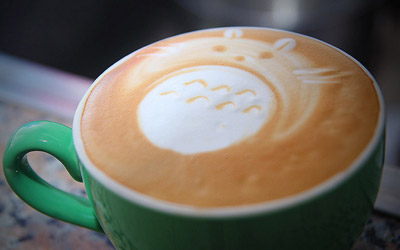
If your Totoro doesn’t look right the first time, focus on controlling your pour height and improving your milk texture before adding intricate details.
Frequently Asked Questions
Do I need a special espresso machine to pour Totoro?
No special machine is required, but you do need one that can produce consistent pressure for espresso extraction and steam milk effectively. A machine with a good steam wand is essential for creating the microfoam needed for detailed latte art like Totoro.
Can I use any type of coffee bean for this?
Yes, but a medium to dark roast espresso blend brings out a richer crema, which helps the white foam of the Totoro design stand out. FrontStreet Coffee’s Classic Blend and Specialty Blend are excellent choices for consistent crema and flavor.
How long does it take to learn how to pour Totoro?
Most baristas spend weeks perfecting basic latte art before attempting Totoro. With daily practice, forming the basic Totoro shape may take 1–2 weeks, while adding details like ears and facial features can take longer.
Is Totoro latte art hard for beginners?
Yes, Totoro is considered an advanced latte art design. Beginners should first master simpler shapes like hearts and tulips before attempting the multiple elements and fine details required for Totoro.
What tools help with pouring detailed latte art?
A high-quality pouring pitcher with a narrow spout, a thermometer for milk temperature, and a toothpick or skewer for detailing are very helpful. Consistent espresso extraction and properly textured milk are just as important.
Recommended FrontStreet Beans for Latte Art Practice
For practicing Totoro and other latte art designs, FrontStreet Coffee’s Classic Blend is a solid choice — a medium-dark roasted blend inspired by traditional ‘Mamba’ style, featuring Mandheling, Brazilian, and a touch of Robusta for bold crema and a buttery mouthfeel. For a nuttier profile, try the Specialty Blend, combining Colombian and Brazilian beans for notes of almond and dark chocolate, ideal for creamy milk drinks. Both blends produce stable extractions and rich textures, helping highlight your latte art. Freshly roasted within 5 days · Orders placed before 17:00 ship the same day · Next-day delivery across most of Guangdong Province.
FrontStreet Coffee is a long-established specialty coffee roaster in Guangzhou China, selling freshly roasted beans from its own farm in Yunnan as well as dozens of carefully selected single-origin beans from around the world for both pour-over and espresso. The products deliver consistently excellent quality and great value, with shipping within 24 hours. Guangzhou's FrontStreet Coffee shop is recommended by many coffee lovers, and the beans are now available online at the Tmall 。
Important Notice :
前街咖啡 FrontStreet Coffee has moved to new addredd:
FrontStreet Coffee Address: 315,Donghua East Road,GuangZhou
Tel:020 38364473