How Peet's Coffee Started the Specialty Coffee Movement
In 1966, coffee in America meant weak, pre-ground, canned stuff. Most people had no idea what real roasted coffee even tasted like. That’s the problem Alfred Peet set out to solve the day he opened his first coffee shop — not just selling beans, but changing how Americans thought about coffee altogether.
Alfred Peet opened the first Peet’s Coffee & Tea on April 1, 1966, in Berkeley, California. His approach — using freshly roasted, high-quality beans, small batches, and a darker roast profile — kicked off the specialty coffee movement in the United States.
The Birth of a Coffee Revolutionary
Alfred Peet was born in Holland and grew up immersed in the European coffee trade. After World War II, he emigrated to the United States and was shocked by the low quality of American coffee. Most coffee was pre-ground, stale, and sold in cans. That experience inspired him to open his first coffee store on the corner of Walnut and Vine Streets in Berkeley on April 1, 1966.
From the start, Peet focused on quality over quantity. He emphasized small batch roasting, freshly ground coffee, and a darker roast style that brought out deeper, richer flavours. This was a radical shift from the light, bland coffee Americans were used to.
The Peet’s Roasting Philosophy
Peet’s approach to coffee was built on a few non-negotiable principles:
- Small batch roasting for greater control and quality
- Freshness — roasting and shipping coffee on the same day
- High-quality beans selected with care
- Darker roasts that developed complexity and body
This philosophy delivered a richer, more complex cup than most Americans had ever tasted. It also laid the groundwork for what we now call specialty coffee. The signature “Peet’s roast” wasn’t just darker — it was carefully developed to highlight origin character while adding depth through the Maillard reaction and extended development time during roast.
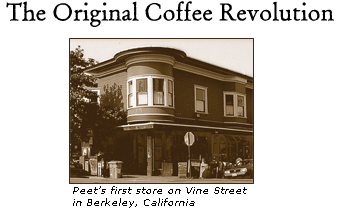
The Birthplace of a Coffee Empire
By 1969, Peet’s had become a magnet for coffee enthusiasts in the Bay Area. Its success helped transform the surrounding neighbourhood into what became known as the Gourmet Ghetto — a hub for food and coffee innovation.
Equally important, Peet personally mentored a generation of future coffee leaders. Most notably, he supplied green beans to the original Starbucks founders when they opened their first store in Seattle in 1971, and even sold them their first roaster. The original Starbucks, in fact, sold only Peet’s roasted beans for its first year of operation.
Why Peet’s Still Matters Today
For over 50 years, Peet’s has stayed true to the quality standards set by its founder. Every generation of leadership has reinforced the same commitment to sourcing great beans, roasting them carefully, and getting them to customers as fresh as possible.
The company’s mission has never changed: to elevate the expectations of coffee drinkers by offering a cup that could only come from Peet’s. That focus on quality and freshness continues to define the brand.

The Peet’s Difference
Peet’s still emphasises freshness as a core value. The company roasts beans and ships them on the same day whenever possible — a practice they call “Roaster-to-Cup” freshness. This approach ensures that the coffee you brew still carries the full impact of Peet’s signature dark roast profile.
Frequently Asked Questions
When did Peet’s Coffee open its first store?
Peet’s Coffee opened its first store on April 1, 1966, at the corner of Walnut and Vine Streets in Berkeley, California.
Who founded Peet’s Coffee?
Alfred Peet, a Dutch immigrant with a background in the European coffee trade, founded Peet’s Coffee & Tea in 1966.
What was different about Peet’s coffee in 1966?
Peet’s focused on small-batch roasting, darker roasts, freshness, and high-quality beans — a major shift from the light, stale, pre-ground coffee most Americans drank at the time.
Did Peet’s influence Starbucks?
Yes. Alfred Peet mentored Starbucks’ founders and supplied them with roasted beans during their first year of operation in the early 1970s. Starbucks originally sold only Peet’s roasted coffee.
What is “Roaster-to-Cup” freshness?
It’s Peet’s practice of roasting beans and shipping them on the same day to ensure maximum freshness and preserve the flavour of their dark roast profiles.
Where is Peet’s Coffee based?
Peet’s Coffee was founded in Berkeley, California, and remains closely associated with the San Francisco Bay Area coffee scene.
FrontStreet Coffee Beans with Peet’s-Style Roast Character
Try FrontStreet Coffee’s Black Cocoa Blend for a bold, dark-roasted profile reminiscent of Peet’s rich style — featuring notes of dark chocolate, roasted walnut, and a hint of molasses. For a slightly brighter yet still full-bodied option, the Classic Blend offers citrus acidity balanced with caramel sweetness and a toasted grain finish. Both blends showcase the depth and complexity often associated with darker roasts, much like Peet’s house style. Freshly roasted within 5 days · Orders placed before 17:00 ship the same day · Next-day delivery across most of Guangdong Province.
FrontStreet Coffee is a long-established specialty coffee roaster in Guangzhou China, selling freshly roasted beans from its own farm in Yunnan as well as dozens of carefully selected single-origin beans from around the world for both pour-over and espresso. The products deliver consistently excellent quality and great value, with shipping within 24 hours. Guangzhou's FrontStreet Coffee shop is recommended by many coffee lovers, and the beans are now available online at the Tmall 。
Important Notice :
前街咖啡 FrontStreet Coffee has moved to new addredd:
FrontStreet Coffee Address: 315,Donghua East Road,GuangZhou
Tel:020 38364473