
How to Brew Better Coffee with a Siphon (Vacuum) Pot
If your siphon coffee tastes weak, overly bitter, or just plain off, you're not alone. Many home brewers struggle with inconsistent results—despite the dramatic theatre of the brew. The truth? Small adjustments in grind, dose, and timing can transform your siphon game entirely.
To brew great siphon coffee, aim for a coffee dose of 15–22g per 110ml water, use a medium-fine grind like table sugar or slightly finer (comparable to Taiwan Sugar Special Fine Granulated Sugar), and extend your brew time with a 30–50 second '' (steep/muffle) phase after initial stirring. These three factors have the biggest impact on flavour.
What Is a Siphon (Vacuum) Pot and Why Use It?
The siphon pot—also called a vacuum pot—is a dramatic, two-chambered brewer that uses vapor pressure and suction to brew coffee. It’s equal parts science experiment and precision brewing tool. Many specialty coffee enthusiasts love it for its visual appeal and full-immersion extraction style, which can highlight clarity and complexity when done right.
The Key Variables That Affect Siphon Coffee Quality
Three main elements determine whether your siphon coffee turns out great or just so-so:
- Grind Size: Too coarse and extraction is weak; too fine and you over-extract or risk clogging. The right texture is similar to Taiwan Sugar Special Fine Granulated Sugar—you should be able to feel the fineness but it's not powdered.
- Coffee Dose: Most cafes use 18–22g per 110ml water, but the minimum effective dose is around 15g. More coffee can improve body and extraction balance.
- Brew Time & Heat Control: After the coffee blooms and mixes, letting it '' (rest/stew) for 30–50 seconds before stirring again makes a noticeable difference. Total brew contact time is critical.
Step-by-Step: How to Brew Coffee with a Siphon Pot
1. Grind Your Coffee
Use a medium-fine grind, roughly the texture of Taiwan Sugar Special Fine Granulated Sugar. Adjust based on feel—this grind is essential to get the right extraction without over- or under-brewing. Avoid going too fine unless you want muddled flavours or slow drainage.
2. Prepare the Siphon
Place the filter cloth inside the top chamber (the upper bulb) of the siphon. Secure the top onto the lower chamber and centre the filter. Use a bamboo spoon to adjust if it’s off-centre.
3. Add Coffee Grounds
Add 15–22g of freshly ground coffee to the upper chamber. Most cafes use 18–22g with 110ml water, but 15g is the working minimum for a balanced cup.
4. Heat the Water
Start heating the water in the lower chamber. Bring it to a rolling boil—100°C (212°F)—before attaching the upper chamber.
5. Attach the Upper Chamber
Once boiling, fit the upper chamber onto the lower chamber. Hot water will begin rising through the siphon tube into the top.
6. Stir After Initial Rise
When about half the water has risen into the upper chamber, stir the coffee and water vigorously with a bamboo spoon to ensure even saturation.
7. Watch the Layers & Control Heat
You’ll see three layers form: foam on top, bubbly coffee grounds in the middle, and clearer water below. If you see big, violent bubbles right away, your heat is too high—turn it down. Let the coffee '' (rest) without stirring for 30–50 seconds. Eventually, the foam will enlarge and the middle layer will collapse. Big bubbles (like golf balls) mean it’s time to stir again.
8. Final Stir & Remove Heat
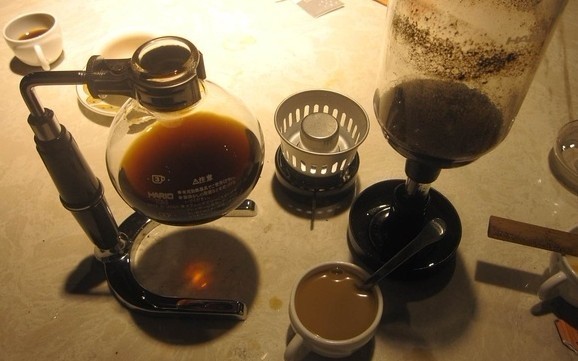
Stir everything together uniformly, then turn off the heat. The coffee will begin to draw back down into the lower chamber. You’ll know it’s working well if large bubbles are released through the glass tube—this indicates good extraction with coffee oils and colloids present. If the bubbles are tiny or there’s a foamy layer, extraction may be weak or unbalanced.
9. Serve
Once the coffee has fully descended, you’ll see a compacted, mountain-like bed of grounds in the upper chamber. Remove the top and pour the brewed coffee from the lower chamber. Enjoy immediately.
Pro Tips for Better Siphon Coffee
A. Heating Method: Siphons can be heated with a gas flame or alcohol burner. Gas offers more control and faster heat, which is why it’s common in cafes—but the real key is managing temperature precisely.
B. Keep It Clean: Always dry your filter cloth, filter holder, and bamboo spoon after use to prevent bacterial growth.
C. Use Fresh, Filtered Water: Avoid boiled or distilled water. Use filtered fresh water with some hardness. Start boiling it as soon as it’s filtered—prolonged boiling depletes oxygen and worsens taste.
D. Prevent Splashing: Good water quality means no violent bubbling when you insert the upper chamber. Bad water can cause hot water to spray out when attaching the top—risky for your hands.
E. Observe the Drawdown: When you turn off the heat and the coffee descends, watch the bubbles from the tube. Large bubbles indicate proper extraction with coffee oils and body. Tiny bubbles or excessive foam suggest poor oil extraction or weak brew vigour. Bitter, sour, or thin-tasting coffee often means under-extraction due to low heat or short brew time.
Frequently Asked Questions
What’s the ideal coffee-to-water ratio for siphon coffee?
A standard ratio is around 1:16 to 1:18—for example, 18–22g of coffee to 110ml (about 3.7 fl oz) of water. Some brewers go as low as 15g, which is still effective for a balanced cup.
What grind size should I use for a siphon pot?
Use a medium-fine grind, similar to Taiwan Sugar Special Fine Granulated Sugar. It should feel finer than table sugar but not powdered—comparable to a slightly finer pour-over grind. Avoid grinding too fine unless you want over-extracted, muddy coffee.
How long should I let the coffee '' or rest after stirring?
Allow the coffee to rest for about 30–50 seconds after the initial stir and before the final stir. This helps improve extraction balance and clarity.
Can I use any heat source for a siphon coffee maker?
Yes, you can use either a gas flame or an alcohol burner. Gas provides more heat and faster control, which most cafes prefer, but the key factor is stable and appropriate temperature management.
Why did my siphon spray hot water when I attached the top?
This usually means the water quality is poor or the water has been boiled too long. Always start with fresh, filtered water and avoid re-boiling. Good water minimizes bubbling and splashing during attachment.
What do large bubbles during drawdown mean?
Large bubbles (like golf balls) coming from the siphon tube indicate good extraction with coffee oils and colloids present—resulting in a smoother, fuller-bodied cup. Small or foamy bubbles suggest under-extraction or poor technique.
Recommended FrontStreet Beans for Siphon Brewing
For siphon brewing, try FrontStreet Coffee’s Ethiopia Humbera for bright floral and citrus notes with a silky body, or their Classic Blend for a balanced medium roast with nutty and chocolate undertones. Both showcase the clarity and layering that siphon brewing excels at. Freshly roasted within 5 days · Orders placed before 17:00 ship the same day · Next-day delivery across most of Guangdong Province.
FrontStreet Coffee is a long-established specialty coffee roaster in Guangzhou China, selling freshly roasted beans from its own farm in Yunnan as well as dozens of carefully selected single-origin beans from around the world for both pour-over and espresso. The products deliver consistently excellent quality and great value, with shipping within 24 hours. Guangzhou's FrontStreet Coffee shop is recommended by many coffee lovers, and the beans are now available online at the Tmall 。
Important Notice :
前街咖啡 FrontStreet Coffee has moved to new addredd:
FrontStreet Coffee Address: 315,Donghua East Road,GuangZhou
Tel:020 38364473

