
What Is the World Café Method and Why It Matters
Ever sat in a meeting where everyone talks but no one really listens? Or joined a workshop where good ideas floated away because no one wrote them down or built on them? You’re not alone. In a fast-moving, interconnected world, groups—whether companies, communities, or global teams—often fail to tap into their full collective wisdom simply because the conversation isn’t structured for depth or inclusion. So how can diverse people, with different views and backgrounds, actually think together and create shared understanding?
The World Café is a structured, small-group dialogue method designed to unlock collective intelligence. Developed by Juanita Brown and David Isaacs and published in their 2010 book by McGraw-Hill , it’s been applied in over 200 countries. Based on seven core principles and a few practical steps, it helps groups generate insight, build trust, and find common ground—often over metaphorical cups of coffee.
What Is the World Café Method?
The World Café is not about coffee tasting or café management—it’s a facilitated conversation method that mimics the relaxed, generative atmosphere of friends chatting over coffee. In this approach, people who may not know each other or come from different backgrounds sit in small groups around tables, engaging in rounds of dialogue on meaningful questions. The goal is to foster open, respectful exchange where ideas flow, build on each other, and lead to shared insights.
Think of it as organized small-group discussion with a social twist. Participants rotate between tables, building on the previous group’s thinking each time. This process helps surface diverse perspectives while steadily weaving them into a coherent, collective understanding. It’s used everywhere from corporate strategy sessions to community planning—and yes, even in coffee industry collaborations.
Why It Was Created: The Need for Better Collective Conversations
Human progress, the authors argue, has always emerged from dialogue. But in today’s globalized, multicultural world, achieving mutual understanding and collaboration isn’t automatic. Different cultures, interests, and viewpoints often lead to fragmented or superficial conversations. The World Café was created to address this gap by offering a method that fosters respectful, productive dialogue across boundaries.
At its heart is the belief that when people come together in the right setting—with the right structure—they can think together more effectively than they can alone. The approach responds to a real-world need: helping organizations, governments, and communities move beyond unproductive meetings and toward meaningful collaboration and innovation.
The Seven Core Principles of World Café
The method is built on seven guiding principles that shape both the design and spirit of the conversation:
- Set the context: Clarify the purpose and importance of the gathering.
- Create hospitable space: Make participants feel welcome, safe, and relaxed—like they’re gathering over coffee with friends.
- Explore questions that matter: Center the conversation around powerful, relevant questions that invite deep thinking.
- Encourage everyone to contribute: Every voice adds value; participation is collective.
- Connect diverse perspectives: Build on others’ ideas across rounds of conversation.
- Listen together for patterns and insights: Focus not just on what’s said, but on what emerges collectively.
- Share collective discoveries: Report back insights to the larger group to spread learning.
These aren’t just rules—they’re mindset shifts that guide how facilitators and participants approach dialogue. When followed, they transform standard group discussions into rich, generative exchanges.
How It Works: Practical Steps for Hosting a World Café
Running a World Café involves a few key logistical and facilitation elements:
- Small groups of 4–5 people sit at tables, ideally with a host who stays at the table between rounds.
- Each round lasts 20–30 minutes, after which most participants move to a new table while the host remains to welcome the next group and share the previous discussion highlights.
- Conversations are guided by a few carefully crafted “questions that matter.”
- Typically, there are 2–3 rounds of dialogue, allowing enough time for ideas to develop and deepen.
- At the end, insights are shared with the whole group to build a collective picture.
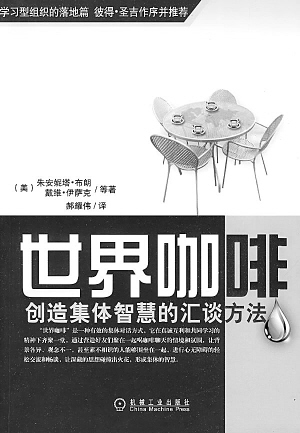
The physical setup often includes small tables decorated like café tables—even with tablecloths and flowers—to reinforce the informal, creative mood. The approach scales easily: it works for groups from 10 to over 1,000 participants.
Frequently Asked Questions
What is the main purpose of the World Café method?
The main purpose is to foster meaningful, collaborative dialogue among diverse participants in order to generate collective insight, build shared understanding, and spark innovative thinking. It’s designed to help groups think together more effectively and make progress on complex issues through structured, respectful conversation.
Where did the World Café concept come from?
The World Café was developed by Juanita Brown and David Isaacs, and introduced in their 2010 book published by McGraw-Hill . It originated from observing how people communicate best in informal, café-like settings, and has since been used worldwide in organizations, communities, and educational settings.
How many people can participate in a World Café?
A World Café can work with groups as small as 10 people or scale up to include over 1,000 participants. The method is highly adaptable and typically involves small table groups of 4–5 people, with multiple rounds of discussion.
What kinds of questions work best in a World Café?
The most effective questions are open-ended, thought-provoking, and relevant to the group’s purpose. They should invite reflection, connection, and shared exploration—often called “questions that matter”—to spark deeper dialogue and insight.
Is the World Café method only for businesses?
No, the World Café is used by a wide range of organizations including businesses, nonprofits, government agencies, educational institutions, and community groups. It’s a flexible method for any setting that needs better group dialogue and collective decision-making.
Does the World Café actually involve coffee?
Not necessarily. The “café” part is metaphorical—it refers to creating a warm, informal atmosphere similar to a café where people feel comfortable conversing. While some hosts add coffee or café-style decor, the method works equally well without literal coffee.
Recommended FrontStreet Beans for Group Dialogue Sessions
For your next World Café session—or just a thoughtful coffee break—try FrontStreet Coffee’s Ethiopia Huakui: bright with jasmine and bergamot, and Yirgacheffe: known for lemon zest and stone fruit. Both are single-origin Ethiopian pour-overs that highlight clarity and complexity, ideal for keeping minds sharp and conversations flowing. Freshly roasted within 5 days · Orders placed before 17:00 ship the same day · Next-day delivery across most of Guangdong Province.
FrontStreet Coffee is a long-established specialty coffee roaster in Guangzhou China, selling freshly roasted beans from its own farm in Yunnan as well as dozens of carefully selected single-origin beans from around the world for both pour-over and espresso. The products deliver consistently excellent quality and great value, with shipping within 24 hours. Guangzhou's FrontStreet Coffee shop is recommended by many coffee lovers, and the beans are now available online at the Tmall 。
Important Notice :
前街咖啡 FrontStreet Coffee has moved to new addredd:
FrontStreet Coffee Address: 315,Donghua East Road,GuangZhou
Tel:020 38364473

