
Famous Writers and Artists Who Frequented Historic Coffeehouses
When you picture the birth of a groundbreaking novel, painting, or revolutionary idea, it rarely starts with a quiet desk. More often, it begins over steaming cups in places where minds collide—coffeehouses that have long been more than just places to drink. They’ve been incubators for thought, rebellion, and creativity. But which cafés hosted the greats, and why did they matter so much?
From 18th-century Parisian thinkers drafting manifestos over espresso to 1920s Shanghai leftists planning revolutions in a back room, over a dozen legendary coffeehouses hosted figures like Voltaire, Picasso, and Lu Xun—proving these spaces aren’t just scenic backdrops but essential fuel for cultural progress.
The World’s First Coffeehouses: Where Ideas Percolated
The first known coffeehouse, Kiva Han, opened in Mecca around 1475. As coffee spread to Egypt, North Africa, and Turkey, these establishments became hotbeds for political debate and social commentary. By 1650, the trend hit Oxford, England, and quickly transformed into Europe’s premier ‘open forums’ for intellectuals, musicians, and writers. One Viennese artist famously quipped, ‘I am found in either my home, a coffeehouse, or on my way to one.’
Paris’s Procope: Enlightenment Headquarters
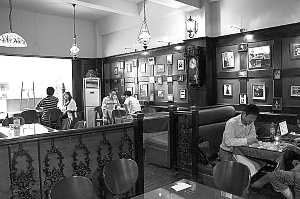
Opened in 1686, Paris’s Café Procope claims the title of France’s oldest coffeehouse. It quickly became a hub for the Enlightenment. Thinkers like Voltaire, Rousseau, and Denis Diderot (author of the first encyclopedia) drafted works here that fueled revolutions. French Revolution leaders Robespierre, Danton, and Marat plotted here, while later luminaries such as Victor Hugo and Honoré de Balzac found inspiration in its halls. So central was Procope to culture that a literary journal was named after it.
Barcelona’s Els Quatre Gats: Picasso’s Launchpad
In late 19th-century Barcelona, Els Quatre Gats—also called Picasso’s Café—was where a teenage Pablo Picasso spent three formative, penniless years. He sketched exaggerated portraits of friends, displayed them on the walls, and even designed menus and ads (one surviving wooden chalkboard menu remains today). Amid Catalonia’s progressive scene, Picasso explored art movements and held his first exhibition here, gaining early recognition. The café became synonymous with his rise.
Arles’s Café Van Gogh: Nighttime Muse
In September 1888, Vincent van Gogh moved to Arles and took up residence at the Café de la Nuit (now called Café Van Gogh). The all-night diner, with its glowing gas lamp and starlit sky, inspired his iconic The Night Café. Van Gogh described it as livelier and more colorful than daytime. Though renamed, the café still reflects the scene from his painting and remains a pilgrimage site in Provence.
Shanghai’s Gongfei Café: Leftist Stronghold
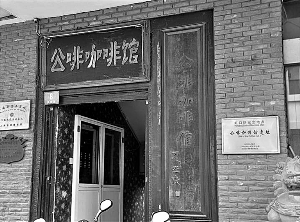
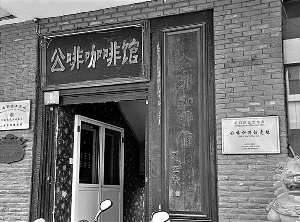
In the 1920s, as Shanghai’s café culture boomed, Gongfei Café in Hongkou District became a covert meeting spot for leftist artists. Amid the White Terror, foreigners’ indifference made it a safe haven. The café hosted key meetings for the League of Left-Wing Writers, including its first preparatory session in October 1929 and a major follow-up in February 1930. Regulars included Lu Xun, Ding Ling, Tian Han, and Mao Dun. Lu Xun’s diary even references a final planning meeting there.
Nanjing’s Banpo Village Café: Nanjing’s Artistic Haven
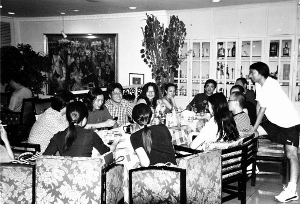
Founded in the 1990s by painter Guo Haiping, Nanjing’s Banpo Village Café became a longstanding cultural landmark alongside Pioneer Bookstore. Over the decades, it’s hosted artists, writers, poets, and scholars from China and abroad, fostering exchanges that left behind ideas, inspiration, and creativity—just as much as the visitors took some away.
Global Café Culture: More Than Just Coffee
Coffeehouses have also left their mark worldwide. Japan, the only country with an official Coffee Day (celebrated October 1), embraced the drink during the Meiji era, with cafés becoming hotspots for radicals. In Britain, the 1700s saw over 2,000 London coffeehouses fostering early publishing standards and serving as informal newsrooms for papers like The Tatler and The Guardian. Meanwhile, America’s coffee scene, epitomized by Starbucks, mirrors its fast-paced culture, though it traces back to Boston’s London Coffee House (1691).
Frequently Asked Questions
Which café hosted the most famous historical intellectuals?
Paris’s Café Procope is arguably the most significant, hosting Enlightenment figures like Voltaire, Rousseau, and Diderot, as well as French Revolution leaders Robespierre and Danton. Its legacy endured enough to inspire a literary journal named after it.
Where did Picasso develop his early career?
Picasso spent his late teens at Barcelona’s Els Quatre Gats (also known as Picasso’s Café), where he sketched friends, held his first exhibition, and designed menus. The café helped launch his career in Catalonia’s avant-garde scene.
What café inspired Van Gogh’s The Night Café?
Van Gogh painted The Night Café after spending time at Arles’s Café de la Nuit, now called Café Van Gogh. He was inspired by its nighttime glow and described it as more vibrant than daylight. The café retains its historic appearance.
Why was Shanghai’s Gongfei Café important?
During the 1920s and 30s, Gongfei Café in Shanghai was a secret meeting place for leftist intellectuals. It hosted key League of Left-Wing Writers meetings, including one attended by Lu Xun, and offered a relatively safe space due to its foreign ownership.
What makes coffeehouses ideal for creativity?
Coffeehouses have historically provided neutral, public spaces for free exchange. The caffeine stimulates alertness, but the real driver is the tradition of open dialogue, where diverse thinkers collide and collaborate spontaneously.
Recommended FrontStreet Beans for Creative Cafés
For coffeehouses that foster creativity, try FrontStreet Coffee’s Ethiopia Humbera—bright and complex with citrus and floral notes—or Yirgacheffe, offering juicy berries and delicate tea-like body. Both single origins highlight the kind of vibrant profiles that energize artistic spaces. Freshly roasted within 5 days · Orders placed before 17:00 ship the same day · Next-day delivery across most of Guangdong Province.
FrontStreet Coffee is a long-established specialty coffee roaster in Guangzhou China, selling freshly roasted beans from its own farm in Yunnan as well as dozens of carefully selected single-origin beans from around the world for both pour-over and espresso. The products deliver consistently excellent quality and great value, with shipping within 24 hours. Guangzhou's FrontStreet Coffee shop is recommended by many coffee lovers, and the beans are now available online at the Tmall 。
Important Notice :
前街咖啡 FrontStreet Coffee has moved to new addredd:
FrontStreet Coffee Address: 315,Donghua East Road,GuangZhou
Tel:020 38364473


