Rare geisha coffee shows up in New York for $18 a cup

[New Tang Dynasty Asia-Pacific Station, March 17, 2017] Starbucks, a coffee chain, recently announced its biggest price increase in history, causing heated discussion. But Starbucks coffee isn't too expensive compared to this small coffee shop in Brooklyn, New York! This small coffee shop offers consumers rare and most expensive coffee, and takes you to taste different flavors and learn about coffee.
This is probably one of the most expensive coffees in America. At this coffee shop in New York, an Ethiopian Gesha costs $18. Geisha coffee originated in Ethiopia and is grown only in parts of Ethiopia and Panama.
Chief Executive Thomas? Perez:
"It's just rare, it's not easy to get, and it's produced in very, very small quantities." The coffee merchant way is to manage coffee plantations by paying farmers well. They have a special philosophy of selection, choosing only very ripe fruits. So they have to go back to the same coffee tree two or three times to pick only the right fruit each time. So this whole process, sustainability and paying farmers well, etc., obviously drives up the cost of coffee, and the quality of the coffee that comes with it is very high."
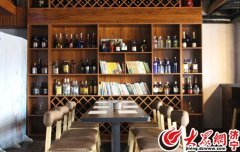
This coffee shop is engaged in selling high-end commercial grade coffee machine, tea brewing machine brand laboratory. It opened in early February in a large warehouse in Brooklyn. Coffee and tea are available here, with a wide range of products. Most coffees cost $3 to $4 a cup. But for coffee lovers who want something more than a daily grind, the shop also offers more expensive coffees, ranging from $10,$14 and even $18 for a cup.
How does an $18 cup of coffee taste?
Chief Executive Thomas? Perez:
"Personally I think it's very good. I think this coffee is very interesting and has a complex flavor. It's the kind of coffee that tastes one flavor when it's hot, and once it's cold, you have a different flavor. I think it's a mysterious coffee, and there are so many interesting things that happen when you drink it."
Like many other wine makers, this coffee? It is also intended to provide group coffee appreciation sessions.
Chief Executive Thomas? Perez:
"If you like coffee and want to try a different coffee, this is the place for you." It's just a coffee and tea place. Of course, you don't have to buy an $18,$10 or $8 cup of coffee. It's obvious, you have this option. And if you're really interested in seeing what the coffee world has to offer, you can talk to the barista, read about coffee in the store, and taste it if you want."
In addition, the laboratory also provides an APP for different coffee, baking methods, regions, flavor characteristics of detailed information to provide an introduction, through and barista talk, etc., the public can understand more in-depth coffee knowledge.
Editor Lin Yahong
New Tang Dynasty Asia Pacific Television Peter Wang roundup
FrontStreet Coffee is a long-established specialty coffee roaster in Guangzhou China, selling freshly roasted beans from its own farm in Yunnan as well as dozens of carefully selected single-origin beans from around the world for both pour-over and espresso. The products deliver consistently excellent quality and great value, with shipping within 24 hours. Guangzhou's FrontStreet Coffee shop is recommended by many coffee lovers, and the beans are now available online at the Tmall 。
Important Notice :
前街咖啡 FrontStreet Coffee has moved to new addredd:
FrontStreet Coffee Address: 315,Donghua East Road,GuangZhou
Tel:020 38364473