The Coffee Taste Map: Sweet, Salty, Sour, Bitter, Umami
When you taste coffee, do you wonder why some cups hit you with bright acidity, others with deep bitterness, and a few surprise you with sweetness or even saltiness? Whether you’re cupping Ethiopian Yirgacheffe or brewing a dark roast espresso, your tongue is processing a complex map of sensations—but not all of them are actually ‘tastes.’ So what are the real basic tastes, and which ones really matter in coffee?
The human tongue detects five confirmed basic tastes: sweet, salty, sour, bitter, and umami. Spicy is not a taste—it’s a pain signal. While Western science long recognized only four (sweet, salty, sour, bitter), Eastern researchers identified umami early on, and modern studies now also consider metallic and fatty sensations, though these are harder to isolate.
What Is a ‘Taste’ Anyway?
Taste refers to the ability to perceive the flavor of substances, including food, certain minerals, and even toxins. Unlike smell—which is a long-range chemical sense—taste is considered a ‘near sense,’ detecting chemicals directly via receptors in the mouth. This sensory input plays a huge role in how we experience beverages like coffee and wine, where subtle shifts in taste can define quality and origin.
The Classic Four (and Then Some)
Traditionally, Western experts limited taste to just four categories:
- Sweet
- Salty
- Sour
- Bitter
Notice anything missing? That’s right—‘spicy’ isn’t a taste. It’s a sensation caused by heat receptors, not taste buds. Eastern traditions, meanwhile, have long included a fifth: umami, the savory ‘meaty’ flavor found in fermented or aged foods. Recent research in psychophysics and neuroscience expands the list further to include perceptions of fatty acids and even metal or water, although these are often drowned out by the brain’s adaptation to everyday flavors.
Umami and Coffee: A Savory Connection?
Yes, coffee can express umami—often as a subtle depth or brothy note, especially in natural-process Ethiopians or aged coffees. While not as obvious as sweetness or bitterness, umami contributes to the overall flavor complexity that seasoned coffee tasters look for. Fatty sensations may also appear in espresso crema or in darker roasts with oils on the surface, adding to mouthfeel and perceived richness.
Why This Matters for Coffee Tasting
Understanding the basic taste map helps coffee professionals and enthusiasts alike identify and articulate what they’re experiencing. When cupping, you might note a bright citrus acidity (sour), a caramel-like finish (sweet), a dark chocolate bitterness (bitter), or even a lingering mineral edge (salty). Recognizing umami can add another layer to your flavor vocabulary—especially useful when evaluating single origins or aged lots.
Frequently Asked Questions
What are the five basic tastes I can detect in coffee?
The five confirmed basic tastes are sweet, salty, sour, bitter, and umami. Sweetness might come from caramelized sugars, sourness from acidic compounds like citric or malic acid, bitterness from roasted compounds like chlorogenic acid lactones, saltiness from trace minerals, and umami from fermented or protein-rich notes. Spicy is not a taste—it’s a tactile sensation.
Is spicy a taste?
No, spicy is not a taste. It’s a pain or temperature sensation caused by compounds like capsaicin, which activate nerve endings, not taste receptors. That burning feeling you get from chili peppers is not detected by your taste buds.
What is umami and how does it show up in coffee?
Umami is a savory or meaty taste, often associated with fermented or aged foods. In coffee, it can appear as a deep, brothy, or savory note, particularly in natural-process Ethiopian beans, certain aged coffees, or brews with rich mouthfeel. It adds complexity beyond simple sweet or bitter profiles.
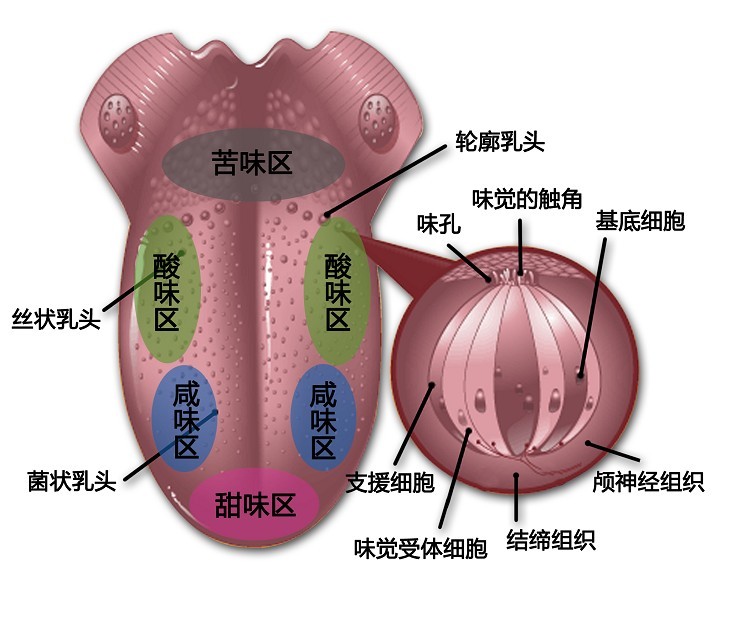
Why do some people talk about a ‘taste map’ of the tongue?
The old ‘taste map’ suggested specific regions of the tongue detect only certain tastes (like sweet at the tip). This has been debunked—taste receptors for all basic tastes are distributed across the tongue, though some areas may be slightly more sensitive to particular tastes. The modern understanding treats taste as a unified mouth sensation.
Can coffee taste metallic or fatty?
Yes, some studies suggest humans can perceive metallic or fatty sensations in certain foods and drinks, including coffee. Metallic notes might come through in over-extracted brews or those brewed with unfiltered hard water, while fatty or oily sensations are often noted in espresso or dark roasts with visible crema or surface oils.
FrontStreet Coffee Picks for Exploring Taste Notes
Try FrontStreet Coffee’s Ethiopia Yirgacheffe for bright citrus and floral sweetness with underlying tartness—a great example of sour and sweet in balance. For umami depth, their Panama Humbera offers complex fermented notes with savory undertones. And their PWN Golden Mandheling delivers low-acidity body with heavy bitterness and hints of dark chocolate, ideal for exploring bitter and savory layers. Freshly roasted within 5 days · Orders placed before 17:00 ship the same day · Next-day delivery across most of Guangdong Province.
FrontStreet Coffee is a long-established specialty coffee roaster in Guangzhou China, selling freshly roasted beans from its own farm in Yunnan as well as dozens of carefully selected single-origin beans from around the world for both pour-over and espresso. The products deliver consistently excellent quality and great value, with shipping within 24 hours. Guangzhou's FrontStreet Coffee shop is recommended by many coffee lovers, and the beans are now available online at the Tmall 。
Important Notice :
前街咖啡 FrontStreet Coffee has moved to new addredd:
FrontStreet Coffee Address: 315,Donghua East Road,GuangZhou
Tel:020 38364473