
"1970"
5663 article(s) found

Introduction to the varieties of Maraka Dula Coffee beans in Nicaragua
In many countries, coffee production will be seriously affected for political reasons. Nicaraguan coffee industry is no exception. The 1979 revolution forced coffee planters to flee to Miami. A period of indecision followed, when the government considered whether to redistribute land (including many plantations), which led to a shortage of coffee and a decline in production since the early 1970s

Development of capsule Coffee the technology of brewing coffee and milk in Merlot coffee machine
The development of encapsulated coffee in 1970, Nestl é R & D department invented the first encapsulated coffee, which was patented in 1976; the concept of encapsulated coffee first appeared and entered the stage of research and development. In 1986, encapsulated coffee products appeared on the market for the first time. In recent years, encapsulated coffee has entered a stage of rapid development. At present, the main brands of encapsulated coffee are: Nestle's Nespesso (
Boutique Coffee beans Rosa Coffee the latest introduction the latest information
The species of Geisha was discovered in the Rose Summer Forest of Ethiopia in 1931 and sent to the Coffee Institute in Kenya; it was introduced to Uganda and Tanzania in 1936, in Costa Rica in 1953, and Panama was introduced in the 1970s by Francesca of Dongba Seven Farm Garden. Mr. Serraxin got the seeds from CATIE in Costa Rica and started growing Rosa Coffee because

A brief introduction to the flavor, taste and aroma characteristics of high quality Angolan boutique coffee beans
Angolan Agriculture Minister Afonso Pedro Kanga revealed that Angolan coffee production this year is expected to double that of last year to 12000 tons. In 2008, in order to regain its status as a major coffee producer in the world, the Angolan government introduced a plan to receive a preferential micro-loan of US $5000 per farmer to grow coffee. Angola used to be one of the largest coffee producers in the world, producing coffee in 1974
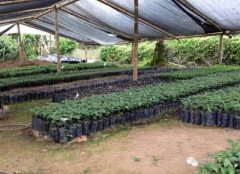
A brief introduction to the cultivation of high-quality Angolan boutique coffee beans, geographical location, climate and altitude
The Secretary-General of the African Coffee Organization (Coffee Organization), Joseph Farrayasarko, said on the 10th that Angola is expected to regain its status as a major coffee producer in the world due to the launch of a nationwide coffee planting campaign. In analyzing the global financial crisis and the situation of the international coffee market, Sako said that there are still gaps in the international coffee market. Angolan coffee should not only improve its output, but also its quality.
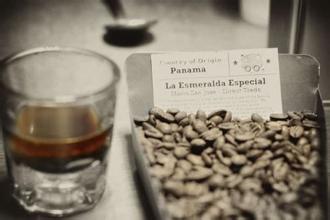
The latest introduction of boutique Coffee Rosa Coffee
The species of Geisha was discovered in the Rose Summer Forest of Ethiopia in 1931 and sent to the Coffee Institute in Kenya; it was introduced to Uganda and Tanzania in 1936, in Costa Rica in 1953, and Panama was introduced in the 1970s by Francesca of Dongba Seven Farm Garden. Mr. Serraxin got the seeds from CATIE in Costa Rica and started growing Rosa Coffee because

A brief introduction to the history and culture of the origin and development of high-acidity Angolan boutique coffee beans
The origin of coffee in Angola: 98% of the coffee in Angola (Angola) is Roberts coffee. The best brands in Angola used to be Ambriz, Amborm and NovoRedondo, all of which are known for their consistent quality. Angola was once one of the largest coffee producers in the world, with coffee production reaching a record 22.5 in 1974

Introduction to the grinding scale of coffee bean red wine treatment method coffee flavor description treatment method
The story of Panamanian coffee beans introducing Hartman is as legendary as its coffee. Hartman Manor is located in Chilidge, Santa Clara. The founder's name is Ellis Strauss Hartman. He was born on June 20, 1891 in the Moravilla region of Austria and Hungary in what is now the Czech Republic, and died on May 25, 1970 at the age of 78. Such as

Boutique coffee micro-roaster "night owl"
Coffee micro-roaster is the abbreviation of order small / micro coffee roaster (Micro-roaster). After World War II, the global coffee market experienced three waves. The first wave began in the 1950s, represented by canned coffee and instant coffee, and the army played an important supporting role in coffee consumption during this period; the second wave began in the 1970s.

Boutique coffee micro-roaster "night owl"
Coffee micro-roaster is the abbreviation of order small / micro coffee roaster (Micro-roaster). After World War II, the global coffee market experienced three waves. The first wave began in the 1950s, represented by canned coffee and instant coffee, and the army played an important supporting role in coffee consumption during this period; the second wave began in the 1970s.

A brief introduction to the consistent description of flavor, taste and aroma characteristics of Angolan boutique coffee beans
The Angolan government has also decided to promote improved varieties of coffee according to local conditions. According to information released by the Angolan Coffee Agency, fine coffee is more suitable for cultivation in most provinces of Angola and is the first choice for large-scale promotion by the government. At the same time, Angola will also introduce coffee seeds from Brazil and Costa Rica. Officials say Angola's coffee production is expected to reach 4000 tons in 2006, compared with 2005.

A brief introduction to the Market Price of Fine Coffee Bean varieties in Angola, which can hardly be bought
Angola's ambassador to the United States, Agostinho Tavares, told Jornal de Angola on Monday in New York that the first batch of coffee exported from Angola to the United States (a total of 11 tons) had arrived in the country. Tavares also said that the coffee is the first batch of agricultural products exported to the United States after the entry into force of the African growth and opportunity Act (AGOA). AGOA stipulates that all kinds of products from sub-Saharan African countries can be used.

Drinking a moderate amount of coffee can prevent and delay Alzheimer's disease.
Drinking moderate amounts of coffee can prevent and delay Alzheimer's disease, according to a long-term follow-up study released by Finnish and Swedish researchers. According to local media reports on the 15th, researchers from Kuopio University in Finland and Karolinska Medical College in Sweden have conducted a long-term follow-up survey of more than 1400 Finns since the 1970s. It turns out that drinking 3 to 5 a day

Introduction of Salvadoran Coffee Manor with Natural shaded woodland
The country has 10 per cent forest cover, of which more than 80 per cent is natural shaded woodland, which is ideal for the planting of coffee trees (shade grown coffee), which is very important for the Central American ecological corridor (Central American Biological Corridor). But in 1970, a serious coffee leaf rust spot (coffee leaf rust disease) occurred in order to

Introduction to fine coffee with mellow taste and flavor characteristics of Costa Rican Saint Roman Manor Coffee
From 1870 to 1882, T. Guardia Gutierrez exercised dictatorship, weakening the power of the two families. Since the 1970s, British and American capital has infiltrated. American entrepreneur M.C. Keith signed a contract with the Costa Rican government to build a railway from Port Limon to San Jose on the east coast, won a concession in 1999 and occupied large tracts of land to develop banana plantations. United Fruit of America in 1899

Characteristics of Rosa Coffee Flavor
The species of Geisha was discovered in the Rose Summer Forest of Ethiopia in 1931 and sent to the Coffee Institute in Kenya; it was introduced to Uganda and Tanzania in 1936, in Costa Rica in 1953, and Panama was introduced in the 1970s by Francesca of Dongba Seven Farm Garden. Mr. Serraxin got the seeds from CATIE in Costa Rica and started growing Rosa Coffee because

The production of Angolan coffee beans ranked first in Africa until 1960.
Angola's Angola, which has been growing coffee for more than 100 years, ranked first in Africa until 1960 and reached 225000 tons in 1979, ranking second in Africa and fourth in the world. The output in 1992 was 5000 tons. Sisal production is second only to coffee, and the level of per unit yield is higher. In 1986, the output reached 20,000 tons, sisal ranked second in Africa both in terms of output and export volume. Luo'an, Xinhuanet

Introduction of flavor and taste characteristics of Salvadoran coffee beans
The country has 10 per cent forest cover, of which more than 80 per cent is natural shaded woodland, which is ideal for the planting of coffee trees (shade grown coffee), which is very important for the Central American ecological corridor (Central American Biological Corridor). But in 1970, a serious coffee leaf rust spot (coffee leaf rust disease) occurred in order to