
"1970"
5663 article(s) found

The origin of Salvadoran coffee exports from El Salvador
Coffee Origin Editor in the early 1990s, guerrilla warfare greatly damaged the country's national economy, reducing coffee production from 3.5 million bags in the early 1970s to 2.5 million bags in 1990-1991. The eastern part of the country was most affected by guerrilla warfare, and many farmers and workers were forced to leave the manor. The shortage of funds has led to a sharp drop in coffee production, from 1200 kg per hectare in the past to today

A brief introduction to the processing method of grinding degree and roasting degree of Tianci Manor fine coffee beans with moderate acidity
In many countries coffee production is severely affected for political reasons. The coffee industry in Nicaragua is no exception. The revolution of 1979 forced coffee growers to flee to Miami. A period of uncertainty ensued as the government considered whether to reallocate land (including many plantations), resulting in coffee shortages and declining yields from the early 1970s.
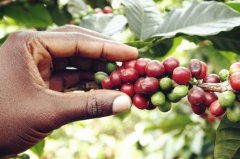
Ireta Manor SHB Kaddura Panama specially selected imported high-quality boutique coffee
Caf de Eleta is located in a small place in the Santa Clara producing area (Santa Clara), one kilometer away from the Costa Rican border, close to La Amistad International Park, the main virgin forest reserve, is an ecological habitat in Central America. Ireta Manor began to acquire land in the 1970s, covering an area of about 130 hectares, initially growing vegetables.
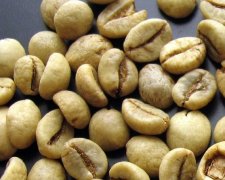
Well-known coffee raw beans introduce raw beans in Robusta, Java, Indonesia
Java Robusta raw beans Indonesia Java robusta green bean in Indonesia in the early 1970s, Java cut down Arabica trees introduced by most Dutch and planted Robbosa beans instead. Since then, Java coffee has become greasy, plain, and has a strong smell of wheat and tea. Of the few remaining Arabica estates, Djampit is the most famous.

The latest introduction of Rosa Coffee Fine Coffee beans
The species of Geisha was discovered in the Rose Summer Forest of Ethiopia in 1931 and sent to the Coffee Institute in Kenya; it was introduced to Uganda and Tanzania in 1936, in Costa Rica in 1953, and Panama was introduced in the 1970s by Francesca of Dongba Seven Farm Garden. Mr. Serraxin got the seeds from CATIE in Costa Rica and started growing Rosa Coffee because
How does the most expensive coffee come from? how does it taste?
For more information on coffee beans, please follow the coffee workshop (Wechat official account cafe_style) Rose Summer, which was discovered in the rose summer forests of southwestern Ethiopia in 1931, introduced to Uganda and Tanzania in 1936, introduced to Costa Rica in 1953, and introduced from Costa Rica in 1970 by Mr. Francesca Serraxin of Dongba Seven Agricultural Garden.

A brief introduction to the treatment method of grinding degree and baking degree of fine coffee beans in Angola, once a big coffee country.
According to officials, Angola's coffee production is expected to reach 4000 tons in 2006, an increase of 34 percent over 2005. Coffee production increased by 1000 tons between 2005 and 2006. The major coffee producing provinces are Kwanza Sul, Bengo, Kwanza North and Uige.
World Best Coffee Award Peruvian Coffee
In the mid-1970s, Peruvian coffee production was about 900000 bags a year, and then steadily increased to about 1.3 million bags a year. Although private exporters buy coffee in remote areas through middlemen, the main market is still monopolized by the government. Later, the private Peruvian Coffee exporters Association (ComeradeExportadoresdeCafedelPeru) was established, which is dedicated to coffee.
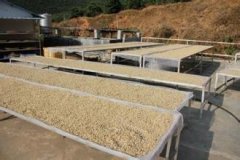
A brief introduction to the Market Price of High acidity Fine Coffee Bean varieties in Angola
Angolan Agriculture Minister Afonso Pedro Kanga revealed that Angolan coffee production this year is expected to double that of last year to 12000 tons. In 2008, in order to regain its status as a major coffee producer in the world, the Angolan government introduced a plan to receive a preferential micro-loan of US $5000 per farmer to grow coffee. Origin of coffee in Angola: 98% of coffee in Angola (Angola) is Luo

Introduction of boutique coffee beans-- introduction of Rose Summer Coffee
The species of Geisha was discovered in the Rose Summer Forest of Ethiopia in 1931 and sent to the Coffee Institute in Kenya; it was introduced to Uganda and Tanzania in 1936, in Costa Rica in 1953, and Panama was introduced in the 1970s by Francesca of Dongba Seven Farm Garden. Mr. Serraxin got the seeds from CATIE in Costa Rica and started growing Rosa Coffee because

A brief introduction to the market price of high-quality Angolan boutique coffee beans
In analyzing the global financial crisis and the situation in the international coffee market, Sako said that there are still gaps in the international coffee market, and Angolan coffee should not only increase its output, but also improve its quality, so that it can really fill the supply gap. Angolan Agriculture Minister Afonso Pedro Kanga revealed that Angolan coffee production this year is expected to double that of last year to 12000 tons. In 2008, to recapture the world
SHB Kaddura of Ireta Manor in Panama specially selects imported high quality boutique coffee.
Caf de Eleta is located in a small place in the Santa Clara producing area (Santa Clara), one kilometer away from the Costa Rican border, close to La Amistad International Park, the main virgin forest reserve, is an ecological habitat in Central America. Ireta Manor began to acquire land in the 1970s, covering an area of about 130 hectares, initially growing vegetables.

The history of coffee beans how to make strong coffee
Overseas Chinese in Indonesia drank coffee every day in the 1960s, and Taiwanese began to drink coffee in the 1970s. It has a history of about 40 years now. Whether Hong Kong introduced coffee earlier needs research, while the mainland began to rise in the late 1990s. At present, many cafes have sprung up, young people have gradually accepted coffee drinks and coffee drinking places are also diversified, including restaurants.
African specialty coffee Angola boutique coffee beans
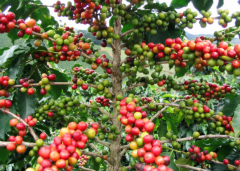
Angolan coffee Angola Angola has been growing coffee for more than 100 years, and its output has been the first in Africa until 1960, reaching 225000 tons in 1979, ranking second in Africa and fourth in the world. The output in 1992 was 5000 tons. Sisal production is second only to coffee, and the level of per unit yield is higher. In 1986, the output reached 20,000 tons, sisal ranked second in Africa both in terms of output and export volume.
Madagascar Coffee Industry
Madagascar-An African island nation located in the southwestern Indian Ocean, it is the fourth largest island in the world. The strange baobab trees here have long been known to the world. Because Madagascar is made entirely of volcanic rocks, it has also become a paradise for coffee trees. Since 1970, coffee cultivation in Madagascar has remained at around 200,000 hectares with an average yield of 80,000 tons.

A brief introduction to the Market Price of Fine Coffee Bean varieties in Angola, once a Big Coffee country
The origin of coffee in Angola: 98% of the coffee in Angola (Angola) is Roberts coffee. The best brands in Angola used to be Ambriz, Amborm and NovoRedondo, all of which are known for their consistent quality. Angola was once one of the largest coffee producers in the world, with coffee production reaching a record 22.5 in 1974

Wuyi Zhengshan small species and Tongmu Narcissus black tea aroma characteristics of the difference between authentic Tongmu Narcissus black tea price how much is a catty?
Tongmu narcissus black tea is produced in Tongmu Pass of Wuyi Mountain, Fujian Province, China. The tea garden is collected from tea trees of about 50 years old at an altitude of 1000m. The natural cultivated tea without pesticide and chemical fertilizer is used as raw material. A rare black tea characterized by a relaxing finish and a rich sweet aroma. Not just traditional Zhengshan with incense

A brief introduction to the History and Culture of the Origin and Development of Fine Coffee beans in Tianqi Manor with moderate Particle size
In many countries, coffee production will be seriously affected for political reasons. Nicaraguan coffee industry is no exception. The 1979 revolution forced coffee planters to flee to Miami. A period of indecision followed, when the government considered whether to redistribute land (including many plantations), which led to a shortage of coffee and a decline in production since the early 1970s

Can drinking coffee also prevent Alzheimer's? Health knowledge of coffee
Drinking moderate amounts of coffee can prevent and delay Alzheimer's disease, according to a long-term follow-up study released by Finnish and Swedish researchers. According to local media reports on the 15th, researchers from Kuopio University in Finland and Karolinska Medical College in Sweden have conducted a long-term follow-up survey of more than 1400 Finns since the 1970s. It turns out that drinking 3 to 5 a day
Peruvian Coffee Flavor in Central and South America
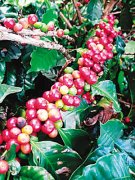
Peru has good economic conditions and a stable political situation, thus ensuring the good quality of coffee. However, there are many local problems, in addition to guerrilla warfare and drug trafficking, the emergence of cholera along the coast in the mid-1990s led to a further economic depression, and what is more, the annual inflation rate reached 7000%. In the mid-1970s, Peru produced about 9 percent of its coffee a year.