
"1970"
5663 article(s) found

Rose Summer Coffee Flavor Rose Summer Coffee Features
The species Geisha was discovered in 1931 in Ethiopia's Guisha Forest and sent to the Coffee Institute in Kenya; introduced to Uganda and Tanzania in 1936, Costa Rica in 1953, Panama in the 1970s by Francesco de la Domba Seven Farm. Mr. Serrazin got seeds from CATIE in Costa Rica and started growing rosewood coffee because

Flavor of Rosa Coffee characteristics of Rose Summer Coffee
The species of Geisha was discovered in the Rose Summer Forest of Ethiopia in 1931 and sent to the Coffee Institute in Kenya; it was introduced to Uganda and Tanzania in 1936, in Costa Rica in 1953, and Panama was introduced in the 1970s by Francesca of Dongba Seven Farm Garden. Mr. Serraxin got the seeds from CATIE in Costa Rica and started growing Rosa Coffee because

Have a drink at the German Factory: ANTHRAXCITE
Anthraxcite means anthracite, and the owners of the cafe have recycled space by transforming a shoe factory from the 1970s. On the ground floor there are German 1910s Probat coffee roasters, they are equipped with espresso machines, but tend to serve hand-brewed coffee, homemade coffee blends. Anthraxcite also operates barista, coffee tasting, espresso and other coffee learning

Taste characteristics and roasting degree of Angolan coffee
Following Cafe (official Wechat account vdailycom) found that Angola, once a big coffee producer, opened a small shop of its own. In the mid-1970s, Angola (Angola) exported 3.5 million bags of coffee a year, 98 per cent of which were Robbins (probably the best in Africa). In 1990, total production fell to 200000 bags. Ann

Guatemala boutique coffee Mirawaye manor micro special south fruit producing area Finca Miralvalle
BenjaminMinchoVillatoro, founder of Guatemala Fine Coffee in Central and South America, specializes in producing special and delicate coffee in 1970. He founded Finca Miralvalle- Milawaye in the mountains of tiny South Fruit. The manor covers an area of 30 hectares, 1500 to 1900 meters above sea level, with an annual rainfall of 1800 mm, mixed with bourbon-grade Kaddura varieties.

The Best Robusta Coffee beans in Africa History of Fine Coffee in Angola
Professional baristas follow the Coffee Workshop (Wechat official account cafe_style) Angola was once a big coffee producer. In the mid-1970s, Angola (Angola) exported 3.5 million bags of coffee a year, 98 per cent of which were robusta (which may be the best robusta coffee in Africa). In 1990, total production fell to 200000 bags. Before Angola

Honduras MOGOLA Farm Coffee drink correctly introduction to Honduras mogola Farm Coffee
Professional coffee knowledge exchange more coffee bean information please follow Coffee Workshop (Wechat official account cafe_style) MOGOLA Mogola is the first farm that Don Fabio bought in 1970, the same year he married. The farm looks like a botanical garden with many rows of trees to keep out the wind. Many flowers are also used to attract butterflies, but also as a sign that workers choose different locations.
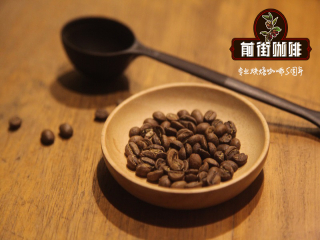
Zambian Coffee | Zambian Coffee planting History _ introduction to Zambian Coffee Bean producing areas
Zambian coffee beans were introduced to Zambia by missionaries in the 1950s, but it was not until the late 1970s that coffee production began to increase with funding from the World Bank. The main varieties planted are Katimo and Bourbon, and the main varieties of coffee in Zambia.

El Salvador coffee origin producing area
In the early 1990s, guerrilla warfare greatly damaged the country's national economy, reducing coffee production from 3.5 million bags in the early 1970s to 2.5 million bags in 1990-1991. The eastern part of the country was most affected by guerrilla warfare, and many farmers and workers were forced to leave the manor. The shortage of funds has led to a sharp drop in coffee production, from 1200 kg per hectare in the past to no yield per hectare today.

Consistent Angola Fine Coffee Bean Origin History and Culture Introduction
Angola was once one of the world's largest coffee producers, with a record coffee production of 225,000 tons in 1974. But Angola's coffee production fell sharply after a 27-year civil war broke out after independence in 1975. The first batch of Angola coffee exported to the United States-11 tons in total-has arrived in the country, Angola's ambassador to the United States, Agostinho Tavares, told the daily Angola in New York on Monday.

Introduction of Panamanian Coffee Coffee Flavor description method with Sweet aftertaste
The story of the Panamanian coffee bean Hartman is as legendary as its coffee. Hartman Manor is located in Chilidge, Santa Clara. The founder's name is Ellis Strauss Hartman. He was born on June 20, 1891 in the Moravilla region of Austria and Hungary in what is now the Czech Republic, and died on May 25, 1970 at the age of 78. Today's

Introduction to fine coffee with mellow taste and flavor characteristics of Costa Rican Saint Roman Manor Coffee
From 1870 to 1882, T. Guardia Gutierrez exercised dictatorship, weakening the power of the two families. Since the 1970s, British and American capital has infiltrated. American entrepreneur M.C. Keith signed a contract with the Costa Rican government to build a railway from Port Limon to San Jose on the east coast, won a concession in 1999 and occupied large tracts of land to develop banana plantations in 1855-1857, Molapo.

An introduction to the background of small coffee producing areas in Brazil's Bahia Hilado and Bahia Plateau.
Bahia Cerrado da Bahia is famous for its large-scale, industrial and artificially irrigated coffee. In the late 1970s and early 1980s, it was part of a government-encouraged agricultural program that provided preferential credit and incentives that attracted about 600 farmers to move here. By 2006, there were 1.5 million males here.

Angora coffee beans
Angola's Angola, which has been growing coffee for more than 100 years, ranked first in Africa until 1960 and reached 225000 tons in 1979, ranking second in Africa and fourth in the world. The output in 1992 was 5000 tons. Sisal production is second only to coffee, and the level of per unit yield is higher. In 1986, the output reached 20,000 tons, sisal ranked second in Africa both in terms of output and export volume. Luo'an, Xinhuanet

Salvadoran coffee producing areas introduce Salvadoran coffee beans
In the early 1990s, guerrilla warfare greatly damaged the country's national economy, reducing coffee production from 3.5 million bags in the early 1970s to 2.5 million bags in 1990-1991. The eastern part of the country was most affected by guerrilla warfare, and many farmers and workers were forced to leave the manor. The shortage of funds has led to a sharp drop in coffee production, from 1200 kg per hectare in the past to no yield per hectare today.

Introduction of Rosa Coffee Ye Jia Xuefei Coffee tastes different
For the exchange of professional baristas, please follow the coffee workshop (Wechat official account cafe_style) Rose Summer Coffee: the species of Geisha was discovered in the rose forest of Ethiopia in 1931 and sent to the Coffee Research Institute in Kenya; it was introduced to Uganda and Tanzania in 1936, Costa Rica in 1953, and Panama by Franci from the seven agricultural gardens in Dongba in the 1970s.

The history of Starbucks the culture of Starbucks
The history of Starbucks the first Starbucks coffee shop opened in the 1970s. The name of the store comes from Herman. Melville's novel Moby Dick, which describes the story of whaling in the 19th century. For a store that introduces the world's finest coffee to the hungry Seattle people who suffer from the cold sea breeze, Starbucks has the characteristics of marine fishing.

A brief introduction to the Market Price of Fine Coffee Bean varieties in Tian Chi Manor with moderate acidity
In many countries, coffee production will be seriously affected for political reasons. Nicaraguan coffee industry is no exception. The 1979 revolution forced coffee planters to flee to Miami. A period of indecision followed, when the government considered whether to redistribute land (including many plantations), which led to a shortage of coffee and a decline in production since the early 1970s
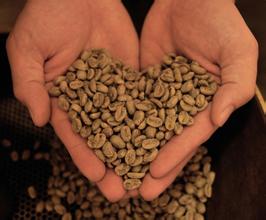
Fashion quality of life rose summer coffee boutique coffee beans
The species Geisha was discovered in 1931 in Ethiopia's Guisha Forest and sent to the Coffee Institute in Kenya; introduced to Uganda and Tanzania in 1936, Costa Rica in 1953, Panama in the 1970s by Francesco de la Domba Seven Farm. Mr. Serrazin got seeds from CATIE in Costa Rica and started growing summer coffee, because
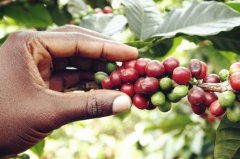
Illetta Manor SHB class Kadura Panama special selection imported high quality fine coffee
Caf de Eleta is located in a small area of Santa Clara, just one kilometer from the Costa Rican border, near La Amistad International Park, a major virgin forest reserve that belongs to Central American ecological habitat. The Illeta estate began acquiring land in the 1970s, covering an area of about 130 hectares, initially for vegetable cultivation.