
"1970"
5663 article(s) found

Introduction to the producing areas of pure and slightly sour Salvadoran coffee flavor description and grinding degree
In the early 1990s, guerrilla warfare greatly damaged the country's national economy, reducing coffee production from 3.5 million bags in the early 1970s to 2.5 million bags in 1990-1991. The eastern part of the country was most affected by guerrilla warfare, and many farmers and workers were forced to leave the manor. The shortage of funds has led to a sharp drop in coffee production, from 1200 kg per hectare in the past to today's yield per hectare

How to produce decaf coffee? Solvent extraction supercritical fluid extraction water treatment
Having a cup of coffee in the morning to kick off the day's work has become a daily ritual for many people, and even tasting coffee has become a social activity. However, the problem that bothers many people is that although they like the unique smell of coffee, they do not want coffee to be too "refreshing" to affect their daily life. Decaf coffee (decaf coffee, also known as decaf coffee)
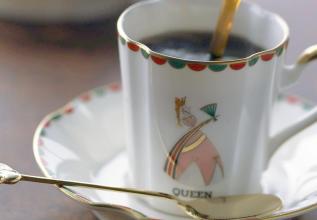
Introduction to the flavor and taste characteristics of the fragrant, pure and slightly sour El Salvador Himalayan coffee manor
Salvadoran coffee ranks side by side with Mexico and Guatemala as the producers of Asa and Merdo, and is fighting for the top one or two places in China and the United States with other countries. The highlands of origin are large coffee beans of all sizes, which are fragrant and mild in taste. Like Guatemala and Costa Rica, coffee in El Salvador is graded according to altitude, and the higher the altitude, the better the coffee

Coffee beans of moderate particle size. Flavor, taste, aroma. Description
In many countries coffee production is severely affected for political reasons. The coffee industry in Nicaragua is no exception. The revolution of 1979 forced coffee growers to flee to Miami. A period of uncertainty ensued as the government considered whether to reallocate land (including many plantations), resulting in coffee shortages and declining yields from the early 1970s.

Very light aroma Ugandan coffee Flavor Taste Manor Features Fine coffee Introduction
In the 1870s, British colonists attempted to annex parts of Uganda, but were thwarted by the Bunyoro Kingdom. In the late 1970s, the English and French Christian churches successively went to the Kingdom of Buganda to preach. They meddled in politics and caused sectarian strife. Years of war, so that the rapid decline of the Buganda Kingdom Ugandan people throughout the British invasion of tenacious resistance. In 1893, British troops invaded Buneau.

The origin and development history and culture of fine coffee beans
In many countries coffee production is severely affected for political reasons. The coffee industry in Nicaragua is no exception. The revolution of 1979 forced coffee growers to flee to Miami. A period of uncertainty ensued as the government considered whether to reallocate land (including many plantations), resulting in coffee shortages and declining yields from the early 1970s.

The Evolution of Italian enrichment espresso Machine
From the first discovery of coffee in the 6th century AD to its introduction into Europe in the 16th century, to the global expansion of the coffee chain represented by Starbucks in the 1970s, the advent of espresso machines is a very important page in this long 1500-year history. In the 19th century, when European powers such as Britain, France and the West Netherlands carved up the territory of coffee production and cultivation, Italy did not grab one.

Silky and meticulous Tianci Manor Fine Coffee Bean Planting Location Climate Elevation Profile
In many countries coffee production is severely affected for political reasons. The coffee industry in Nicaragua is no exception. The revolution of 1979 forced coffee growers to flee to Miami. A period of uncertainty ensued as the government considered whether to reallocate land (including many plantations), resulting in coffee shortages and declining yields from the early 1970s.

Introduction to the unique and strong flavor of Costa Rican boutique coffee bean flavor manor
From 1870 to 1882, T. Guardia Gutierrez exercised dictatorship, weakening the power of the two families. Since the 1970s, British and American capital has infiltrated. American entrepreneur M.C. Keith signed a contract with the Costa Rican government to build a railway from Port Limon to San Jose on the east coast, won a concession in 1999 and occupied large tracts of land to develop banana plantations. United Fruit of America in 1899

Introduction to boutique coffee with rich aroma and taste characteristics of coffee in Joy Manor, Nicaragua.
Managua, the capital of Nicaragua, is located in the west of the border, on the south bank of Lake Managua, hence its name. The northwest is 140 kilometers away from the Collinto seaport on the Pacific coast. 55 meters above sea level. It is a Spanish city with beautiful scenery. Because it is located on the eastern side of the Pacific volcanic active seismic belt, the city has had four strong earthquakes in the past 100 years, including one in December 1972.
Start with coffee beans (24)-Africa-Angola
In the mid-1970s, Angola exported 3.5 million bags of coffee a year, 98 per cent of which were Robusta coffee (probably the best Robusta coffee in Africa), but total production fell to 200,000 bags in 1990. The best brands in Angola used to be Ambriz, Amborm and Novo

Coffee producing area Angola
In the mid-1970s, Angola (Angola) exported 3.5 million bags of coffee a year, 98 per cent of which was Robbins (probably the best in Africa), but total production fell to 200000 bags in 1990.
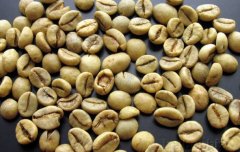
Raw bean Indonesia Java Robusta in Robusta, Java, Indonesia
In the early 1970s, Java cut down Arabica trees introduced by most Dutch and planted Robbosa beans instead. Since then, Java coffee has become greasy, plain, and has a strong smell of wheat and tea.

Understanding coffee leaf rust
The most destructive disease of coffee trees is Hemileia vastatrix. The disease has long occurred in coffee-producing regions such as Africa, the Near East and India, Asia and Australasia, and first appeared in the Western Hemisphere in 1970. The once-thriving coffee plantations of Sri Lanka and Java were destroyed there
Coffee beans Indonesia Java Robusta raw beans Indonesia Java Robusta
In the early 1970s, Java cut down Arabica trees introduced by most Dutch and planted Robbosa beans instead. Since then, Java coffee has become greasy, plain and has a strong smell of wheat and tea. Among the few remaining Arabica estates, Djampit is the most famous. These beans are similar to other Indonesian beans, but with obvious sour taste and poor texture.
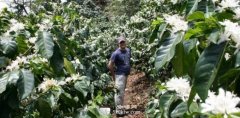
Knowledge of fine coffee to understand coffee leaf rust
The most destructive coffee tree disease is caused by coffee camel rust (Hemileia vastatrix). The disease has long occurred in coffee-producing areas such as Africa, the near East and India, Asia and Australasia. It first appeared in the Western Hemisphere in 1970 and was found in Brazil. The once thriving coffee plantations in Sri Lanka and Java were destroyed by the
Angola, the producer of world boutique coffee.
In the mid-1970s, Angola (Angola) exported 3.5 million bags of coffee a year, 98 per cent of which was Robbins (probably the best in Africa), but total production fell to 200000 bags in 1990. The best brands in Angola used to be Ambriz, Amborm and Novo Redondo, all of which are consistent
Coffee beans Africa Angola
Once a big coffee producer, in the mid-1970s, Angola (Angola) exported 3.5 million bags of coffee a year, 98 per cent of which was robusta (probably the best in Africa), but total production fell to 200000 bags in 1990. The best brands in Angola used to be Ambriz, Amborm and Nov
Coffee tree disease coffee leaf rust
Coffee leaf rust (coffee rust) is the most destructive disease of coffee trees, which is caused by coffee camel rust (Hemileia vastatrix). The disease has long occurred in coffee-producing areas such as Africa, the near East and India, Asia and Australasia. It first appeared in the Western Hemisphere in 1970 and was found in Brazil. Once-thriving coffee plantations in Sri Lanka and Java
Angola, once a big coffee producer
Once a big coffee producer, the future is now uncertain. In the mid-1970s, Angola exported 3.5 million bags of coffee a year, 98 per cent of which was Roberts (probably the best in Africa), but total production fell to 200000 bags in 1990. The best brands in Angola used to be Ambriz, Amborm and Nov