
"900"
4749 article(s) found

Kenyan coffee-producing countries with rich conditions for growing coffee beans
The highest temperature of the year is 22: 26 ℃ and the lowest is 10: 14 ℃. These conditions are very suitable for the excellent growth of Arabica beans. And high-quality Arabica coffee beans, its suitable growth conditions are on the slope of 900m ~ 2000 m above sea level in the tropics, the suitable growth temperature is 1524 ℃, the higher humidity, the annual rainfall is not less than 1500 ml, the soil is fertile and suitable for acidity and alkalinity.

Do Jamaican beans taste good? planting and processing of single beans in Jamaica
For the exchange of professional baristas, please follow the coffee workshop (Wechat official account cafe_style) Jamaica Jamaican population: 2711000 Jamaica has only one coffee producing area and is the most famous growing area in the world. BLUE MOUNTAIN Blue Mountain Coffee, the most successful work in coffee history, this particular area of Jamaica has been clearly defined and well protected. Only

The sour taste of nuts, the bright taste of citrus, Brazil's Hirado prairie, Brazil's best manor.
Boutique coffee (specialty coffee) is also called specialty coffee selection coffee. It refers to coffee made from a small number of raw beans with excellent taste grown in an ideal geographical environment. Depending on the special soil and climatic conditions in which they grow, they have outstanding flavor. After strict selection and classification, this kind of coffee is hard in texture, rich in taste and stylish.

The origin of Salvadoran coffee beans introduce the flavor of Salvadoran coffee beans
For more information on coffee beans, please follow the coffee workshop (Wechat official account cafe_style) Salvadoran Coffee, which borders Guatemala and Honduras, has a mellow taste but relatively moderate taste and acidity. Altitude: 1200-1500 m Alabica varieties: bourbon, Pacas, Pacamar

A list of Mexican Coffee producing Manors what is the treatment of Mexican coffee beans
For more information on coffee beans, Coffee Workshop (Wechat official account cafe_style) Mexico is located at the northern tip of Central America, bordered by the United States to the north, the Pacific Ocean to the south and west, the Caribbean Sea to the southeast, Belize and Guatemala, and the Gulf of Mexico to the east. It is the fourth largest coffee producer in the world and a big producer of organic coffee.

Fine coffee beans, common sense, size, specification and grade of coffee beans
A, coffee can be divided into washing type and non-washing type according to specifications, and can also be divided into flat beans and round beans. Washing type: in the sink, after rubbing with water and utensils, the pulp and colloid are removed and dried, which is called washing coffee bean with uniform quality. Non-washing type: after the sun is naturally dried, the pulp and peel is removed by a sheller, and its quality is unstable. The fruit of coffee is made up of two oval shapes

Description of the flavor of Yejia Coffee Cochel washed coffee beans introduction to the regional treatment method of manor production
Yega Coffee Kochel washed coffee bean flavor description manor regional treatment method Ethiopia, known as the birthplace of coffee, has a history of coffee origin and traditional agricultural farming techniques. It is said that the English word coffee also comes from the place name kaffa in Ethiopia. Legend has it that around 900 AD, the Cafa region of Ethiopia
The price of Guatemalan coffee beans the characteristics of Guatemalan coffee beans
Coffee production in Guatemala has declined relatively, at 700kg per hectare, while that in El Salvador is 900kg per hectare and that in Costa Rica is even more astonishing, at 1700 kg per hectare. The export of dangerous Dimara coffee is controlled by private companies, but the National Coffee Council (Asociacion Nacional de Cafe) controls the coffee industry.
Characteristics of Guatemalan coffee beans cultural boutique coffee of Guatemalan coffee beans
Coffee production in Guatemala has declined relatively, at 700kg per hectare, while that in El Salvador is 900kg per hectare and that in Costa Rica is even more astonishing, at 1700 kg per hectare. The export of dangerous Dimara coffee is controlled by private companies, but the National Coffee Council (Asociacion Nacional de Cafe) controls the coffee industry.

The origin of Guatemalan coffee beans the characteristics of Guatemalan coffee beans
Coffee production in Guatemala has declined relatively, at 700kg per hectare, while that in El Salvador is 900kg per hectare and that in Costa Rica is even more astonishing, at 1700 kg per hectare. The export of dangerous Dimara coffee is controlled by private companies, but the National Coffee Council (Asociacion Nacional de Cafe) controls the coffee industry.

Characteristics of Guatemalan coffee beans the origin of Guatemalan coffee beans boutique coffee
Coffee production in Guatemala has declined relatively, at 700kg per hectare, while that in El Salvador is 900kg per hectare and that in Costa Rica is even more astonishing, at 1700 kg per hectare. Guatemalan coffee exports are controlled by private companies, but the National Coffee Council (AsociacionNacionaldeCafe) controls other ministries of the coffee industry.

The characteristics of Guatemalan coffee beans an introduction to the origin of Guatemalan coffee beans
Coffee production in Guatemala has declined relatively, at 700kg per hectare, while that in El Salvador is 900kg per hectare and that in Costa Rica is even more astonishing, at 1700 kg per hectare. The export of dangerous Dimara coffee is controlled by private companies, but the National Coffee Council (Asociacion Nacional de Cafe) controls the coffee industry.

The most dazzling Hope Manor in the Cauca Valley of Cauca, Colombia.
Arabica species (scientific name Coffee Arabica) have to be mentioned in Colombian coffee species. Arabica coffee trees grow between 900m and 2000 m above sea level; they are hardy, and the suitable growth temperature is 1524 ℃; they need more humidity, and the annual rainfall is not less than 1500 ml. At the same time, they also require higher cultivation techniques and conditions. So now you can understand.

Fine coffee the origin of Guatemalan coffee the development process of Guatemalan coffee
Coffee production in Guatemala has declined relatively, at 700kg per hectare, while that in El Salvador is 900kg per hectare and that in Costa Rica is even more astonishing, at 1700 kg per hectare. The export of dangerous Dimara coffee is controlled by private companies, but the National Coffee Council (Asociacion Nacional de Cafe) controls the coffee industry.

Specifications of coffee beans treatment methods of coffee beans
Water-washed coffee beans have more beautiful color and less impurities. Colombia, Mexico, Guatemala and other countries adopt this method for about 70% of their output. Sometimes in the fermentation process, if not handled properly, it may give off fermentation odor and its unique sour taste, but if handled properly, all kinds of beans can give off their unique coffee aroma. a. Washing type / non-washing type: in

Introduction to the description of the Flavor of Manor varieties in El Salvador Coffee Bean
Salvadoran coffee ranks side by side with Mexico and Guatemala as the producers of Asa and Merdo, and is fighting for the top one or two places in China and the United States with other countries. The highlands of origin are large coffee beans of all sizes, which are fragrant and mild in taste. Like Guatemala and Costa Rica, coffee in El Salvador is graded according to altitude. The higher the altitude, the better the coffee.
What are the conditions for producing high-quality coffee? the coffee producing areas in that country are the best.
Coffee production in Guatemala has declined relatively, at 700kg per hectare, while that in El Salvador is 900kg per hectare and that in Costa Rica is even more astonishing, at 1700 kg per hectare. The export of dangerous Dimara coffee is controlled by private companies, but the National Coffee Council (Asociacion Nacional de Cafe) controls the coffee industry.
Fake coffee, shoddy coffee, fake top coffee, how to identify fake coffee?
According to the general production of Blue Mountain Coffee, it should be noted that 99.9% of the Blue Mountains that can be drunk in China are only planted near the Blue Mountains. Only coffee produced on 6000 hectares above 1600 meters above sea level can be called Blue Mountain, and the output has always been less than 900tons. according to the principle of supplying 10% to the world outside Japan, the world can only consume 90 tons a year.
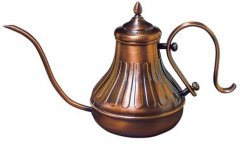
It is best to use the hand to make the coffee pot kalita the court hand.
All-copper refinement: exquisite and elegant shape, showing exquisite texture. All-copper refined body, high-efficiency thermal conductivity, is the best choice for filter coffee. Fine mouth design: the purpose is to easily control the amount of water when brewing coffee, so that the coffee powder everywhere can receive the same amount of hot water equally, so as to prevent excessive extraction or underextraction in some places.

What's the flavor of coffee in Guatemala?
Let's learn about the description of the regional characteristics of the coffee bean growing areas in Guatemala. Guatemala is rich in natural resources, which makes Guatemalan coffee beans very amorous. the common tonality is elegant and lively, clean and layered, with green malic acid, jasmine, orange peel, green pepper and cocoa, and some finishes have a strong smoky flavor.