
"Coast"
5351 article(s) found

Definition of various roasting degrees and common sense of taste of coffee
In the United States, the baking degree has long been defined by Cinnamon (shallow roasting), City (shallow roasting), Fully City (deep roasting) and Dark roast (heavy deep roasting, including Italian and French). However, the American preference for coffee flavor has always been strong in the west and light in the east, so the shallow roasting on the west coast may be as deep as that on the east coast, and vice versa.
The most detailed introduction to coffee beans in the world. Coffee beginners must see the knowledge points
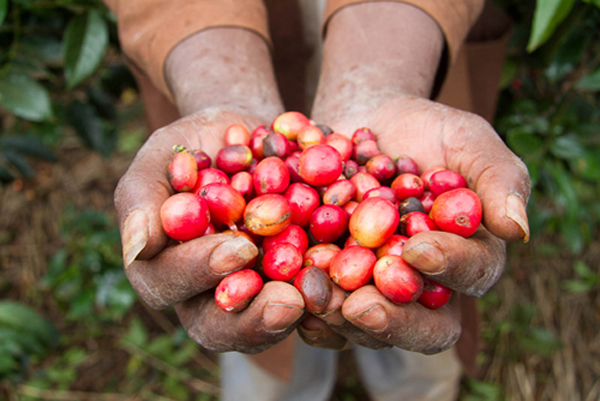
Coffee comes from coffee beans, which in turn are harvested and processed from the fruits of trees. Coffee trees grow at the equator as the center, between 25 degrees north and south latitude, known as the coffee belt tropical or subtropical countries home, coffee production countries currently have about more than 60 countries, coffee production in South America, Central America, West Indies, Asia, Africa, Arabia, South Pacific and
Coffee Estate Knowledge Points: Collection and classification of world boutique coffee estates in detail
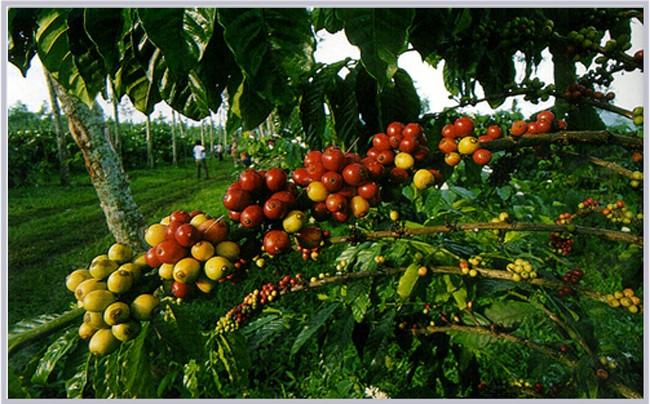
Coffee comes from coffee beans, which are harvested and processed from the fruits of trees. Coffee trees grow at the equator as the center, between 25 degrees north and south latitude, known as the coffee belt in tropical or subtropical countries home, coffee beans are currently. Coffee comes from coffee beans, which in turn are harvested and processed from the fruits of trees. Coffee trees grow at the equator.

Description of flavor and taste characteristics of main producing areas of Costa Rican coffee bean varieties
Varieties of Costa Rican coffee bean acid flavor description grinding scale are introduced in seven provinces: Alajuela Alajuela (central, northwest of San Jose), Catago Cartago (central, east of San Jose), Guanacaster Guanacaste (northwest), Eredia Heredia (central, north of San Jose), Limon Limn (east, along the Caribbean Sea).

Talking about the definition of all kinds of baking degree and taste
In the United States, the baking degree has long been defined by Cinnamon (shallow roasting), City (shallow roasting), Fully City (deep roasting) and Dark roast (heavy deep roasting, including Italian and French). However, the American preference for coffee flavor has always been strong in the west and light in the east, so the shallow roasting on the west coast may be as deep as that on the east coast, and vice versa.

Atlantic Island Coffee| St. Helena Green Tip Bourbon Arabica Cultivation History?
Professional coffee knowledge exchange More coffee bean information Please pay attention to coffee workshop (Weixin Official Accounts cafe_style) Atlantic Island Coffee| St. Helena Green Tip Bourbon Arabica Cultivation History? Saint Helena is an island in the Atlantic Ocean, 1900 km (1,400 mi) from the west coast of Africa and 3400 km (1,400 mi) from the east coast of South America.

Common sense of Coffee talking about the definition of various roasting degrees and Taste
In the United States, the baking degree has long been defined by Cinnamon (shallow roasting), City (shallow roasting), Fully City (deep roasting) and Dark roast (heavy deep roasting, including Italian and French). However, the American preference for coffee flavor has always been strong in the west and light in the east, so the shallow roasting on the west coast may be as deep as that on the east coast, and vice versa.

Introduction of boutique coffee beans in Panama Alida Manor Coffee Flavor Variety
Panama City (Panama city), located on the peninsula near the mouth of the Pacific coast of the Panama Canal. Facing the Gulf of Panama and backed by the Ankang Valley, the city is picturesque. Originally an Indian fishing village, the old city was founded in 1519 and became the capital after Panama declared its independence from Colombia in 1903. The 2010 Panamanian National Congress with a total population of 1.71 million is a unicameral system.

Introduction to the flavor and taste characteristics of Nicaraguan Tianyi Manor Coffee
Columbus arrived here in 1502 and reached the east coast of Nicaragua. In 1522, Spanish colonists began to conquer the region. The cities of Granada and Leon were founded in 1524. From then on, Nicaragua became a Spanish colony and came under the jurisdiction of the Governor's Office of Guatemala. The city of Leon developed into a political and cultural center; Granada became a commercial and agricultural center. In the later period of colonial rule
Global coffee producing area-C ô te d'Ivoire
Ivory Coast (CotedIvoire) has never produced the best quality coffee and rarely produces coffee from Arabian coffee trees. In the early 1980s, it was the third largest coffee producer in the world and is still the fifth largest coffee producer even today. In terms of coffee production, C ô te d'Ivoire is second only to Indonesia. Coffee production in C ô te d'Ivoire: Kurt

A global coffee producer in C ô te d'Ivoire.
Ivory Coast (CotedIvoire) has never produced the best quality coffee and rarely produces coffee from Arabian coffee trees. In the early 1980s, it was the third largest coffee producer in the world and is still the fifth largest coffee producer even today. In terms of coffee production, C ô te d'Ivoire is second only to Indonesia. Coffee production in C ô te d'Ivoire: Kurt

Ivorian Coffee Market and characteristics of Ivorian coffee
Ivory Coast (CotedIvoire) has never produced the best quality coffee and rarely produces coffee from Arabian coffee trees. In the early 1980s, it was the third largest coffee producer in the world and is still the fifth largest coffee producer even today. In terms of coffee production, C ô te d'Ivoire is second only to Indonesia. Coffee production in C ô te d'Ivoire: Kurt

Global coffee producing area-Ivorian coffee market
Ivory Coast (CotedIvoire) has never produced the best quality coffee and rarely produces coffee from Arabian coffee trees. In the early 1980s, it was the third largest coffee producer in the world and is still the fifth largest coffee producer even today. In terms of coffee production, C ô te d'Ivoire is second only to Indonesia. Coffee production in C ô te d'Ivoire: Kurt

PADDLERS COFFEE
Using fresh coffee beans baked in Portland on the west coast of the United States, hand-made coffee is recommended. They also sell coffee beans. 6-18-14 TODD SNYDER TOWNHOUSE 2F TEL:03-3409-9070 in front of the shrine in Saitani district, Tokyo, the day of the month will be closed from 11:00 to 19:00

How does Columbia taste exquisite?
For the exchange of professional baristas, please follow the Coffee Workshop (Wechat official account cafe_style) Columbia is located in the Andes Mountains where Colombia meets Ecuador in the southeast (the Andes Mountains, beginning in Chile and Argentina in the south, across the north and south of Colombia, while running through the exquisite producing areas). The natural geographical environment here: tropical Pacific coast, Yama

Introduction to the characteristics of Flavor Flavor Coffee beans in the Coffee Variety producing area of Hassanda Coffee Garden in Ecuador
Ecuador is divided into the western coast, the central mountains, the eastern Amazon River basin and the four central regions of the Galapagos Islands, with diverse climatic conditions. The western coastal plain belongs to the tropical rain forest climate, with an average temperature of 23-25 ℃. The central Andes. The intermountain basin in this area belongs to the savanna climate, and the mountain belongs to the subtropical forest climate, with perennial snow above 4000 meters above sea level. Annual average decline

Introduction to the flavor and taste characteristics of coffee in Nicaragua's Tianyi Manor with rich aroma, smooth and meticulous taste.
In many countries, coffee production will be seriously affected for political reasons. Nicaraguan coffee industry is no exception. The 1979 revolution forced coffee planters to flee to Miami. A period of indecision followed, when the government considered whether to redistribute land (including many plantations), which led to a shortage of coffee and a decline in production since the early 1970s

Introduction to the main Coffee producing areas in the World
Coffee comes from coffee beans, which are harvested and processed from the fruit of trees. Coffee trees grow at the center of the equator, between latitudes of 25 degrees south and north, and are called the homes of tropical or subtropical countries called coffee belts. At present, there are about 60 coffee-producing countries. Coffee is produced in South America, Central America, the West Indies, Asia, Africa, Arabia, the South Pacific and

An introduction to the characteristics of fine coffee in the manor area of Costa Rican coffee
Costa Rica is located in the Central American isthmus, belonging to North America, 10 north latitude, 84 west longitude. It is bordered by the Caribbean Sea to the east and the North Pacific Ocean to the west, with a coastline of 1290 km (212km on the east coast and 1016 km on the west coast). Costa Rica borders Nicaragua in the north (309 km long border) and Panama (639 km long border) south-southeast. Total

The taste of Bolivian coffee with a bitter taste an introduction to the characteristics of fine coffee in the manor area.
In 1863, rich saltpetre deposits were discovered in Atacama province along the Pacific coast. In 1879, Chile sent troops to occupy the mining area, and Bolivia joined forces with Peru to wage the Pacific War with Chile. Bolivia was defeated in 1883 and ceded the saltpeter-rich Pacific coast to Chile in 1904. Bolivia lost its only coastal province, including the important port of Antofagasta, from