
"Cultivation"
22848 article(s) found

The latest news of the world coffee industry: the decline of coffee cultivation in Costa Rica
According to the Costa Rican "financier" newspaper reported on December 14. The planting area of coffee in Colombia has decreased by 6.4% in the past 30 years. It was 89881 hectares in 1984 and only 84133 hectares remained in 2015. Coffee gardens have to give up their land to real estate, especially in metropolitan areas. At the same time, the changes in coffee prices in the world have gradually reduced the profits of coffee cultivation, which are all placed on the main side of the coffee garden.

Guatemala coffee cultivation What varieties of cultivation conditions How about Guatemala coffee
Professional coffee knowledge exchange More coffee bean information Please pay attention to coffee workshop (Weixin Official Accounts cafe_style) Guatemala is located in Central America. This is a country with tropical rain forest weather, high humidity and warm climate all year round. It forms Central American volcanoes with Nicaragua, El Salvador, Honduras, Costa Rica and Panama

The history of coffee cultivation in Peru and the brewing methods of coffee cultivation in Peru
Following caf é (Wechat official account vdailycom) found that the history of Peruvian Coffee growing Coffee is not long, but as a rising star, Peruvian Coffee is gradually gaining popularity and entering the world. Peru is located in western South America, with a coastline of 2254 kilometers. The Andes runs from north to south, and the mountains account for 1% of the country's area. it belongs to the tropical desert.

Cultivation techniques of small-grain coffee soil management of coffee cultivation
Weeding, covering the young coffee garden, weeds are easy to breed, especially in the rainy season, weeding should be done once a month. If the labor force is sufficient, clean the grass should be removed first. Adult coffee garden can be weeded once every 2 to 3 months. If you use herbicides, you should be careful not to spray on the branches and leaves of coffee, and it is more important and prudent to use them in young coffee gardens. Coffee has shallow roots and is vulnerable to adverse climatic conditions such as high temperature and drought.

Arabica coffee cultivation techniques Multi-stem shaping and cultivation of coffee trees
Multi-stem integer Multi-stem integer is an integer method that uses the first branch as the main result branch. The purpose of integer is to cultivate multiple trunks and grow a large number of robust first-order branches. Multi-trunk trees do not pick the top. As a result, when the yield decreases after 3 to 5 years, new trunks are replaced.① Cultivation of multi-stem method oblique planting method: When planting, the seedlings are obliquely planted, generally at an angle of 30~60 degrees with the ground. oblique planting can inhibit
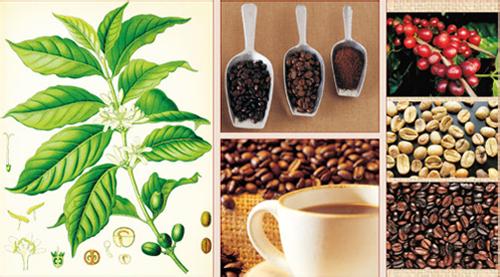
High-yield cultivation techniques of Coffee in Hainan
In order to make the standardized planting technology of coffee easy to learn and understand, the Institute of Flavor and Beverage of the Academy of Thermal Sciences has also compiled "High-yield cultivation techniques of Coffee", "Diagram of High-quality and High-yield cultivation techniques of small-grain Coffee", "Coffee cultivation and Primary processing Technology", "standardized production Technology of small-grain Coffee" and other atlas and books, which are given to coffee planting free of charge. The "breeding of 8 clones of medium-grain coffee" developed by the institute has won the country.

Introduction of cultivation and species of Coffee Tree
Cultivation techniques require that the origin of coffee trees [4] is in Ethiopia in Africa. In botany, coffee trees belong to the evergreen trees of the subgenus Rubiaceae, and coffee beans, commonly known as coffee beans, are actually the seeds of the fruit of coffee trees. They are called coffee beans only because they are shaped like beans. Climate is the decisive factor for coffee cultivation, and coffee trees are only suitable for growing in the tropics or subheat.

Coffee cultivation at an altitude of about 900-1500 meters El Salvador La Traviata estate variety cultivation market ring
Generally speaking, Salvadoran coffee inherits the mild quality of Central American coffee, which is soft, slightly sour and has a good sweetness. At the same time, it has its own characteristics: aromatic taste slightly sour, very soft; pure without impurities, taste balance is excellent; smooth feeling like cream chocolate is impressive; coffee in the mouth that kind of dense feeling makes coffee have deep

Cultivation techniques of small Coffee cultivation of Coffee beans in Yunnan Province
Disease control: 1. Coffee rust is the main disease of coffee, the most harmful, the damaged plants, light reduced yield, heavy death. Coffee rust is mainly harmful to leaves and sometimes to young fruits and twigs. After the leaves were infected, many light yellow spots appeared at first and enlarged in the form of water stains, followed by orange-yellow powdery spores on the back of the leaves, and there was a light green halo around the disease spots, and the disease spots in the later stage.

Comparison of basic data of Coffee varieties
Suitable cultivation conditions: Arabica variety (Arabica) is suitable for plateau cultivation, Robesta variety (Robusta) is suitable for lowland cultivation, and Liberian variety (Liberica) is suitable for minimum cultivation. Production: the Arabica variety (Arabica) accounts for about 70-80% of the world's total output; the Robesta variety (Robusta) accounts for about 20-30% of the world's total output of Liberian varieties (Liberica)

Cultivation techniques of coffee trees how would you like your latte coffee milk foam to be beaten?
The cultivation technology editor requires that the origin of coffee tree [4] is in Ethiopia in Africa. In botany, coffee trees belong to the evergreen trees of the subgenus Rubiaceae, and coffee beans, commonly known as coffee beans, are actually the seeds of the fruit of coffee trees. They are called coffee beans only because they are shaped like beans. Climate is the decisive factor for coffee cultivation. Coffee trees are only suitable for growing in the tropics or

Cultivation of Arabica beans in China cultivation of Arabica coffee beans
The planting situation in China Arabica is deeply loved by Chinese people with a short history of coffee contact because of its strong fruity aroma. it was introduced to China by missionaries in the 19th century. It is widely planted in Panzhihua, Sichuan, and the dry-hot valley of the Jinsha River, which is more than 1000 meters above sea level in western Yunnan. The sunshine time in this area is long, and there is a great temperature difference between day and night. The local people solve the lack of seasonal rainfall by diverting water up the mountain.

Comparison of basic Information of Coffee varieties
Suitable cultivation conditions: Arabica variety (Arabica) is suitable for plateau cultivation, Robesta variety (Robusta) is suitable for lowland cultivation, and Liberian variety (Liberica) is suitable for minimum cultivation. Production: the Arabica variety (Arabica) accounts for about 70-80% of the world's total output; the Robesta variety (Robusta) accounts for about 20-30% of the world's total output of Liberian varieties (Liberica)

Comparison of basic data of Coffee varieties
Suitable cultivation conditions: Arabica variety (Arabica) is suitable for plateau cultivation, Robesta variety (Robusta) is suitable for lowland cultivation, and Liberian variety (Liberica) is suitable for minimum cultivation. Production: the Arabica variety (Arabica) accounts for about 70-80% of the world's total output; the Robesta variety (Robusta) accounts for about 20-30% of the world's total output of Liberian varieties (Liberica)

Is the bean cultivation period of coffee with different roasting degrees the same? Is carbon dioxide really bad for coffee?
In the process of roasting raw coffee beans into ripe beans, the sound like popcorn will occur with the development of the stage process, which is referred to as "first explosion" and "second explosion" for short. The causes of "first explosion" and "second explosion" are different: the first explosion is mainly caused by the pressure formed by the evaporation of water in coffee beans, while the second explosion is caused by the sugar degradation of coffee during caramelization.
The Origin and cultivation of Coffee: how Starbucks Coffee is grown? what's so special about the conditions of coffee cultivation?
Professional coffee knowledge exchange more coffee bean information please follow the coffee workshop (Wechat official account cafe_style) A coffee tree bears fruit several times a year. Geographically, there are three global coffee growing areas: East Africa and the Arabian Peninsula, Southeast Asia and the Pacific Rim, and Latin America. Coffee grown in different regions has different flavors.

Cultivation techniques of Chinese small-grain Coffee cultivation of Coffee varieties of Tieli Katim in Yunnan, China
Prevention and treatment methods: ① strengthen management, reasonable pruning, appropriate shade. ② artificially killed adults and larvae, cut off the damaged branches and burned them in time. two。 Coffee leopard bark moth. It is widely distributed and is one of the common coffee pests, which can harm a variety of cash crops. The larvae overwintered in the branches, and the larvae often ate upward in the branches, forming a tunnel of 30cm to 60cm. Prevention and control methods:

The spread History of Coffee in China introduction to the characteristics of Flavor and Taste of Coffee Bean cultivation in Yunnan
According to historical records, Taiwan's planting was successful for the first time in 1884. Since then, coffee trees have been planted in China, and coffee cultivation in mainland China began in Yunnan. In 1902, a French missionary named Tian introduced seeds from Yinggong and planted them in Binchuan County, Yunnan Province. it is located in a place called Zhu Kula, which is located on the bank of the Yushan River, a tributary of the Jinsha River

Basic knowledge of coffee beans comparison of basic data of coffee bean varieties
Suitable cultivation conditions: Arabica variety (Arabica) is suitable for plateau cultivation, Robesta variety (Robusta) is suitable for lowland cultivation, and Liberian variety (Liberica) is suitable for minimum cultivation. Production: the Arabica variety (Arabica) accounts for about 70-80% of the world's total output; the Robesta variety (Robusta) accounts for about 20-30% of the world's total output of Liberian varieties (Liberica)

History of Coffee cultivation in Taiwan how to develop Coffee planting Technology in Taiwan
Professional coffee knowledge exchange more coffee bean information please follow the coffee workshop (Wechat official account cafe_style) A coffee tree bears fruit several times a year. Coffee is the second largest internationally traded commodity in the world, after oil. Coffee is a very important cash crop in many countries, but in Taiwan, you may have heard the name Gukeng Coffee. Trust you