
"Cultivation"
22848 article(s) found
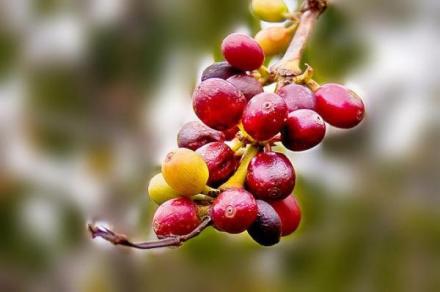
Climate change affects coffee cultivation in equatorial countries
As the second most traded commodity, coffee is second only to oil in value. Global climate change is affecting coffee cultivation in tropical countries on both sides of the equator, and the coffee crisis is already brewing. It is generally believed that large food companies will always be able to get coffee from somewhere in the future, or even if the temperature warms up, farmers can still grow coffee on higher mountains. But the researchers point out that in the main

Columbia Colombia huila coffee beans
Colombia huila, Colombia: located in the southwest of Colombia, it is one of the major coffee growing areas. Because there are famous coffee cultivation places in Huilan area, the names of small areas become brand names and circulate. Although the cultivation conditions in this area are also very good, the cultivation infrastructure of coffee cultivation farm and surrounding conditions is not yet.

Flavor of Ethiopian Coffee cultivation
Various forms of coffee cultivation can be found in Ethiopia: everything from wild coffee forests and semi-developed land to traditionally operated plots to modern plantations. About 50% of the coffee is grown more than 1500 meters above sea level. Harrar coffee is the highest growing area of all coffee in Ethiopia. Hara coffee can be divided into long coffee.

Four major cultivation systems of Ethiopian coffee analyze in detail how Ethiopian coffee is cultivated.
Forest coffee (Forest Coffee): wild coffee, which accounts for 10% of Ethiopia's national output, is distributed in the wild coffee forest areas of the west and southwest, also known as the Kafa forest. The dense trees here provide the most natural shade for coffee trees and do not need manual care. Mother Earth is in charge of birth, aging, sickness and death, and coffee farmers can go directly to the woodland to harvest. Hansen

Cultivation techniques of small-grain coffee: multi-dry shaping and cultivation
Multi-dry shaping is a method that uses the first-order branch as the main fruiting branch. The purpose of plastic surgery is to cultivate multiple trunks and grow a large number of robust primary branches, and the multi-trunk trees will not be topped. As a result, when the yield decreases after 3-5 years, the new trunk will be replaced. ① culture multi-stem method oblique planting method: when planting, the seedlings are oblique, generally at an angle of 30-60 degrees with the ground. Oblique planting can be suppressed

The History and present situation of Coffee cultivation in China
History of Coffee cultivation in the World Coffee originated in the tropics of northern and central Africa. It has been cultivated for more than 2000 years, and the Arabs began to plant it in 525 BC. At first, coffee beans were only used for chewing. In 890 AD, Arab merchants brought coffee to Yemen and made it into a drink for the first time. By the 13th century, Arabs had become in the habit of stir-frying coffee, but to

Peruvian coffee in western South America with a short history of coffee cultivation
Peruvian coffee cultivation history is not long, but as a rising star, Peruvian coffee is gradually opening up its popularity and entering the international market. Peru is located in western South America, with a coastline of 2254 kilometers. The Andes runs from north to south, and the mountains account for 1% of the country's area. it belongs to the tropical desert region with a dry and mild climate. Peruvian coffee is mostly grown at the foot of the Andes, where it is abundant.

Coffee cultivation is concentrated in Yunnan, Hainan, Guangdong, Guangxi and other places
Professional coffee knowledge exchange more coffee bean information please follow the coffee workshop (Wechat official account cafe_style) the history of coffee cultivation in Yunnan can be traced back to 1892. A French missionary brought coffee to Yunnan from abroad and successfully planted it in a valley in Binchuan County, Yunnan Province. There are still more than 30 coffee plants blooming in Binchuan County.

The cultivation environment of coffee trees? Is Robusta more suitable for planting soil? What planting conditions?
Professional coffee knowledge exchange more coffee bean information please pay attention to the coffee workshop (Wechat official account cafe_style) coffee tree cultivation environment? Is Robusta more suitable for planting soil? What planting conditions? Due to the physiological characteristics of coffee trees, there are only a few areas in the world that can cultivate coffee beans commercially. It is mainly limited by temperature, because coffee trees are very tolerant.

Detailed analysis of forest and semi-forest system of four major cultivation systems of Ethiopian coffee
Forest coffee (Forest Coffee): wild coffee, which accounts for 10% of Ethiopia's national output, is distributed in the wild coffee forest areas of the west and southwest, also known as the Kafa forest. The dense trees here provide the most natural shade for coffee trees and do not need manual care. Mother Earth is in charge of birth, aging, sickness and death, and coffee farmers can go directly to the woodland to harvest. Hansen
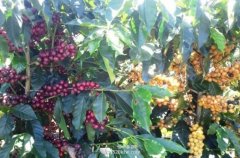
The History of Coffee in China
According to historical data, Taiwan was first planted successfully in 1884. Coffee trees were planted in China. Coffee cultivation in China began in Yunnan. In 1902, seeds introduced by a French missionary named Tian were planted successfully in Binchuan County, Yunnan Province. Commercial cultivation of Yunnan coffee began in 1985, but it has grown

Cultivation techniques of small Coffee in Yunnan Province: harvesting and processing
Yunnan Province, small-grain coffee cultivation, coffee cultivation techniques, coffee harvesting, coffee processing
Technical specification for cultivation of small seed coffee
1 scope this part stipulates the technical methods of small seed coffee garden selection, planning, reclamation, seeds, seedlings, planting, soil management and coffee tree management. This part is suitable for the cultivation of small seed coffee. 2 normative citation documents the provisions of the following documents become the provisions of this part through the citation of this section. For all dated reference documents, all subsequent revisions

The latest situation of Los Congo Manor in Nicaragua introduction to the cultivation of Coffee
The latest situation of Coffee cultivation at Los Congo Manor in Nicaragua Coffee is grown on 10 plots over 1350 meters above sea level at the Tianyi estate in Dipilto. When Misael Sauceda Olivera, the current landowner, inherited from his father, there were only two plots for planting and development, and then he bought the land from his neighbors to the present size of the Lemon Tree Farm.
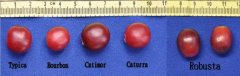
Coffee cultivation techniques how to cultivate coffee seeds pruning and fertilization of coffee
Professional coffee knowledge exchange more coffee bean information please follow the coffee workshop (Wechat official account cafe_style) A coffee tree bears fruit several times a year. Coffee is a perennial evergreen shrub of Rubiaceae. At present, there are two kinds of coffee with economic value: Coffea arabica (Arabica) and Coffea canephora (Robusta).

Coffee planting and cultivation techniques Arabica coffee how to plant coffee seeds and how to grow into trees
Professional coffee knowledge exchange more coffee bean information please follow the coffee workshop (Wechat official account cafe_style) A coffee tree bears fruit several times a year. Coffee tree is a kind of plant that is very sensitive to climate, sunshine, Rain Water and soil. when a coffee bean sprouts up and takes root in the soil, it will squeeze the bean out of the soil.
Technical specification for cultivation of fine coffee with small seeds
1 scope this part stipulates the technical methods of small seed coffee garden selection, planning, reclamation, seeds, seedlings, planting, soil management and coffee tree management. This part is suitable for the cultivation of small seed coffee. 2 normative citation documents the provisions of the following documents become the provisions of this part through the citation of this section. For all dated reference documents, all subsequent revisions
Introduction of three Coffee varieties
Arabica variety (Arabica) is suitable for plateau cultivation, Robesta variety (Robusta) is suitable for lowland cultivation, and Liberian variety (Liberica) is suitable for minimum cultivation.

Ethiopian coffee cultivation methods
Ethiopia has a variety of coffee cultivation methods: from wild coffee groves and semi-developed plots, to small plots of traditional farming, to modern plantations. About 50 percent of coffee is grown at altitudes of more than 1500 meters. Harrar coffee is the highest coffee grown in Ethiopia. Hara coffee can be divided into long

A brief History of Coffee cultivation in Costa Rica Coffee Manor
Coffee was first introduced in 1720 according to CR official data. Baidu sources show that 1729 were imported from Cuba. In short, coffee has taken root in CR in the 18th century. It was first planted in the central valley (central valley). In the 19th century, the government vigorously promoted the cultivation of coffee, including the allocation of land as long as it was willing to cultivate coffee, and that it could become a landowner after five years of cultivation.