
"Cultivation"
22848 article(s) found

Geographical Distribution cultivation techniques of Coffee trees
Coffee grows mostly in countries with alpine terrain between the Tropic of Cancer and the Tropic of Cancer. It is native to tropical Africa and is introduced and cultivated in South and Southwest China. [2] the cultivation technology editor requires that the origin of the coffee tree [4] is in Ethiopia in Africa. In botany, the coffee tree belongs to the evergreen tree of the coffee subgenus of Rubiaceae, and the so-called coffee bean is actually the fruit of the coffee tree.

Puerto Rico has a very long history of coffee cultivation.
Puerto Rico has a very long history of coffee cultivation. As a Caribbean island country, coffee planting as a commodity began to rise here as early as the 1860s. What is interesting is that in recent years, with the increase of import tariffs on Puerto Rico coffee in the United States and other countries, although the coffee planting industry here has shrunk to a great extent, a new round of industrial reshuffle and integration

Detailed Analysis of four cultivation Systems of Ethiopian Fine Coffee
According to the following four different modes of production, Ethiopian coffee can be divided into nine major coffee producing areas, including five boutique coffee areas: Sidamo, Yegashefi, Harald, Lim and Lekampidi, and four general commercial bean producing areas: Gemma, Irugbagbo, Tibby and Bekaa. The sun or water washing methods are used in each district, and different treatment methods also affect the flavor.

Thai Coffee | introduction of Thai Coffee Bean producing areas _ Historical Origin of Coffee cultivation in Thailand
There are two theories about the history of coffee bean cultivation in Thailand. the first is that in 1904, a Muslim pilgrim passed through India on his way back to Thailand, where he brought some Robusta coffee bean seeds back to Thailand and planted it on the land of southern Thailand. Another kind of story is in 1950, when a man with great intentions

To what extent has coffee cultivation developed in China?
The unique geographical location of the rise of coffee in China is that the west and south of Yunnan Province are located between the 15th latitude and the Tropic of Cancer, most of the areas are 1000-2000 meters above sea level, and the topography is dominated by mountains and slopes. and ups and downs, fertile soil, sufficient sunshine, rich rainfall, large temperature difference between day and night. International form and government support the increase in international and domestic demand for coffee

Favorable conditions for coffee cultivation in Colombia Coffee cultivation in Colombia has a unique advantage
Professional coffee knowledge exchange more coffee bean information please follow the coffee workshop (Wechat official account cafe_style) front street-Columbia planting conditions South America is already the largest coffee-producing continent, thanks to the high altitude surrounded by the Andean foothills, where the climate is mild and humid, good rainfall makes it very suitable for coffee growth, making Columbia

Detailed Analysis of four cultivation Systems of Coffee in Ethiopia
Forest coffee (Forest Coffee): wild coffee, which accounts for 10% of Ethiopia's national output, is distributed in the wild coffee forest areas of the west and southwest, also known as the Kafa forest. The dense trees here provide the most natural shade for coffee trees and do not need manual care. Mother Earth is in charge of birth, aging, sickness and death, and coffee farmers can go directly to the woodland to harvest. Hansen

Basic information on coffee varieties
Suitable cultivation conditions: Arabica variety (Arabica) is suitable for plateau cultivation, Robesta variety (Robusta) is suitable for lowland cultivation, and Liberian variety (Liberica) is suitable for minimum cultivation. Production: the Arabica variety (Arabica) accounts for about 70-80% of the world's total output; the Robesta variety (Robusta) accounts for about 20-30% of the world's total output of Liberian varieties (Liberica)

Various coffee cultivation methods the flavor of Ethiopian coffee
The origin of the coffee tree is Ethiopia in Africa. In botany, coffee trees belong to the evergreen trees of the subgenus Rubiaceae, and coffee beans, commonly known as coffee beans, are the seeds of the fruit of coffee trees, just because they are shaped like beans, so they are called coffee beans. Climate is the decisive factor for coffee cultivation. Coffee trees are only suitable for growing in the tropics or subtropics, so latitude 25 is south and north.
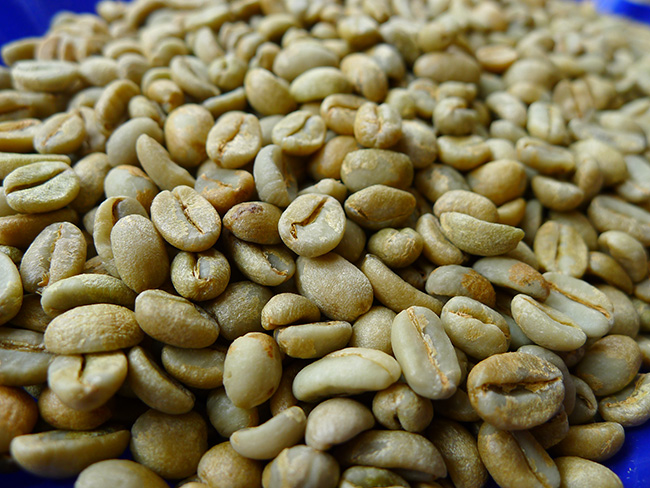
The cultivation of coffee beans the history of coffee beans the cultivation of raw coffee beans
Coffee raw beans are the seeds of coffee trees. It is the wealth hidden in coffee cherries (coffee berries) that people usually call coffee cherries. They are mistakenly called beans because they are similar to the beans we usually see, but they are actually the seeds of coffee. There are usually two flat oval coffee beans in the coffee berries, and a small number of coffee berries

Coffee evaluation? Industry: guiding cultivation is more important
Exchange of professional baristas Please pay attention to the coffee workshop (Wechat official account cafe_style) Taiwan's coffee planting model is not like the large area of foreign manor beans, mostly small coffee farmers,-Yunlin Gukeng Township Office will soon hold a pre-competition workshop on coffee bean evaluation, hoping to make Gukeng coffee achieve good results. However, some people in the industry believe that in order to improve the quality of coffee in Taiwan, it is more necessary to guide coffee.

Low yield coffee cultivation conditions Cultivation process and method Introduction
West Africa is the origin of Liberian coffee. It has strong adaptability to various environments such as high temperature or low temperature, humidity or dryness. It is not resistant to leaf rust and its flavor is worse than Arabica. Therefore, it is only traded domestically in some West African countries (Libya, Cote d'Ivoire, etc.) or planted for research. Coffee circulating in the world market

Detailed Analysis of four cultivation Systems in Coffee producing areas of Ethiopia
Forest coffee (Forest Coffee): wild coffee, which accounts for 10% of Ethiopia's national output, is distributed in the wild coffee forest areas of the west and southwest, also known as the Kafa forest. The dense trees here provide the most natural shade for coffee trees and do not need manual care. Mother Earth is in charge of birth, aging, sickness and death, and coffee farmers can go directly to the woodland to harvest. Hansen
Comparison of basic data of Fine Coffee varieties
Suitable cultivation conditions: Arabica variety (Arabica) is suitable for plateau cultivation, Robesta variety (Robusta) is suitable for lowland cultivation, and Liberian variety (Liberica) is suitable for minimum cultivation. Production: the Arabica variety (Arabica) accounts for about 70-80% of the world's total output; the Robesta variety (Robusta) accounts for about 20-30% of the world's total output of Liberian varieties (Liberica)

What is organic coffee? Is there any advantage in drinking organic coffee? Flavor characteristics of Organic Coffee
Professional coffee knowledge exchange more coffee bean information please pay attention to the coffee workshop (Wechat official account cafe_style) Organic coffee in the cultivation does not use any insecticides and other chemicals to treat pests or cultivation problems, but the use of natural methods, such as the use of natural composting, hedgerow, pruning and other methods to maintain the growth of coffee trees, in terms of pest control

History and present situation of Coffee cultivation in China
History of Coffee cultivation in the World Coffee originated in the tropics of northern and central Africa. It has been cultivated for more than 2000 years, and the Arabs began to plant it in 525 BC. At first, coffee beans were only used for chewing. In 890 AD, Arab merchants brought coffee to Yemen and made it into a drink for the first time. By the 13th century, Arabs had become in the habit of stir-frying coffee, but to

Introduction to Coffee cultivation in Yunnan
The history of coffee cultivation in Yunnan can be traced back to 1892. A French missionary brought coffee to Yunnan from abroad and successfully planted it in a valley in Binchuan County, Yunnan Province. The coffee plants of this batch of coffee seeds are still blooming and bearing fruit in Binchuan County.
Cultivation techniques of small-grain Coffee in Yunnan Province: pest Control
Small-grain coffee cultivation, coffee cultivation techniques and coffee pest control in Yunnan Province