
"Degrees"
22086 article(s) found

Jamaica Blue Mountain Sherwood Coffee Manor introduces how to drink Jamaican Blue Mountain Coffee?
Professional coffee knowledge exchange more coffee bean information please follow Coffee Workshop (Wechat official account cafe_style) Blue Mountain (Blue Mountain) Coffee is a coffee bean brand grown in a limited area in the Blue Mountains of Jamaica at an altitude of 800-1200 meters. It usually grows on steep slopes, sometimes as high as 60 degrees and requires manual mining. The characteristic is that it has a very high incense.

Ethiopia Yega Sheffield Gaidi Ocochelbanco G1 sun Fafat flavor?
Professional coffee knowledge exchange more coffee bean information please follow the coffee workshop (Wechat official account cafe_style) Ethiopia Yega Xuefei production area | what is Sunshine Fat? Ethiopia Washed Yirgacheffe Banko Fufuate G1 Ethiopia Yega Sheffield Gaio Cochel Banco G1 processing Plant: Benafka processing Plant Beyene Figa

Espresso Common sense about the temperature of Espresso
A perfect Espresso usually affects its taste and aroma expression due to changes in temperature. So, we have a debate about how to preheat the handle and the filter screen in the extraction of Espresso, but how much does the temperature of the handle and filter affect the Espresso? how much will the Espresso cool down? Here, I'm going to do a little test, hoping to know more about it.

Introduction to the characteristics of the manor producing area of Jamaican boutique coffee with rich flavor and mellow taste
Located in the northwest of the Caribbean Sea, Jamaica is an island country at 17.42 degrees north latitude and 18.31 degrees north longitude and 76.11 degrees to 78.22 degrees west longitude. [1] the island of Jamaica is 234km long from east to west and 82km wide from north to south, with a territorial area of 11420 square kilometers, of which the land area is 10991 square kilometers. To the east across the Strait of Jamaica, facing Haiti, about 140 kilometers north of Cuba. The third largest in the Caribbean
Three baking processes: drying, high temperature decomposition and cooling
Newly imported coffee beans usually contain about 12% moisture, and when the coffee beans are roasted at a high baking temperature from 500 to 800 degrees Fahrenheit, when the coffee beans heat up, the water evaporates. Most of the moisture is released in the first few minutes of the baking process, although the baking time in the United States is usually about 15 minutes, which may be 5 minutes or as long as an hour. At 8
Three baking processes: drying, high temperature decomposition and cooling
Newly imported coffee beans usually contain about 12% moisture, and when the coffee beans are roasted at a high baking temperature from 500 to 800 degrees Fahrenheit, when the coffee beans heat up, the water evaporates. Most of the moisture is released in the first few minutes of the baking process, although the baking time in the United States is usually about 15 minutes, which may be 5 minutes or as long as an hour. At 8
Common sense of espresso about the temperature of Espresso
A perfect Espresso usually affects its taste and aroma expression due to changes in temperature. So, we have a debate about how to preheat the handle and the filter screen in the extraction of Espresso, but how much does the temperature of the handle and filter affect the Espresso? how much will the Espresso cool down? Here, I'm going to do a little test, hoping to know more about it.
Effect of temperature on Coffee in Italian concentrated production process
A perfect Espresso usually affects its taste and aroma expression due to changes in temperature. So, we have a debate about how to preheat the handle and the filter screen in the extraction of Espresso, but how much does the temperature of the handle and filter affect the Espresso? how much will the Espresso cool down? Here, I'm going to do a little test, hoping to know more about it.
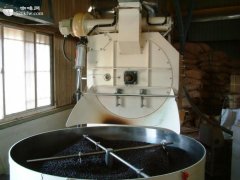
Analysis of roasting process of Coffee Bean Baking Technology
1. Dehydration: generally refers to the baking process below 170 degrees. Different baking appliances require different dehydration time, but it is usually best controlled at 5-8 minutes, depending on the water content of the beans. two。 Climbing temperature: usually the climbing temperature speed of baking is controlled between 7 and 14 degrees, which is related to the control of firepower, the better climbing temperature speed is controlled at about 10 degrees, and the water content of beans is different.

The answer to the question of Espresso's temperature espresso
A perfect Espresso usually affects its taste and aroma expression due to changes in temperature. So, we have a debate about how to preheat the handle and the filter screen in the extraction of Espresso, but how much does the temperature of the handle and filter affect the Espresso? how much will the Espresso cool down? Here, I'm going to do a little test, hoping to know more about it.

Three baking processes: drying, high temperature decomposition and cooling home baking
Newly imported coffee beans usually contain about 12% moisture, and when the coffee beans are roasted at a high baking temperature from 500 to 800 degrees Fahrenheit, when the coffee beans heat up, the water evaporates. Most of the moisture is released in the first few minutes of the baking process, although the baking time in the United States is usually about 15 minutes, which may be 5 minutes or as long as an hour. At 8

Experience in baking skills of Yega Snow Coffee share the reason why Yega Chet Coffee smells bad _ Yega Chet Coffee Price
Professional coffee knowledge exchange more coffee bean information please follow the coffee workshop (Wechat official account cafe_style) Ethiopia-Yega snow coffee beans (sun) Ariga G1 roasting record (1) 190 degrees into beans. Reverse 34 degrees, controlled at 0800 degrees, temperature is 157degrees; fire to 230degrees, temperature drop to 190,1100,201 degrees at 1230 hours

Properties of coffee beans during roasting
The process of fried beans is the main process of heating raw beans and developing the aroma and taste of coffee. The aroma and taste emitted are determined by the original characteristics of each kind of raw bean. The depth of fried beans depends on the type of raw beans, market demand or the way they are cooked. What kind of baking machine controls the depth of fried beans. Even though the chemical and physical components of various raw beans are different, these ingredients

Coffee thermometer introduction: Jimmy hanging foam thermometer pointer pull needle is used in many ways
Features: a perfect proportion of cappuccino and latte, the proportion of milk, milk foam is the key, and to pull the milk out of the dense milk foam, temperature control is the key, the thermometer pointer points to about 60 degrees Celsius can stop milk steaming, so that when the actual stop milk steaming, the temperature will continue to rise to about 70 degrees 80 degrees, the resulting milk foam is the most fragrant and dense. Have one
The way professional coffee is roasted
The eight stages of roasting: the roasting method of professional coffee is usually divided into the following eight stages.

Yega Xuefei baking record
Yega snow coffee: turn the cage on the oven, preheat it at 170 degrees for 2 minutes, serve the coffee beans. Bake at 170 degrees for 2 minutes to 250 degrees. After about 11 minutes, hear the first explosion for more than ten seconds and quickly take it out and rotate to the cooling plate to cool down. Coffee beans are slightly deeper than the standard medium roasting, and the actual roasting degree must be below medium. A lot of silver skins are still glued to the coffee beans, indicating that they are not roasted enough.

Properties of boutique coffee beans during roasting process
The process of fried beans is the main process of heating raw beans and developing the aroma and taste of coffee. The aroma and taste emitted are determined by the original characteristics of each kind of raw bean. The depth of fried beans depends on the type of raw beans, market demand or the way they are cooked. What kind of baking machine controls the depth of fried beans. Even though the chemical and physical components of various raw beans are different, these ingredients

Sweet, not astringent, not bitter, not sour Mafei fine coffee beans cultivation geographical location climate sea
Alishan coffee is the most special and superior coffee in Taiwan, and the yield is small, and the rare is expensive. Alishan Mountain, located 75 kilometers east of Chiayi City, Taiwan, is located at an altitude of more than 2000 meters. It is adjacent to Yushan Mountain Range and Yushan National Park in the east. It is surrounded by high mountains and has a cool climate. The average temperature is 10.6 degrees Celsius, the average summer temperature is 14.3 degrees Celsius, and the average winter temperature is 6.4 degrees Celsius. drink

How does the label of coffee roasting distinguish between several degrees of roasting?
This is some study of coffee label. How to distinguish between several degrees of baking? If you see Italian, Vienna, Nanyi and other signs on the coffee label, do not mistakenly think that the coffee beans have anything to do with the above place names-probably not, because traditionally, "Italy" and "Vienna" are synonyms for the degree of roasting (or the way they are mixed).