
"Discovered"
6500 article(s) found

Introduction of Coffee knowledge Coffee Bean Variety types and Taste and Flavor
Professional coffee knowledge exchange more coffee bean information please follow the coffee workshop (Wechat official account cafe_style) Arabica (Arabica): first-class flavor and aroma of high-end coffee beans Arabica is a representative variety of origin in Ethiopia, in South Africa, Africa, Asia and other countries

Ninetyplus coffee90+ Coffee introduction Ninety plus90+ Coffee grading
Professional coffee knowledge exchange more coffee bean information please follow the coffee workshop (Wechat official account cafe_style) what is NINETY PLUS (90 +)? Ninety plus is an internationally renowned coffee bean production and sales company, and is famous for providing rare and unique raw coffee beans. In addition to working directly with coffee farmers, it has 134 hectares in Panama.

Does the taste of coffee beans have anything to do with the degree of roasting?
Roasting and taste since the Arabs discovered coffee beans, the first way to eat is to put the whole fruit of coffee into the mouth to chew to get its juice. Later, they ground the coffee beans from the fruit and mixed them with animal fat as a physical supplement for caravans to trade far away. After that, around 1000 AD, it changed to the method of boiling raw beans into soup.

Coffee legend Coffee the origin of this plant dates back millions of years
The origin of coffee plant can be traced back to millions of years ago, in fact, it was discovered in the real age is not known, only legend coffee is Ethiopia Heights a shepherd named Kaldi (Kaldi), when he found his sheep accidentally ate the fruit of a plant, became very lively and energetic, from the discovery of coffee. All historians seem to agree.

Description of Coffee Farm Coffee flavor in Piedra Grande Farm, Imbabula Province, Ecuador
Professional coffee knowledge exchange more coffee bean information please follow Coffee Workshop (Wechat official account cafe_style) FINCA PIEDRA GRANDE-OLGER OBANDO Olger is a 46-year-old Ecuadorian coffee grower. Four years ago, on a family outing, he discovered the wonderful world of coffee on a quiet road in the province of Inbabula. He's in Corazn de Guadua.

There is no way to examine the origin of coffee and the origin of coffee ingredients.
There is no way to examine the source of coffee. One of the many legends refers to the highlands of Cafa province in southwestern Ethiopia. It is said that a shepherd became very excited and lively when he discovered that the sheep had eaten a plant more than a thousand years ago, so he discovered coffee. It is also said that due to a wildfire, a coffee forest was destroyed and the smell of barbecue coffee attracted the attention of the surrounding residents.

Coffee species gene mutant
From left to right: Kenya round beans, elephant beans, Kenya AA pointed bourbon (Bourbon Pointu): found in Bourbon Island in 1810, beans changed from round to pointed, with only half the caffeine content, but in small quantities, weak and extremely precious (mostly cultivated in the laboratory). Elephant bean (Maragogype, or Elephant Bean): the most famous variety of Tibica beans, first found in northeastern Brazil in 1870.

Coffee Common knowledge Bourbon Coffee Bean bourbon (bourbon) the natural variety of Cadura Arabica coffee beans
Kaddura (Caturra), a natural variety of Arabica variety bourbon, was discovered in Brazil in 1937. Its tree is not as tall and shorter as bourbon.

Savor the regional │ coffee from here-Ethiopia
The exchange of professional baristas please follow the coffee workshop (Wechat official account cafe_style) 16th century Lebanese scholar Faustus Nairous Barlesius wrote in his book the Sleepless Monastery that the origin of coffee was discovered by shepherds living in the Ethiopian highlands in the sixth century. Coffee starts here in Ethiopia and Africa, known as the birthplace of coffee.

The auction price of the best Panamanian raw bean contest broke the record. What are the Rosa coffee beans like?
For more information on coffee beans, please follow the coffee workshop (Wechat official account cafe_style) Rose Summer Coffee (Geisha) was discovered in the rose forest of Ethiopia in 1931 and sent to the Coffee Institute in Kenya. It was introduced to Uganda and Tanzania in 1936, Costa Rica in 1953 and Panama in 1970.

A few cold knowledge points you need to know to open a coffee shop
Coffee grows on a tree and can live for 200 years. A coffee tree can live for more than 200 years. When it begins to sprout, the buds at the top are very lovely, but eventually it can grow into a thick plant and survive for two centuries. It is said that coffee was first discovered by shepherds. The most widely circulated
Planting of boutique coffee trees Coffee leaf rust
Coffee leaf rust was discovered in Central America as early as 40 years ago, but recent outbreaks in Central America (Colombia, Costa Rica, El Salvador, Guatemala, Nicaragua) and Mexico are by far the most serious. Guatemala, Honduras, Costa Rica and other countries have declared a national state of emergency. President of Guatemala says leaf rust will cause Guatemala
Boutique Coffee Science choose the fried degree of coffee beans
What is the fried culture of coffee? The act of fried coffee and raw beans is called fried culture in the coffee world. In the early days of the discovery of coffee beans, coffee was always consumed by boiling raw beans, but it has been used ever since it was discovered that fried culture can lead to the real aroma of coffee. The raw beans of coffee beans are actually tasteless. Experts all know that coffee is special.
Coffee Bean Type Introduction Gene Mutant
From left to right: Kenyan round beans, elephant beans, Kenyan AA pointy Bourbon (Bourbon Pointu): Found on Bourbon Island in 1810, the bean body has changed from round to pointy, and the caffeine content is only half; however, the quantity is small and weak, and it is extremely precious (mostly cultivated in the laboratory). Maragogype (or Elephant Bean): The best-known variety of tibeka bean, first developed in northeastern Brazil in 1870.

Variety Information and Flavor description of Iron pickup Coffee Bean
For the exchange of professional baristas, please follow the coffee workshop (Wechat official account cafe_style) [Typica] Tibica species closest to the original species. The bean shape is slightly longer, like an elongated egg, known as Arabigo or criollo in Central America. It has a clean citric acid taste, sweet aftertaste, low resistance to leaf rust, not easy to take care of, low seed setting of trees, and long harvest period.
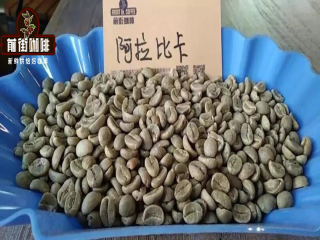
Arabica coffee bean variety catalogue, detailed introduction of Arabica mainstream variety knowledge.
Typica is considered to be the prototype of all coffee varieties or genetic screening. The Netherlands was the first country to spread coffee around the world and grow it commercially. Iron pickup was the kind of coffee at that time. The fruit of the iron pickup is usually red, and the flavor in the cup is also very outstanding.

Common sense of Coffee Culture Coffee's "History of aggression" to Human beings
Coffee culture legend coffee was first discovered by goats, as a result, people on earth who like to taste fresh can't stop from now on. Human beings are really curious. Hey! Throughout the history of coffee, it is simply a documentary in which mankind has been conquered by it. Watch the origin and development of coffee with [Ice City Coffee]. As people on earth, we really don't have the strength to fight back! Coffee originated in the 6th century AD

Jeju, South Korea: a caf é turned into a volcanic cave
South Korea's Jeju Island was formed by undersea volcanic eruptions millions of years ago. It was originally composed of volcanic rocks and lava caves formed over the years, one of which was discovered by tea farmers in 2006 and has now been converted into an underground cafe.

A brief History of Ethiopian Rosa Coffee
The species of Geisha was discovered in the Rose Summer Forest of Ethiopia in 1931 and sent to the Coffee Institute in Kenya; it was introduced to Uganda and Tanzania in 1936, in Costa Rica in 1953, and Panama was introduced in the 1970s by Francesca of Dongba Seven Farm Garden. Mr. Serraxin got the seeds from CATIE in Costa Rica and started growing Rosa Coffee because