
"Independence"
2410 article(s) found

Introduction to the characteristics of Bolivian Coffee Manor with vanilla flavor
Bolivia was conquered by Spain at the end of the 15th century and became a Spanish colony in 1538, historically known as Peru, belonging to the governor district of La Plata, Spain. Bolivia was rescued from independence by Bolivar, a national hero from Caracas, Venezuela, during the War of Independence in Latin America in the 18th century, so the country was named after him. On August 6, 1825, it was announced that

More slippery Indonesian Manning Coffee Flavor and taste introduction to the characteristics of boutique coffee in manor area
A number of scattered feudal kingdoms were established in the 7th century AD. Recorded dynasties include the death of the Buddhist Sri Buddha (mid-7th century-1293), who was conquered by Manabache, and the Kingdom of New Keshari, which controlled the Strait of Malacca (1222-1292), which led to the Yuan-claw War, and then the royal family established the most powerful Malacca in Indonesian history in Java with the help of the Yuan army.

Introduction to the flavor description and taste characteristics of Costa Rican coffee varieties
In the 1820s, the independence movement in Latin America was high, and Costa Rica declared its independence in 1821. Incorporated into the Iturvid Empire of Mexico in 1822. He joined the Union of Central America in 1823. The Republic of Costa Rica was founded in 1848. From 1821 to 1870, the Costa Rican regime was mainly controlled by J.R. Morapolas and J.M. The economy is booming in the hands of the two Montealegre families.
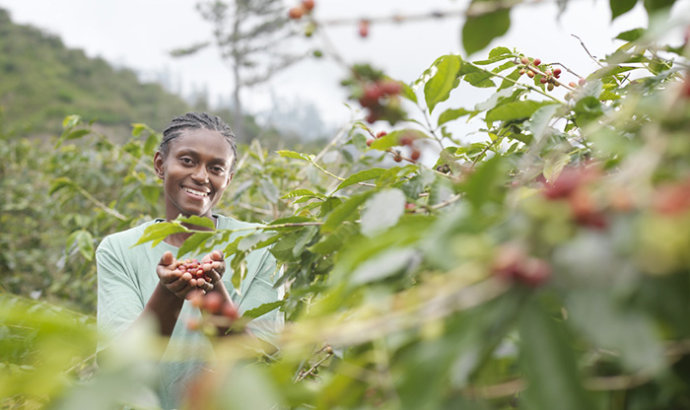
The abnormal prosperity of Brazil's "coffee kingdom"
From the early 16th century to the 1820s, Portugal colonized Brazil for more than 300 years. Portugal colonial rule had a profound impact on Brazil's economy, politics, society and culture. Single product system and large estate system became fetters restricting the development of modern Brazil's economy. Due to the incomplete nature of the independence movement, Brazil remained a colony for 100 years after independence.

Introduction to the varieties and brands of coffee flavor and taste in Santa Rita Manor, Colombia.
The indigenous people of pre-independence Colombia were the Chibucha Indians. They use wooden and stone tools to grow crops such as corn and cassava and weave cotton cloth. This area is a famous gold mining area in ancient South America, and the Chibucha people have a high level of gold decoration art. In 1501, the Spaniard R.de Bastidas first arrived on the northern coast of Colombia.

Introduction of high-quality coffee beans in Bolivian coffee flavor and taste areas
Bolivia was rescued from independence by Bolivar, a national hero from Caracas, Venezuela, during the War of Independence in Latin America in the 18th century, so the country was named after him. On August 6, 1825, independence from Spain was declared, named the Bolivarian Republic, and later changed to its present name. It formed a federation with Peru in 1836 and collapsed as a result of the Chilean invasion in 1839. one hundred and eighty six

The most unique Sweet Coffee in Indonesia Fuyin Manor Coffee Flavor and Taste introduction
In the 15th century, Portugal, Spain and Britain invaded successively. The Dutch invaded in 1596, the East India Company with government authority was established in 1602, and the colonial government was established at the end of 1799. Japan occupied Indonesia in 1942. After Japan surrendered in 1945, Indonesia broke out the August Revolution. On August 17, 1945, it declared its independence and established the Republic of Indonesia. After Indonesia became independent, it successively used military force.

Introduction to the flavor and taste characteristics of chocolate-flavored Indonesian Fuyin Manor coffee
In July 2004, Indonesia held its first direct presidential election in history. Former Minister of political Security Susilo Bambang Yudhoyono and Minister of people's Welfare Coordination Muhammad Jusuf Kalla won two rounds of direct elections and were sworn in as president and vice president on October 20, 2004. In August 2005, the Indonesian government reached a peace agreement with the Aceh Independence Movement separatist organization. July 2006, India

Introduction to the characteristics of coffee flavor and taste of Manor Renas Manor in Honduras
The national emblem of Honduras was used in 1825. The huge Montzonique pyramid built of stone on the national emblem symbolizes equality and justice, and the left and right square towers symbolize national independence and sovereignty. The vast blue sea indicates the geographical location of Honduras. The blue sky and rainbow in the background reflect the yearning and longing for the future. One in yellow Spanish, Republic of Honduras 182

Introduction to the characteristics of fine coffee in the producing area of coffee flavor and taste in Xuemai Manor, Bolivia.
Bolivia was rescued from independence by Bolivar, a national hero from Caracas, Venezuela, during the War of Independence in Latin America in the 18th century, so the country was named after him. On August 6, 1825, independence from Spain was declared, named the Bolivarian Republic, and later changed to its present name. It formed a federation with Peru in 1836 and collapsed as a result of the Chilean invasion in 1839. one hundred and eighty six

Characteristics of coffee grindability in Chateau Saint-Roman, Costa Rica, varieties, taste, price, fine coffee beans in producing areas
In the 1820s, the independence movement in Latin America was high, and Costa Rica declared its independence in 1821. Incorporated into the Iturvid Empire of Mexico in 1822. He joined the Union of Central America in 1823. The Republic of Costa Rica was founded in 1848. From 1821 to 1870, the Costa Rican regime was mainly controlled by J.R. Morapolas and J.M. The economy is booming in the hands of the two Montealegre families.

Flavor and taste characteristics of Dominica Santo Domingo Coffee Manor with a winding and smooth aftertaste
In 1795, France and Spain signed the Basel Peace Treaty in Switzerland, agreeing to cede the Santo Domingo area in the eastern part of the island of Dominica to France, making the Spanish island a complete French colony. Six years later, Toussaint Lovidur, a black Haitian, led other black slaves to revolt against French rule and captured Santo Domingo in 1801.

Introduction to the Flavor description method of Grinding scale of Colombian Ramon Coffee beans
Colombian Ramon coffee beans grinding scale flavor description method varieties introduction to Colombia's coffee trade export management, mainly under the responsibility of the National Federation of Coffee owners. It is an unofficial industry organization with several government ministers as its members. Colombian law clearly stipulates that only private businessmen with federation licenses can export coffee in order to protect Colombian coffee.

Colombian Ramon Coffee Flavor description Taste Grinding scale Variety Manor
Colombian Ramon Coffee Flavor description Grinding scale Variety Manor introduces Colombia in South America is the world's leading coffee producer and exporter. In recent years, due to global climate change, Colombia's crop production is often affected by bad weather and other factors, which makes its coffee production has been hovering at a low level. In order to restore Colombia's coffee country
Two basic planting patterns of Colombian Coffee Fine Coffee with Colombian Flavor
After the news of Napoleon I's invasion of Spain in 1808 spread to Colombia, the people of that place immediately launched an independence movement. On July 20, 1810, a large-scale uprising against Spanish colonial rule broke out in Bogota and the Governor of New Granada was arrested. In November 1811, representatives from all over the world organized Congress in Bogota and established the New Granada Joint Provincial Government, which was announced on November 11.

Introduction to the characteristics of boutique coffee beans in Dominica Santo Domingo coffee producing area
On July 16, 1838, Juan Pablo Duvat and his colleagues established Trinity one experience (La Trinitaria), a Dominican secret society, with the aim of gaining independence from the rule of Haiti. Soon after, Matthias Ramon Malia and Francesco del Rosario Sanchez joined the Trinity experience. All three of them were later called duo.

Where can I buy the price and taste of Colombian Ramon coffee beans?
Colombian Coffee Bean introduced Colombian President Uribe to take a tougher right-wing line after he came to power in 2002. FARC was vigorously besieged and suppressed by the government. The Revolutionary Armed Forces of Colombia killed Uribe's father in 1983. After Uribe came to power, attacking the Revolutionary Armed Forces of Colombia was the top priority, narrowing the distance between Colombia and the United States, and the United States gave more money to Colombia.

Introduction to the characteristics, varieties and Brands of Manning Fine Coffee Manor in Indonesia
Manning coffee is considered to be the most mellow coffee in the world. When tasting Mantenin, you can feel obvious lubrication on the tip of the tongue and low acidity, but this acidity can also be obviously tasted. Leaping slight acid mixed with the richest aroma, so that you can easily feel the lively factor in the mild fragrance. In addition, this kind of coffee has a light taste.

High-grade vanilla sweet Bolivian coffee manor flavor taste characteristics of boutique coffee beans
Bolivia was rescued from independence by Bolivar, a national hero from Caracas, Venezuela, during the War of Independence in Latin America in the 18th century, so the country was named after him. On August 6, 1825, independence from Spain was declared, named the Bolivarian Republic, and later changed to its present name. It formed a federation with Peru in 1836 and collapsed as a result of the Chilean invasion in 1839. one hundred and eighty six

Dominica coffee with rich aroma and mellow taste the characteristics of boutique coffee in manor area
In 1677, about 4,000 French lived in 11 villages in the west of the island. In 1697, France and Spain ceded the western part of the island to France according to the Leswick Treaty of the Alliance War, formally recognizing French sovereignty over Haiti in the western part of the Spanish island, and the eastern part of the Spanish island was called East Santo Domingo. France continues to develop its agricultural economy on the island of Hispaniola.