
"Mara"
1155 article(s) found

Tanzania coffee boutique coffee beans introduce flavor and taste manors in producing areas
Wheat: the national average annual output of wheat is 70, 000 tons, and the largest wheat production unit is the HANNANG wheat complex, which is composed of several farms with a total planting area of 4000 hectares. These farms are located in the Hannang district of Arusha and are all autonomous subsidiaries of NAFCO. In the 1970s, NAFCO developed and operated these with the help of the Canadian International Development Agency (CIDA).

A brief introduction to the cultivation of slightly bitter Aldu Mara boutique coffee beans, geographical location, climate and altitude
Mexico has a long history of producing coffee and is currently one of the most important coffee producing countries in the world. The coffee produced in Mexico is naturally called Mexican coffee. About 5 ℃ of Mexico's national area are plateaus and mountains, with an annual average temperature of 2527 ppm. The Mexican plateau has a mild climate all the year round, with mostly plateau topography, no severe cold in winter, no heat in summer, and ten thousand trees in four seasons.

Introduction to the characteristics of Tanzania Kilimanjaro Coffee Flavor Manor treated with Water washing
Rice: mainly grown by small farmers, there are also several large-scale rice farms of the National Agriculture and Food Corporation (NAFCO). Large-scale cultivation depends mostly on modern irrigation facilities, while small-scale cultivation depends entirely on natural rainfall or traditional irrigation. The national annual output of rice is 60-700000 tons. The main planting areas are Shinyanga, Mwanza, Morogoro, Mbeya and Tabora.

Pacamara | what's the difference between sun-dried beans, sun-dried Pacamara and washed?
Pacamara | what's the difference between sun-dried beans, sun-dried Pacamara and washed? Orange Fruit Manor (Best of Nicaragua winning Manor | Award record: 2016. 1st place) Variety: Pacamara Manor owner: Luis Emilio Valladarez Zelaya producing area: Nueva Segovia (New Sagovia) City: Dipilto Grade: Strictly Har

A brief introduction to the origin, development, history and culture of Aldu Mara boutique coffee beans
Mexicans are optimistic and enthusiastic, and it can also be seen from their coffee that the mellow Mexican coffee is not only loved by the native people, but also praised by many coffee connoisseurs. There are many ways to taste Mexican coffee, mainly divided into alcoholic and non-alcoholic practices. Non-alcoholic Mexican coffee often goes with milk. Put a cup

A brief introduction to the planting Market Price of slightly bitter Aldu Mara Fine Coffee Bean varieties
Aldura coffee beans are the top coffee beans in Mexico. This coffee beans have large granules and have strong sweet, sour and good aroma. Mexicans are optimistic and enthusiastic, and it can also be seen from their coffee that the mellow Mexican coffee is not only loved by the native people, but also praised by many coffee connoisseurs. Tasting Mexican coffee.

A brief introduction to the Origin, Development, History and Culture of aromatic and soft Aldu Mara Fine Coffee beans
Aldura coffee beans are the top coffee beans in Mexico. This coffee beans have large granules and have strong sweet, sour and good aroma. Mexicans are optimistic and enthusiastic, and it can also be seen from their coffee that the mellow Mexican coffee is not only loved by the native people, but also praised by many coffee connoisseurs. Tasting Mexican coffee.

A brief introduction to the description of flavor and aroma characteristics of Aldu Mara boutique coffee beans
Mexican coffee has a strong low taste, rich aroma, although slightly bitter but very mellow, has a unique and strong flavor, is a wonderful product of afternoon tea, should be carefully tasted. It is also the best choice for mixing other coffees and the first sip of coffee that beginners should taste. To taste Mexican coffee, it is best to drink it while it is hot (about 75C). After an hour of hot coffee, all the aroma will be gone.

A brief introduction to the treatment method of grinding degree and baking degree of Aldu Mara boutique coffee beans
Non-alcoholic Mexican coffee often goes with milk. Heat a cup of milk, a teaspoon of cinnamon powder and a teaspoon of vanilla powder in a pot at medium temperature, not too hot, and do not boil the milk. Then add the cocoa powder, dissolve and stir well. If you like chocolate, you can use chocolate paste instead of cocoa powder and milk. Let the milk dry for about 5 minutes, wait until

A brief introduction to the treatment method of grinding degree and baking degree of Aldu Mara boutique coffee beans
Mexico has a long history of producing coffee and is currently one of the most important coffee producing countries in the world. The coffee produced in Mexico is naturally called Mexican coffee. About 5 ℃ of Mexico's national area are plateaus and mountains, with an annual average temperature of 2527 ppm. The Mexican plateau has a mild climate all the year round, with mostly plateau topography, no severe cold in winter, no heat in summer, and ten thousand trees in four seasons.

A brief introduction to the flavor, taste and aroma characteristics of fragrant and soft Aldu Mara boutique coffee beans
Indeed, after drinking Mexican coffee, it really has the effect of forgetting worries and getting rid of troubles. Mexican coffee has a strong low taste, rich aroma, although slightly bitter but very mellow, has a unique and strong flavor, is a wonderful product of afternoon tea, should be tasted carefully. It is also the best choice for mixing other coffees and the first sip of coffee that beginners should taste. Taste Mexican coffee, it's best to drink it while it's hot.

A brief introduction to the treatment method of grinding degree and baking degree of slightly bitter Aldu Mara boutique coffee beans
The selection of Mexican coffee is generally carried out manually. The main basis for selection is according to the fullness of coffee particles, whether it is uniform, and then grade it. Generally speaking, coffee with full and uniform grains is easier to preserve. Only the fullest and most evenly grained coffee beans can be roasted to represent the best and best coffee in the country. After picking the coffee beans, the workers put the coffee

Pacamara coffee
Pacamara coffee is a hybrid of Pacas Pacas (a sudden variant of the bourbon species) and giant bean Maragogype (a sudden variant of the Tibica species found in Brazil) found in El Salvador in the 1950s. The coffee tree is very tall, the branch spacing of the trunk is wider than that of Pacas Pacas, and the edge of dark green leaves is wavy. It is suitable for cultivation at the elevation of 900m to 1500m.
Basic knowledge of boutique coffee Pacamara coffee
Pacamara coffee is a hybrid of Pacas Pacas (a sudden variant of the bourbon species) and giant bean Maragogype (a sudden variant of the Tibica species found in Brazil) found in El Salvador in the 1950s. The coffee tree is very tall, the branch spacing of the trunk is wider than that of Pacas Pacas, and the edge of dark green leaves is wavy. It is suitable for cultivation at the elevation of 900m to 1500m.

Pacamara, a variety bred with Pacas and elephant beans
The Pacamara was bred with Pacas and elephant beans until it surprised people to participate in the extraordinary Cup in 2004. Pacamara low yield, large beans, not easy to wash and bake, high viscosity, fat feeling is obviously the biggest feature of Pacamara, acid domineering, so that many people can not adapt, sweet similar to the creamy taste of biscuits, the overall flavor is changeable, the amplitude is wide. although
Coffee beans, coffee beans, coffee beans
Pakamara coffee is a hybrid of Pacas(a sudden variant of the Bourbon species) found in Salvador in the 1950s and Maragogype(a sudden variant of the Tibica species found in Brazil). Coffee trees are tall, with branches wider apart than Pacas, dark green leaves with wavy edges, suitable for cultivation at elevations of 900 - 1500 m,
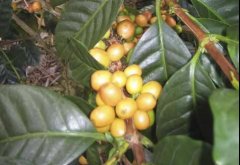
Coffee variety: Pacama (Pacamara)
Pacamara coffee is a hybrid of Pacas Pacas (a sudden variant of the bourbon species) and giant bean Maragogype (a sudden variant of the Tibica species found in Brazil) found in El Salvador in the 1950s. The coffee tree is very tall, the branch spacing of the trunk is wider than that of Pacas Pacas, and the edge of dark green leaves is wavy. It is suitable for cultivation at the elevation of 900m to 1500m.
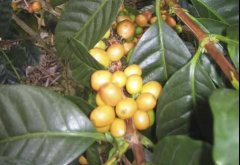
Introduction of coffee bean variety introduction of Pacamara (Pacamara)
Pacamara coffee is a hybrid of Pacas Pacas (a sudden variant of the bourbon species) and giant bean Maragogype (a sudden variant of the Tibica species found in Brazil) found in El Salvador in the 1950s. The coffee tree is very tall, the branch spacing of the trunk is wider than that of Pacas Pacas, and the edge of dark green leaves is wavy. It is suitable for cultivation at the elevation of 900m to 1500m.

Pakamara Coffee Pakamara Coffee Cultivated hybrid coffee varieties
Pakamala seeds are lustrous in color, full and rich in grains, slightly lower in density and hardness than ordinary beans. It is easy to overcook when baking with high fire, so it is necessary to adjust the time distribution of fire during baking, increase the baking time, and slow down the baking rhythm. When the beans are placed about 10 seconds after the first explosion, the surface wrinkles of the beans are basically unfolded, and the sourness is increased on the basis of retaining the sourness.

Introduction to the flavor characteristics of Malabar Manor
Malabar Manor is 1400 to 1800 meters above sea level, with a temperature of 15-21 ℃ and an annual rainfall of 2000 mm, which is very suitable for Arabica coffee production. Malabar's coffee plantation in Indonesia is managed by the concept of community forest management, and its tree species are certified by the Center's seed Certification and quality Control Bureau. Arabica in Malabar Manor