
"Production"
57160 article(s) found
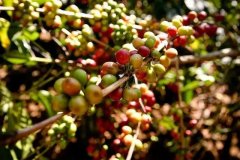
The production of Ugandan Arabica coffee beans accounts for only 10% of the country's total coffee production.
Boutique coffee has a rich and beautiful taste. Even if the coffee made of boutique coffee beans is not all fine coffee, it depends on whether it gives full play to the characteristics of coffee beans, whether it has a good taste, if not, it can not be called boutique coffee. In Uganda (Uganda), Arabica beans account for only 10% of the country's total coffee production, but

Coffee bean production methods and production methods
Kopi Luwak (Indonesian for coffee), Luwak refers to an Indonesian arboreal wild animal commonly known as the civet cat, which looks similar to the civet cat in southern China. Sumatra, Java, and

Coffee making skills 37 fancy coffee recipes
Fancy coffee making formula: 1. Italian pure (espresso) coffee-ESPRESS material: Italian steam pressurized kettle. The thickest stir-fried coffee beans are very fine ground 6-8 grams. Production: pour the right amount of boiling water into the Italian steam pot, put the coffee powder into the coffee basket, press, tighten the upper and lower pot, add heat, and pour the water into the upper pot for a while. It is produced. two。 Italian latte CARFFE LATTE: material: small ESPRESSO.2-4 cups

37 kinds of fancy coffee making formula
Fancy coffee making formula: 1. Italian pure (espresso) coffee-ESPRESS material: Italian steam pressurized kettle. The thickest stir-fried coffee beans are very fine ground 6-8 grams. Production: pour the right amount of boiling water into the Italian steam pot, put the coffee powder into the coffee basket, press, tighten the upper and lower pot, add heat, and pour the water into the upper pot for a while. It is produced. two。 Italian latte CARFFE LATTE: material: small ESPRESSO.2-4 cups

Production method of coffee beans the production process of coffee beans
First of all, the coffee bean is a red coffee fruit that is picked from the coffee tree and ripe by fermenting flat beans and round beans, as shown in the figure. The pale green core with a little blue in the middle is the coffee bean. In general, the core of a coffee fruit is oval. When two kernels are opposite to each other, flat beans are formed; sometimes a single kernel grows and forms.

Coffee bean production method production area
Ruwak coffee beans [the most famous coffee beans in history come from coffee beans left in the feces of cats after eating coffee beans] Musk Coffee (Kopi Luwak), Kopi (Indonesian, coffee), Luwak is an arboreal wild animal commonly known as the civet in Indonesia, which looks similar to masked palm civet in southern China. Produced in Sumatra, Zawa, and

The production line expansion project of Yunnan Coffee Factory is coming to an end.
In the first half of this year, Yunnan Coffee Factory made every effort to promote the expansion project of 5000 tons of three-in-one instant coffee packaging production line. At present, the concrete construction of the fourth floor has been capped. The main structure of the steel frame logistics warehouse has been basically completed. Now it has entered the installation and commissioning of production equipment. The 5000 ton three-in-one instant coffee packaging production line project of Yunnan Coffee Factory passed the evaluation on July 14, 2012.
After the drought in Yunnan affected the production of 30,000 mu of coffee for many years, the price went down again.
The continuous drought in Yunnan Province has had a great impact on the important local coffee industry. Data released by the Yunnan Coffee Association show that due to the impact of drought, about 30,000 mu of coffee in Baoshan and other places has been affected, which may lead to a 5% to 10% reduction in coffee production in the province, with an estimated economic loss of tens of millions of yuan. Simaomu, a subsidiary of Starbucks Aichi Coffee (Yunnan) Co., Ltd. (hereinafter referred to as Aichi Coffee).
Basic knowledge of Coffee 37 kinds of fancy Coffee recipe
Fancy coffee making formula: 1. Italian pure (espresso) coffee-ESPRESS material: Italian steam pressurized kettle. The thickest stir-fried coffee beans are very fine ground 6-8 grams. Production: pour the right amount of boiling water into the Italian steam pot, put the coffee powder into the coffee basket, press, tighten the upper and lower pot, add heat, and pour the water into the upper pot for a while. It is produced. two。 Italian latte CARFFE LATTE: material: small ESPRESSO.2-4 cups

Introduction to the production area of coffee bean flavor description and grinding scale treatment in Honduras
Honduran coffee comes from El Salvador. At first coffee production was in a state of unavoidable heat until the frost in Brazil in 1975. At that time, Brazil was hard hit and coffee production plummeted, while Honduras took the opportunity to take advantage of the surge in coffee production from 500000 bags to 1.8 million bags and was ransacked. It was only after that that coffee production in Honduras really developed. Now, Honduran coffee.

Nestle latest news: Nestle production label non-compliance fined 86,000 yuan Nestle most products are unhealthy
Food production date is related to food safety. For safety reasons, consumers often pay attention to important information such as production date and shelf life when purchasing food. According to several media reports, Nestle was fined 86,000 yuan for producing non-compliant food labels. According to the website of Shanghai City Market Supervision Bureau, Shanghai Nestle Product Service

History of coffee production and cultivation in Rwanda Coffee hometown people's Security of the Coffee Market in Rwanda
The history of coffee cultivation in Rwanda is very tortuous. In 1904, German missionaries introduced coffee to Rwanda. Exploited by Belgian colonists, coffee grew slowly and peaked in the 1930s. During this period, mainly large quantities, low-grade coffee production. The instability of colonial rule led to the Rwandan genocide in 1994. In a period of 100 days

Introduction to the production mode and production method of coffee beans
The coffee beans are treated after harvest, otherwise they will begin to ferment, making the coffee beans smell bad. The main methods of treatment are drying and washing, which will cause different flavors. Dry beans have complete natural mellow taste, gentle aroma and more gum, while water washing type has good mellow taste, high aroma and lively sour taste, which is also concentrated.

The preparation of 10 kinds of fancy Coffee
1. Italian pure (espresso) coffee-ESPRESS material: Italian steam pressurized kettle. Extremely fine grind 6-8 grams of stir-fried coffee beans: pour an appropriate amount of boiling water into the Italian steam pot, coffee powder into the coffee basket, press, tighten the upper and lower pots, add heat, and pour water into the upper pot for a while. Product 2. Italian latte CARFFE LATTE material: small cup ESPRESSO.2-4 cup hot milk production: in hot ESPRE
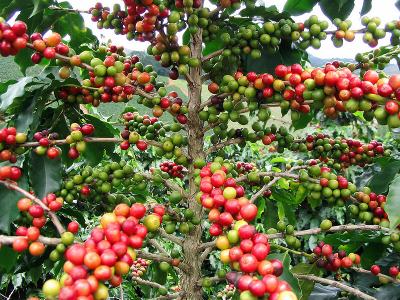
Fine coffee beans: 4 forms of Ethiopian coffee growing and producing
Growth and production patterns: There are four growth and production patterns in Ethiopia, from which 95% of coffee is produced. 1. Forest In Ethiopia's coffee-producing areas in the south and south-west, most of them are wild or planted under natural forests, which provide natural shade for coffee trees, but the resistance is slightly weak. This production system accounts for about

Introduction to the production mode of micro-batch boutique beans in Costa Rica: how to establish a manor production resume
The exchange of professional baristas please follow the coffee workshop (Wechat official account cafe_style) Costa Rica can be said to be a model for the production of micro-batches of top boutique coffee beans, and the living standards of farmers are much better than those in other coffee producing areas. About 10 years ago, small coffee farmers in Costa Rica started a revolution in microprocessing plants and set up their own processing plants to make beans with commercial beans.

Original production of Ch'ire Ameli Forest Coffee from Hill Emily processing Plant in Sidamo Coffee production area
Professional coffee knowledge exchange more coffee bean information please follow the coffee workshop (Wechat official account cafe_style) Ethiopia Sidamo Hill Emily processing Plant G1 washing Ethiopia Sidamo Chire Ameli G1 Washed production area: Sidamo level: G1 treatment method: Washed Process washing altitude: 1900m varieties: Heirloom Sidamo

Introduction to the production area of Fine Ugandan Coffee roasted degree treatment method and Flavor description
Uganda's coffee production ranks first in Africa, accounting for more than 70% of its total exports. Uganda is also the hometown and main producing area of Robes specialty coffee. In the 1960s, Ugandan coffee production remained at 3.5 million bags a year. By the mid-1980s, coffee production had dropped to 2.5 million bags a year, mainly for political reasons. But now coffee production is on the rise again, which is large at present.
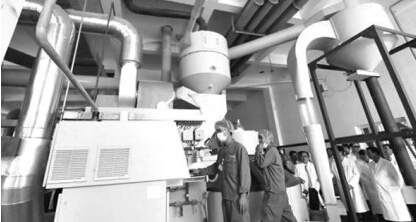
The latest news of coffee industry: equipment innovation to improve the quality of coffee production
Coffee is a favorite drink for many people, and the coffee beans harvested every year in Yunnan have become one of the local agricultural products with high added value and broad prospects. In order to improve the quality of coffee, not only the raw materials should be good, but also the production equipment should be new in order to obtain instant coffee with strong flavor and good taste. Therefore, many domestic manufacturers aim at coffee and develop new coffee production equipment one after another. It is reported that the whole coffee
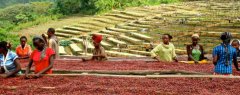
Ethiopian cooperatives introduce African boutique coffee beans
Production area of Sigiga Cooperative (1600-2500 m): Gedeo-Kochere Cochel members: 1862 people Land attribute: red Brown soil Certificate: Fair Trade Fair Trade, UTZ Sustainable cultivation, Organic Organic Coffee Finchewan Cooperative (1450-2000 m) production area: Gedeo-Wenago Vina members: 1271 people Land attribute: reddish Brown