
"adaptation"
3994 article(s) found
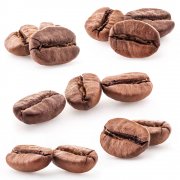
Output accounts for about 20% to 30% of the world's output. Robasta Coffee Tree Commercial Coffee
The bean shape of Robasta is larger, the front is gradually round, the back is round and convex, and the crack is straight. Robasta coffee trees are native to Madagascar in central and western Africa and Indonesia in Asia, and account for about 20% to 30% of the world's output. Robasta coffee tree is suitable for planting in the lowlands below 500 meters above sea level. It has strong adaptability to the environment and can resist bad conditions.

The three native species of coffee
The three main native species of coffee are coffee varieties: Arabica Arabica, Robusta Robusta, and Liberia Liberica. The first two are relatively long-term, while the latter is hardly in circulation on the market and is only traded within parts of West African countries. Arabica is mainly produced in Brazil, Colombia, Guatemala, Jamaica, Mexico and other American countries, the Caribbean Sea.
Introduction of three Coffee varieties
Arabica variety (Arabica) is suitable for plateau cultivation, Robesta variety (Robusta) is suitable for lowland cultivation, and Liberian variety (Liberica) is suitable for minimum cultivation.

What are the brewing steps of Costa Rican coffee brands
Professional barista communication please follow the coffee workshop (Wechat official account cafe_style) Costa Rica Helsar De Zarcero country: Costa Rica level: SHB production area: West Valley roasting degree: moderate roasting treatment: yellow honey treatment: about 40% pectin is removed; drying method requires the most direct heat absorption, subject to maximum light drying
Description of coffee bean flavor of Colombian Pradilla Manor Colombian coffee taste
Professional coffee knowledge exchange more coffee bean information Please follow Coffee Workshop (Wechat official account cafe_style) La Pradera Hacienda La Pradera is a specialty coffee project, which is certified to adapt to organic practice to ensure the harmlessness and quality of products. Fifty years ago, this was a piece of land in the dessertic Santander area that is now located in Chicamocha Canyon.
Coffee flavor description of Colombian coffee beans in La Pradilla Manor, Colombia
Professional coffee knowledge exchange more coffee bean information Please follow Coffee Workshop (Wechat official account cafe_style) La Pradera Hacienda La Pradera is a specialty coffee project, which is certified to adapt to organic practice to ensure the harmlessness and quality of products. Fifty years ago, this was a piece of land in the dessertic Santander area that is now located in Chicamocha Canyon.

A brief introduction to Coffee Culture in Ethiopia
Sustainable coffee culture Ethiopian coffee beans grow in close to the natural environment, after years of planting under the same growth conditions, Ethiopian coffee beans have gradually adapted to the environment here. More than 60% of coffee beans are grown in forests or semi-forests. The villages that grow coffee in large areas account for about the total amount of coffee produced in the country.

Coffee common sense Why is plain coffee bitter?
Today, several friends have expressed to varying degrees that they do not adapt to the bitter taste of pure coffee. I believe many people feel the same way, but why is pure coffee bitter? A seemingly simple problem has been bothering scientists for decades. Now, scientists have narrowed down their research and targeted two chemical molecules. You have a cup of coffee, actually.

Costa Rican yellow honey taste fragrance Costa Rican coffee types and prices
Professional barista communication please pay attention to coffee workshop (Wechat public number cafe_style) factory name: Dazhen Coffee Qianjie Cafe location: Guangzhou Baoqian Street 10 manufacturer contact information: 020-38364473 ingredient table: home baking shelf life: 90 net content: 227g packaging: raw maturity of bulk coffee beans: sugar-free origin: Costa Rican coffee species

Small mocha-mocha can be said to be the pearl treasure of the coffee industry.
The variety of mocha can be said to be the pearl treasure of the coffee industry. Is a variety of bourbon, from Ethiopia and Yemen, and then transplanted to Brazil, Hawaii, Guatemala and Colombia, the bean is naturally short and round, not peaberry, but after arriving in Hawaii, the small mocha was mixed with Tibica to become a tall mocha to adapt to the soil and water of Maui, Hawaii, but the bean shape is still preserved.

How about Yemeni mokamadeli coffee beans? Yemeni mokamadali written by teacher Han Huaizong
Professional baristas exchange please follow the coffee workshop (Wechat official account cafe_style) Yemen mocha Martell (YEMEN MOCHA MATTARI) this coffee, in fact, have long heard that the origin of MATTARI in Yemen's Martell Heights (Bani Mattari), coffee cultivation altitude of about 2000-2400m, quite high. In order to adapt to the climate of drought and little rain, coffee farmers use unique ladders.

African coffee growing countries which African countries are suitable for growing coffee African coffee producing country Uganda
For more information on coffee beans, please follow the Coffee Workshop (official Wechat account cafe_style) in Uganda, Robusta coffee production has been adversely affected by climate change, which has affected regional weather patterns. In recent years, Uganda experienced drier conditions during the normal spring rainy season and early summer, and experienced more at the end of the year.

The three native species of high-quality coffee
There are three main varieties of coffee: Arabica Arabica, Robusta Robusta, and Liberia Liberica. The first two are relatively long-term, while the latter is hardly in circulation on the market and is only traded within parts of West African countries. Arabica is mainly produced in Brazil, Colombia, Guatemala, Jamaica, Mexico and other American countries, and Costa Rica in the Caribbean.
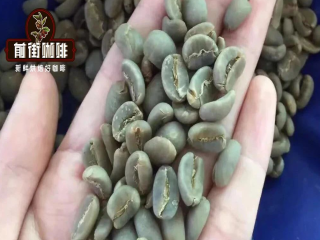
The type of coffee and its taste coffee variety Daquan coffee beans have the best flavor
According to biology, coffee varieties are divided into three major varieties: Arabica, Robusta, and Liberika. Arabica is one of the best flavor of coffee beans, it is currently recognized as the representative of boutique coffee. Arabica coffee accounts for 70% of the total output of economically grown coffee in the world, which is us.
On the function of Powder Press on Powder Hammer
I believe that every barista wants to have his or her own Tamper (or pressing powder hammer), because with each cup of espresso, the coffee maker uses a powder hammer to flatten the ground coffee powder, thus increasing the extraction quality of the coffee (although there are individual ways of not pressing the powder). So what's the use of the powder hammer? Why can it be so expensive? For

Low yield coffee cultivation conditions Cultivation process and method Introduction
West Africa is the origin of Liberian coffee. It has strong adaptability to various environments such as high temperature or low temperature, humidity or dryness. It is not resistant to leaf rust and its flavor is worse than Arabica. Therefore, it is only traded domestically in some West African countries (Libya, Cote d'Ivoire, etc.) or planted for research. Coffee circulating in the world market

Yunnan Arabica coffee how brewing price Brand characteristics Flavor description Taste treatment method Introduction
Yunnan small coffee how to brew the price of brand characteristics flavor description taste treatment method introduced small coffee brewing strategy siphon pot characteristics: boiled coffee aroma is good, alcohol degree is high. Corresponding coffee beans: non-heavy roast single coffee beans and mixed coffee beans, such as Blue Mountain, Colombia, Brazil, etc. Adapt to the crowd: pursuit of coffee quality, not afraid of pot washing trouble, rich

How much is Costa Rican yellow honey? Costa Rica yellow honey coffee price
Professional barista communication please follow the coffee workshop (Wechat official account cafe_style) Costa Rican coffee has always been considered to be the perfect type of classic flavor, balanced, clean, mild is his tone, this batch of western valley Yelzaro processing plant, famous for its excellent natural geographical conditions and excellent regional planting management technology, almost perfect classic flavor, in the acidity

The New World characteristics and Origin Story of the 11 most Common Coffee Bean varieties
There are still stories of shepherds about the origin of coffee. Whether the story is true or not, it is undeniable that most coffee beans do come from Ethiopia, Sudan and Yemen. After leaving the country of origin, most coffee beans have genetic mutations or artificial hybrids under natural conditions. You may have heard of Ethiopian native species, rose summer, but coffee in the world

A brief description of the flavor, taste and aroma characteristics of balanced sweet bourbon boutique coffee beans
Kaddura "Caturra" is a single gene variant of bourbon found in Brazil in the 1950s. It has better yield and disease resistance than bourbon, and its tree is shorter and easy to harvest. Unfortunately, it encounters the same problems as bourbon. As a result, it has a year off, and its flavor is equal to or slightly worse than bourbon beans. But it is more adaptable and can be planted with high density.