
"america"
25409 article(s) found

Boutique coffee beans: a detailed introduction to the classification and taste of famous coffee beans in South America
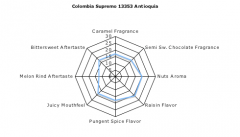
Columbia Xuefeng Coffee ColombiaKoguiSnowCapSpecialtySupremo: South American countries: Colombia: SierraNevada flavor: obvious nutty flavor, the overall taste is rich and varied! Columbia MDLS Manor ColombiaMDLS State: South American countries: Colombia production area: MDLS Manor Flavor: drupe fragrance with vanilla freshness and smooth berries

El Salvador Coffee, the smallest coffee producer in Central America, introduces Siberi in the Santa Ana volcano region.
It is located in Central America, bordering Guatemala and Honduras in the north, and the Pacific coastline in the west and south. The smallest country in Central America and the most densely populated country in Central America. The land area is 21393 square kilometers, the population is 6.25 million (data 2012), and the population density is 327 people / square kilometers. The economy is dominated by agriculture. In 2011, per capita domestic production
Introduction to the taste of famous coffee in South America
Columbia Xuefeng Coffee ColombiaKoguiSnowCapSpecialtySupremo: South American countries: Colombia: SierraNevada flavor: obvious nutty flavor, the overall taste is rich and varied! Columbia MDLS Manor ColombiaMDLS State: South American countries: Colombia production area: MDLS Manor Flavor: drupe fragrance with vanilla freshness and smooth berries

Nicaragua Coffee, Central America's Poorest Coffee Producer
Nicaragua is now one of the poorest countries in Central America. Because of its poor economic base, the coffee industry is still in a relatively backward state, while coffee farmers are in an extremely poor state. Fortunately, Nicaragua's coffee has received some foreign aid funds to improve the quality of its coffee. Nicaragua's Madagerba, Chinodega, Segovia region of coffee

Which major countries in America mainly produce coffee
Which major countries in the Americas mainly produce coffee began in Central America in the 18th century, and this important economic product originated in Costa Rica around 1840. Since Central America became independent from Spain in 1821, there has been a lot of war. Because Costa Rica was far away from Guatemala City, the capital of the Spanish colony at that time, it was not affected by the civil war, but Guatemala.

Bolivian Coffee Bean Flavor Bolivia Coffee Manor South America is rich in coffee beans, Bolivia
South America is rich in coffee beans, and Bolivia is no exception. The unique tropical rain forest environment in some parts of Bolivia provides excellent natural conditions for the growth of organic coffee. The aroma of Bolivian coffee is rich and unique, both the aroma of ground beans and the aroma of coffee are obviously rich, similar to the mixture of flower and fruit aroma, which is impressive.

Stories about the flavor characteristics of coffee beans from Africa, Central and South America and Asia
The three major producing areas of Africa: Africa is represented by Ethiopia. The method of treatment is Yega snow caffeine washed in water and berries in the sun. There is also a representative of Kenya, which has the same berry flavor as Ethiopia and has a unique solid wealth. Central and South America: central and South America has a mild flavor. It is also often expressed in the flavor of caramel. Many people from Brazil and Brotherhood

A detailed introduction of the coffee production areas of Costa Rica on behalf of coffee from Central America.
For the exchange of professional baristas, please follow the Coffee Workshop (official Wechat account cafe_style). There are seven countries in Central America, namely, Belize, Costa Rica, El Salvador, Guatemala, Honduras, Nicaragua and Panama. All seven countries in Central America produce coffee, among which Guatemala, Costa Rica and Honduras are global coffee exporters.

Dirkley's "Father of Coffee trees in Central and South America"
In the middle of the 18th century, cafes were opened in major cities in Europe, and the huge demand for coffee led to the popularity of growing coffee in Central America. At present, most of the Tibica coffee trees in Central America are related to the coffee mother tree transplanted by Deckley. In 1777, 19 million coffee trees were planted on Martinique Island alone. Haiti, Puerto Rico and Cuba in the Caribbean followed suit to grow coffee.

Which countries in Latin America grow coffee?
Which countries grow coffee in Latin America? in 1721, French naval officer Gabriel Mathieu de Clieu brought the first coffee sapling from Africa to the Latin American island of Martinique, which is the origin of coffee cultivation in Latin America. Because France at that time was under the rule of the Bourbon dynasty.
Coffee mellow Tour (22) Coffee's second hometown-South America
Finally, finally going to South America. From the hometown of coffee in Africa, to the crown of coffee in the Caribbean, to the third world of coffee in Central America, now it has finally arrived in South America, the second hometown of coffee. The second hometown is worthy of the name. There are Brazil, the largest coffee producer in the world, and Colombia, the third largest coffee producer (Colombia is also the best Arabica coffee and washable coffee beans in the world.
A brief talk on the Regional Flavor of Coffee in Central America-- Panama, which is famous for its rosy summer
For the exchange of professional baristas, please pay attention to the coffee workshop (Wechat official account cafe_style) the Boguit producing area (Boquete) is the oldest and most famous coffee producing area in Panama, located on the eastern side of the Baru volcano, on a plateau about 10002000 meters above sea level. The ecological environment of the Bogut area is intact and the rainfall is abundant. The good planting environment makes the coffee in the Bogut area have a unique aroma.

Dirkley-- the Father of Coffee trees in Central and South America
In the middle of the 18th century, cafes were opened in major cities in Europe, and the huge demand for coffee led to the popularity of growing coffee in Central America. At present, most of the Tibica coffee trees in Central America are related to the coffee mother tree transplanted by Deckley. In 1777, 19 million coffee trees were planted on Martinique Island alone. Haiti, Puerto Rico and Cuba in the Caribbean followed suit to grow coffee.
Boutique coffee beans: a detailed explanation of the producing areas and flavor of the world's boutique coffee beans
South American Coffee region introduction / SouthAmericanArea Columbia [Xuefeng] Coffee ColombiaKoguiSnowCapSpecialtySupremo: South American countries: Colombia: SierraNevada flavor: obvious nutty flavor, rich and varied overall taste. Columbia [MDLS] Manor ColombiaMDLS country: South American country: Colombian region

Story of the Origin of Coffee Bean cultivation in Central America and Costa Rica Coffee beans in Milasu Manor in Tara Pearl producing area
Professional coffee knowledge exchange more coffee bean information please follow the coffee workshop (Wechat official account cafe_style) Costa Rica's seven main coffee producing areas are distributed from northwest to southeast along with the inland central plateau. Costa Rican volcanic terrain has fertile volcanic ash, mild and suitable temperature, and stable abundance.
Leaf rust sweeps coffee plantations in Central America
According to a recent report released by the International Coffee Organization, the production of coffee crops in Central America has been reduced by about 15% in 2012 and 2013 due to leaf rust. As the overall economic growth in Central America slows, coffee growers in the region will suffer a double whammy of reduced production of coffee crops and a collapse in coffee prices, which will also hit the economies of Central American countries hard. As the coffee crop in Central America is in the international coffee market.

Analysis and summary of coffee characteristics from different origins
Jamaica Caribbean consistent sour, bitter, sweet, aroma is also good light ~ Central Brazil South America taste mild, sour bitter moderate, aroma soft Central Mexico North America grain large and sour strong, fragrant medium ~ deep Colombia South America sour, bitter, sweet heavy and thick, color as a good wine medium ~ deep Salvador Central America sour, bitter, sweet moderate ~ deep brother

Introduction to Grinding scale of characteristic species of Coffee beans in Latin America
In Latin America, coffee is produced in South America, where Brazil accounts for 30-50% of the world's production, while Colombia produces 10-20%. At present, the coffee production of Asia and Vietnam has exceeded that of Colombia. In addition, Indonesia has also developed into the world's fourth largest coffee producer Central and South America is the world's largest coffee producing area, where there are numerous boutique coffee. Feel free to take Colombia.
King's Arm Cafe North America's "British Headquarters"
It wasn't until 1696 that the first coffee shop opened in New York City. English immigrant John Hatchen opened his own King's Arm Cafe on Broadway. Hachen's coffee-house was modelled on the London coffee-houses he knew, and had a large room upstairs with tables covered with green tablecloths. Through the door to the balcony, enjoy the beautiful river view and dock, can let businessmen early

Central America's poorest coffee-producing country (Nicaragua)-Matagalpa
Nicaragua is an economically backward agricultural country and one of the poorest countries in Central America. The unemployment rate is very high and the people live in poverty. Coffee is the pillar industry of Nicaragua, producing nearly 100,000 tons of coffee beans every year. Because of the poor economic base, the coffee industry is still relatively backward, and coffee farmers are also in a relatively poor state. Although Nicaragua is a Central American country with a large territory