
"arc"
523 article(s) found

Introduction to the characteristics of Yejia Coffee, Grinding scale, Manor Flavor description
Yega Chuefei coffee features taste grinding scale manor flavor description variety introduction 1. Arabica grows Arabica beans, and the world-famous Blue Mountain Coffee and Mocha Coffee are almost all Arabica varieties. Shape: the shape of the bean is small, the front is long oval, the middle crack is narrow and tortuous, and the arc on the back of the bean is flat, uniform in size and shiny in color. Origin: a

How to adjust the thickness of mazzer bean grinder? what do you think?
How to adjust the thickness of the mazzer bean grinder? how to adjust the size of the bean mill is a machine, as long as it is a machine, there will be errors, so the scale is only a reference. I never look at the scale, but only adjust the grinding scale according to the grinding degree of the ground powder. Different brands and different grinding scales are different, and the performance of the same type of bean grinders of the same brand under the same scale is not exactly the same.

Characteristics of coffee beans from three regions-Characteristics of coffee beans from Central and South America
Characteristics of coffee beans from three regions-Characteristics of coffee beans from Central and South America Arabica Arabica beans, world-famous blue mountain coffee, mocha coffee, etc., almost all Arabica species. Appearance: bean shape smaller, positive was long oval, narrow and tortuous cracks in the middle, beans back arc shape more flat, consistent size, uniform color luster. Origin: Arabica coffee

How to soak coffee beans in order to taste good?
Arabica beans, world-famous Blue Mountain Coffee, Mocha Coffee and so on, are almost all Arabica species. Shape: the shape of the bean is small, the front is long oval, the middle crack is narrow and tortuous, and the arc on the back of the bean is flat, uniform in size and shiny in color. Origin: Arabica coffee is grown in Brazil, Colombia, Central America and the Caribbean.

What are the types of coffee trees?
The shape of the bean is small, the front is long oval, the middle crack is narrow and tortuous, and the arc on the back of the bean is flat. Arabica coffee is grown in Brazil and Colombia in South America, Central America, Costa Rica in the Caribbean, Guatemala, Jamaica, Mexico and Ethiopia. Arabica coffee beans are large, uniform in size and glossy in color.

What are the smaller coffee beans? is it sweetened to drink coffee?
1. Arabica grows Arabica beans, and the world-famous Blue Mountain Coffee and Mocha Coffee are almost all Arabica varieties. Shape: the shape of the bean is small, the front is long oval, the middle crack is narrow and tortuous, and the arc on the back of the bean is flat, uniform in size and shiny in color. Origin: Arabica coffee is grown in Brazil, Colombia and Central America in South America.

Introduction to the price of Arabica coffee beans the characteristics of Arabica coffee beans
Arabica coffee trees grow between 900m and 2000 m above sea level; they are hardy, and the suitable growth temperature is 1524 ℃; they need more humidity, and the annual rainfall is not less than 1500 ml. At the same time, they also require higher cultivation techniques and conditions. Arabica coffee beans are mainly grown in South America (except Argentina and parts of Brazil), Central American countries and Africa.

What is the history or origin of Blue Mountain Coffee?
The shape of Arabica bean is small, the front is long oval, the middle crack is narrow and tortuous, and the arc on the back of the bean is flat. Arabica coffee is grown in Brazil and Colombia in South America, Central America, Costa Rica in the Caribbean, Guatemala, Jamaica, Mexico and Ethiopia. Arabica coffee beans are large, uniform in size and color.

Arabica Coffee, the most important kind of coffee in the world, okay?
Professional coffee knowledge exchange for more information about coffee beans, please follow the coffee workshop (Wechat official account cafe_style) Arabica species (scientific name CoffeeArabica). The origin of Arabica species is Ethiopia's Abyssinia Plateau (present-day Ethiopian Plateau). In the early days, it was mainly used as medicine to eat, and developed the habit of baking and drinking in the 13th century.

Choice of coffee machine powder press-how to choose a household coffee machine
Choice of coffee machine powder press-how to choose a household coffee machine 1. About the role of the powder hammer in making espresso, the powder hammer has several important functions in making espresso: the first is to press the ground coffee powder so that hot water can fully penetrate and flow through the coffee cake; the second is to keep the gap between the coffee powder consistent, because the coffee powder will begin to expand after absorbing water, which can easily lead to extraction imbalance;
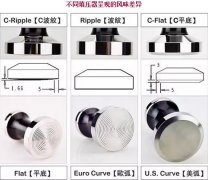
The differences among the six types of powder presses find a suitable powder press and do a good job of each cup of Italian concentration.
Powder pressing hammer is one of the most commonly used tools in espresso. The main purpose is to flatten and tamp the coffee powder in the handle to form a flat horizontal plane, to better let the hot water be extracted through the coffee powder, and to make the coffee powder withstand the great pressure caused by the coffee machine extraction. without being washed away and impressing the quality of the extraction. The pressing force of the powder should be ground according to the coffee powder.

Semi-automatic coffee machine what kind of powder hammer is good-Delong semi-automatic coffee machine brand price introduction
Semi-automatic coffee machine powder hammer what kind of good-Delong semi-automatic coffee machine brand price introduction in Italian coffee machine temperature value is mainly the size of the boiler or heating block, as well as good heat conduction material, toy machine and professional Italian coffee machine here there is an obvious difference. In general, many standard toy machines are equipped with small boilers (below 200ml) or small heating blocks, which are difficult to achieve.

Powder filler and espresso extract how to make espresso with coffee beans
Filler base diameter: the filler base diameter is very important, but the mainstream problem in the market is not the filler diameter, but its effective filling area. Most filler manufacturers, when making fillers, almost always wrap the edge of the base in an arc. However, this small design reduces the effective filling area. The following figure illustrates this phenomenon (VS

What is the development trend of coffee use in the types of coffee trees?
The shape of Arabica bean is small, the front is long oval, the middle crack is narrow and tortuous, and the arc on the back of the bean is flat. Arabica coffee is grown in Brazil and Colombia in South America, Central America, Costa Rica in the Caribbean, Guatemala, Jamaica, Mexico and Ethiopia. Arabica coffee beans are large, uniform in size and color.
How to eat Robusta coffee beans_Robusta coffee beans characteristics_Robusta how much money a catty
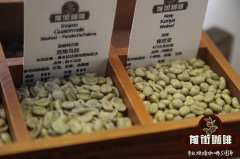
Professional coffee knowledge exchange More coffee bean information Please pay attention to coffee workshop (Weixin Official Accounts cafe_style) Arabica coffee bean shape is small, the front is long oval, the middle line crack is narrow and tortuous, S-shaped, the arc shape of the back of the bean is more complete. Robasta coffee beans are larger in shape, tend to be round on the front, and split cracks in the middle into straight lines. (with

How to use the coffee powder press correctly-what kind of coffee powder is used in the French press
How to use the coffee powder press correctly-what coffee powder is used in the pressure pot, but it is also this point. I think it can most increase the shaking, when you use the counterbalance to grow beans, find the scale, and determine the amount of powder, if you can make a decent cup of esp after pressing the powder with a force that you think is more comfortable, then the foundation is done. The reason why it is said that the strength of the powder to mediate can increase wavering, because

Coffee bean varieties and differences Introduction to the characteristics of the three native species of coffee See this simple and easy to understand
Professional coffee knowledge exchange More coffee bean information Please pay attention to coffee workshop (Weixin Official Accounts cafe_style) Front Street-Introduction of three major coffee varieties 1. Arabica Arabica beans, world-famous Blue Mountain coffee, mocha coffee, etc., almost all Arabica varieties. Appearance: small bean shape, long oval shape on the front, narrow and tortuous crack in the middle, circular arc shape on the back of bean

Powder filler and Italian espresso extraction filler Italian coffee machine Italian coffee beans
Filler base diameter: the filler base diameter is very important, but the mainstream problem in the market is not the filler diameter, but its effective filling area. Most filler manufacturers, when making fillers, almost always wrap the edge of the base in an arc. However, this small design reduces the effective filling area. The following figure illustrates this phenomenon (VS

How can coffee beans be divided into male beans and female beans? will the taste of coffee really be more pleasant than that of female beans?
Professional coffee knowledge exchange more coffee bean information please follow the coffee workshop (Wechat official account cafe_style) front street-coffee beans introduced in the coffee fruit development process, inside the seeds (that is, coffee beans) split into 2, plane inside, arc outside, this kind of coffee bean is become flat beans, but also the most common form, for the mother bean. The poorly developed seed did not enter

Arabica Coffee Variety Variety Quality Flavor Description Processing Method Taste Grindness Introduction
Arabica is a large shrub with oval, dark green leaves and oval fruits. It usually has two slightly flat beans. The bean body is small and round, the front is long oval, the middle crack is narrow and curved in S shape, and the arc shape of the back of the bean is relatively flat. Caffeine content is about 1% 1.7% Arabica coffee tree, one of the most important coffee trees in the world. The Arabica species (