
"climate"
29418 article(s) found

Colombian coffee beans with mild climate introduce the taste of Colombian coffee beans
Colombia's mild climate, humid air, and diverse climate make it a harvest season all year round, with different kinds of coffee ripening at different times. What they grow is Arabica coffee beans of unique quality, and the coffee made from this coffee bean has a rich taste and endless aftertaste, which can be called fine coffee. Nowadays, many people combine Colombian coffee with high quality and delicious coffee.

Climate change affects coffee production. 25 million coffee farmers' livelihoods are threatened.
A coffee farmer in the Mexican state of Chiapas recently talked about drastic climate change in an interview with Alicia Frank, a researcher at the University of California. In the past, there was usually only mild drizzle, but now there are frequent torrential rains, causing coffee trees to flood. These problems are by no means confined to Mexico. In South America, Asia and Africa, droughts and storms caused by global warming
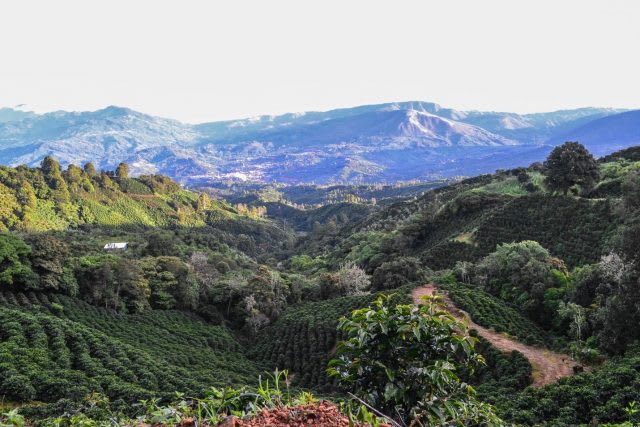
What are the local conditions? What is the effect of local conditions on the flavor of coffee?
Professional coffee knowledge exchange more coffee bean information please follow the coffee workshop (Wechat official account cafe_style) What Is Terroir and How Does It Affect Your Coffee We often hear the word "local conditions" when talking about coffee, but what exactly does "local" mean? Does it have anything to do with the flavor of coffee? Why do we need to care about the local environment? Author mining

What conditions do Rwandan coffee trees need to grow?
Rwanda throughout the multi-mountain and plateau, most of the region is a tropical plateau climate and savanna climate, mild and cool. With its natural conditions of high altitude and fertile volcanic soil, the country's fertile soil and favorable climate are conducive to plant growth. Rwanda is the only country in the world that can fully enjoy the harmony between soil, elevation and climate. In this unique

What are the local conditions? What is the effect of local conditions on the flavor of coffee?
Professional coffee knowledge exchange more coffee bean information please follow the coffee workshop (Wechat official account cafe_style) What Is Terroir and How Does It Affect Your Coffee We often hear the word "local conditions" when talking about coffee, but what exactly does "local" mean? Does it have anything to do with the flavor of coffee? Why do we need to care about the local environment? Author mining

The producing areas of Guatemala coffee beans distribute the climatic environment of Guatemala
Professional coffee knowledge exchange more coffee bean information Please pay attention to the coffee workshop (Wechat official account cafe_style) after the impact of the Kuroshio movement, people gradually began to acquire professional knowledge and technology related to the coffee industry. In addition to the annual large-scale coffee-related exhibitions, barista competitions and the ever-changing baking equipment of various countries, our loyalty and love for coffee is no longer

Climatic conditions of coffee bean growing areas in Kenya how to roast Kenyan AA coffee beans to taste good
Kenya's climatic and geographical conditions provide unique conditions for the growth of high-quality coffee beans, which are located in eastern Africa, the equator runs through the middle, and the East African Rift Valley runs through the north and south. It is bordered by Somalia to the east, Tanzania to the south, Uganda to the west, Ethiopia and Sudan to the north, and the Indian Ocean to the southeast. The coastline is 536 km long. There are many plateaus in the territory, with an average elevation of 1500 meters.

Introduction to Colombian Coffee with mild Climate and humid Air
Colombian coffee is divided into more than 200 grades, which means that the coffee is very regional. The country's coffee-producing areas are located in the Andes, where the climate is mild and the air is humid. Colombia has three Codiera mountains running north and south, right into the Andes. Coffee is grown along the highlands of these mountains. The mountain steps provide a diverse climate, and it is the harvest season all year round.

Introduction to the characteristics of Colombian coffee beans with mild climate and humid air
Colombia's mild climate, humid air, and diverse climate make it a harvest season all year round, with different kinds of coffee ripening at different times. What they grow is Arabica coffee beans of unique quality, and the coffee made from this coffee bean has a rich taste and endless aftertaste, which can be called fine coffee. Nowadays, many people combine Colombian coffee with high quality and delicious coffee.

The rich smell of Columbia exquisite boutique coffee beans planting geographical location, climate, altitude is simple
The annual temperature there is about 18 degrees Celsius, the annual rainfall is 2000 to 3000 mm, latitude 1-11 15 north, longitude 72-78 west, the specific range can exceed 2.000 meters above sea level. By a special combination of factors, the latitude, altitude, soil, plant origin of species and varieties of coffee in the coffee growing areas of Colombia, the climate and tropics of the coffee growing areas

Guatemala Flower God Coffee Planting Situation Location Climate Elevation Profile
Coffee was introduced to Guatemala in 1750 by Father Jesuit, and German colonists developed the coffee industry in the late 19th century. Today, most of the coffee industry is produced in the south of the country. Guatemala has seven major coffee producing areas, each producing area produced by the coffee flavor is different, but in summary, Guatemala coffee are

Introduction of American Hawaiian coffee beans with special growth and climatic environment
Such superior natural conditions make Arabica coffee in Kona produce more coffee than any other plantation in the world, and maintain high quality, unique growth and climate environment to create a stronger coffee flavor. But to the regret of coffee fans, only about 1400 hectares of Kona coffee is produced, although Hawaii is often affected by tornadoes.

The relationship between coffee bean quality and altitude, the relationship between air temperature, and the harm of climate change to coffee trees.
Professional coffee knowledge exchange more coffee bean information please follow the coffee workshop (Wechat official account cafe_style) altitude: a symbol of coffee quality? Higher altitude is often associated with better sweetness and more complex coffee flavor; to be exact, there is a correlation between the two, but not causality. To a large extent, the factors that affect the quality of coffee
With the global warming, the production of boutique coffee may be reduced.
Half of the arable land needed to produce coffee will disappear by 2050. This is the result of a new research model that assesses how climate change will change the conditions under which coffee beans grow, such as temperature and rainfall. The researchers first acquired Arabica Coffee (coffeaarabica) and Robusta Coffee (coffea), the two main coffee species currently used in the world.

Will the weather affect the flavor of the coffee during processing? What is the process of coffee processing?
As discussions about climate change become mainstream in the media in 2019, it is well known that global warming is no longer a distant future. Rising sea levels and rising temperatures have affected many aspects of human life. Agriculture is one of the most changing areas, and agriculture itself is also an important factor in greenhouse gas emissions. This will have a significant impact on coffee production.

With a humid climate, Rain Water's abundant Cuban crystal coffee
With fertile land, humid climate and abundant Rain Water, Cuba can be called a natural treasure land for coffee cultivation. The suitable natural conditions provide a favorable natural environment for the growth of coffee trees. Coffee is well cultivated and developed here, and the best coffee growing area in Cuba is located in the Central Mountains. Because in addition to growing coffee in this area, there are also precious minerals such as quartz and crystals.

Jamaica Blue Mountain Coffee Regional Climate
The unique flavor of Blue Mountain Coffee is related to the unique geographical location and climatic conditions of Blue Mountain. Blue Mountain is located in the coffee belt between 25 degrees north latitude and 25 degrees south latitude, with fertile new volcanic soil, fresh air, no pollution, rainy all the year round and great temperature difference between day and night. Most importantly, clouds cover the top of the mountain every afternoon, not only as a natural shade for coffee trees, but also for coffee trees.
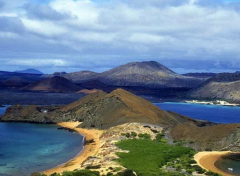
An introduction to the climate and environment of coffee growth in India's unique Hancody Manor.
Unique Hancodi AAA producing area: Indian Karnataka Godagu County Manor name: Hancode Hancody Manor planting height: altitude 1000 m-1500 m Climate: average annual rainfall 2500 mm harvest time: 11-January of the following year treatment: washing treatment product features and taste: Hancodi has a 500ha coffee estate, fruit located in southern India

High-balanced Columbia exquisite boutique coffee bean cultivation geographical location, climate, altitude is simple.
The annual temperature there is about 18 degrees Celsius, the annual rainfall is 2000 to 3000 mm, latitude 1-11 15 north, longitude 72-78 west, the specific range can exceed 2.000 meters above sea level. By a special combination of factors, the latitude, altitude, soil, plant origin of species and varieties of coffee in the coffee growing areas of Colombia, the climate and tropics of the coffee growing areas

The reason for the variety of coffee flavor in Guatemala: the micro-climate combination forms the personality and characteristics of coffee flavor.
Communication of professional baristas Please pay attention to Coffee Workshop (Wechat official account cafe_style) after the impact of the Kuroshio movement, people gradually began to possess professional knowledge and technology related to the coffee industry. In addition to the annual large-scale coffee-related exhibitions, barista competitions and the rapid development of baking equipment, our loyalty and love for coffee is no longer just to meet the status quo.