
"climate"
29418 article(s) found

Climatic characteristics of coffee producing areas in El Salvador
On the whole, Salvadoran coffee inherits the mild quality of Sino-American coffee, which is soft, slightly sour and has beautiful sweetness. At the same time, it also has its own characteristics: the aromatic taste is slightly sour and very soft; it is pure and has no miscellaneous flavor, and the taste balance is excellent; the smooth feeling like cream chocolate is impressive; the dense feeling of the coffee in the mouth gives the coffee depth.

Development trend of the price of coffee and raw beans
Major coffee producing areas around the world, including Brazil, have significantly reduced production due to climate change, and coffee prices are likely to soar in the future, according to an article in Fortune magazine on April 30. However, the price of coffee will not rise this year, at least not significantly. But there are signs that a large number of speculators are rushing into the market

Planting coffee trees requires the weather, climate and soil quality of the province.
1. Arabica coffee is not resistant to high temperature and humid climate, nor can it stay at a low temperature below 5 ℃ for a long time, so it is mostly planted on steep slopes at elevations of 1000 to 2000 meters above sea level. On the other hand, Robusta caffeine is adaptable (Robusta means tenacious) and is mostly grown in lowlands below 1000 meters above sea level. The average rainfall for the whole year is in

Introduction to Lazmus Manor in Columbia Coffee producing area with mild Climate
Colombia, located in the northwest of South America, is a beautiful country with a long history. Indians have lived on this land since ancient times. It was colonized by Spain in 1531 and gained independence in 1819. It was renamed in 1886 to commemorate Columbus, the discoverer of the American continent. In 1808, a priest transferred coffee from the French Antilles to Venezuela.

Introduction to the fragrant coffee flavor and taste of the coffee in Hassanda Coffee Garden in Ecuador
Ecuador is divided into the western coast, the central mountains, the eastern Amazon River basin and the four central regions of the Galapagos Islands, with diverse climatic conditions. The western coastal plain belongs to the tropical rain forest climate, with an average temperature of 23-25 ℃. The central Andes. The intermountain basin in this area belongs to the savanna climate, and the mountain belongs to the subtropical forest climate, with perennial snow above 4000 meters above sea level. Annual average decline

New wild coffee varieties found in Africa Arabica coffee varieties are expected to improve their high temperature resistance.
For more information on coffee beans, please follow the coffee workshop (Wechat official account cafe_style). A recent study by the Potsdam Climate impact Institute shows that climate change will affect the production and quality of boutique coffee beans in Ethiopia. In order to ensure that the global coffee supply chain can adapt to climate change, coffee planting researchers are also constantly looking for

Coffee farms in Ethiopia may be relocated due to climate change
Professional baristas follow Coffee Workshop (Wechat official account cafe_style) A new study warns that climate change is having a huge impact on coffee farms in Ethiopia, forcing farmers to relocate their farms or lose their crops, foreign media reported. These troubles are caused by rising temperatures and reduced rainfall, resulting in a reduction in coffee cultivation. Decades later, 60% of Ethiopia
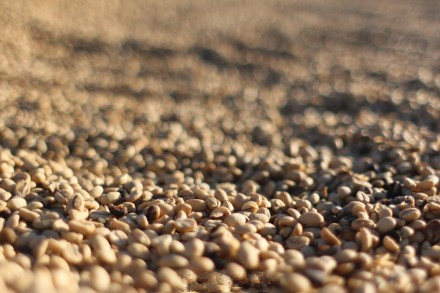
World Coffee Information Latin American caffeine climate warming is facing decline
Organic coffee in Latin America is under threat due to the spread of rust leaf disease at higher altitudes due to global warming, Taiwan's United News Network reported recently. For nearly six years, a fungus commonly known as "coffee rust" has killed a large number of coffee trees in Central America, so many that scientists believe that coffee harvests in the region could be reduced by as much as 40%. The culprit is what scientists say

Kenyan Coffee touching Story of Kenyan Coffee the impact of Kenya's climate on coffee
Professional coffee knowledge exchange more coffee bean information please follow the coffee workshop (Wechat official account cafe_style) when you say "Kenya", you think of the African prairie and the animal migration, is there anything else? The coffee-loving editor immediately thought of mellow coffee. Kenya is the largest coffee-producing area in East Africa, and it is also a representative term for fine coffee. Even Starbucks sells Kenyaca.

Among the three major non-volcanic coffee producing areas in Guatemala, the tiny Tenango Highland has the driest climate and the sea.
Highland Huehue: of the three major non-volcanic coffee producing areas in Guatemala, the Ginango Heights has the driest climate and the highest elevation. The dry and hot wind from Mexico's Tehuantepec plateau protects the area's coffee from frost, and coffee can be grown to 2000 meters (6500 feet). Because of its remote location, all coffee

Taste of Hawaiian Kona Coffee with suitable Climate introduction Fine Coffee beans Hawaiian Coffee beans
Kona coffee, Arabica, beautiful appearance, average neat bean shape, clear taste, medium mellow, slightly sour taste, strong aroma and long aftertaste. Kona coffee is divided into four grades, namely Extra Fancy, Fancy, Prime and Gr.No.1. Due to the low output and high production cost, the price of Kona in the market is catching up with the increasing demand for fine coffee.

A brief introduction to the planting situation, geographical location, climate and altitude of high-quality coffee beans in Antigua
Like Guatemala's boutique coffee, Antigua coffee is grown in shade. In Antigua, shade is mainly used to protect coffee trees from frost, which is cold and sometimes frosty from December to February every year. Dense shade and extremely shallow aquifers work together to create a unique micro-climate for the coffee trees living in it. Ann

Grass-scented boutique coffee beans from Rwanda: a brief introduction to geographical location, climate and altitude
The mission of the Rwanda Coffee Association is to manage and supervise the operation of the coffee industry in Rwanda from production to sale. The recently revised mission focuses on policy formulation and implementation, with more emphasis on the need to improve the professionalism of the coffee industry and to increase marketing efforts. Since the establishment of the Rwanda Coffee Association, it has developed Rwanda very well.

Introduction to the Fine Coffee Bean Manor in Guatemala Coffee growing Environment
Guatemala is located in the tropics, the northern and eastern coastal plains have a tropical rain forest climate, the southern mountains have a subtropical climate, the year is divided into two dry and wet seasons, with the wet season from May to October and the dry season from November to April of the following year. The narrow and fertile flatlands on the Pacific side of Guatemala have a tropical climate. The central plateau is also the cultural center of Guatemala, where the year-round temperature ranges from 1300 to 1800 meters.

The world's best coffee producers are threatened by climate change
Pay attention to coffee reviews (Weixin Official Accounts vdailycom ) and find a good cafe to open your own shop. What is your favorite coffee? Cat shit, blue mountains don't just look here, in fact, the best coffee to drink in Ethiopia. An international coffee connoisseur ranks Ethiopian coffee as the best coffee in the world; American thrillist.com

Description of climate, topography, taste and flavor of Coffee in Crystal Mountain, Cuba
Following the comment (official Wechat account vdailycom) found that the Republic of Cuba [Cuba] is one of the few socialist countries in the world (China, North Korea, Cuba, Vietnam, Laos). Cuba is the first country in the Western Hemisphere to establish diplomatic relations with China, and it is the only socialist country in the Americas. Why is it subject to sanctions?
Yunnan has geographical and climatic advantages for developing high-quality coffee industry
Speeding up the transformation of medium and low-yield coffee, benefiting the people and promoting the development of active exhibitors to enhance the international competitiveness of coffee products Yunnan has the geographical and climatic advantages of developing high-quality coffee industry According to Kunming Customs statistics, Yunnan coffee exports in 2011 earned 130 million yuan, an increase of 49.9% year-on-year, becoming one of the characteristic agricultural products in Yunnan Province with the fastest export growth. During the Twelfth Five-Year Plan period, coffee has been the focus of our province.

The most ideal climatic conditions for the growth of coffee beans in India the main variety of coffee in India is Robusta.
Professional coffee knowledge exchange more coffee bean information Please follow the coffee workshop (official Wechat account cafe_style) the ideal climatic conditions for the growth of coffee beans in India are temperature between 23 to 28 degrees Celsius, rainfall between 1.5m and 2.0m, and a dry season of 2-3 months after the rainy season. The cold temperature near freezing point is not suitable for growing coffee. Although the rainfall in southern India is less than 1.

Introduction to the fragrant Ecuadorian Coffee Flavor and the Fine Coffee in the Manor area
Ecuador is divided into the western coast, the central mountains, the eastern Amazon River basin and the four central regions of the Galapagos Islands, with diverse climatic conditions. The western coastal plain belongs to the tropical rain forest climate, with an average temperature of 23-25 ℃. The central Andes. The intermountain basin in this area belongs to the savanna climate, and the mountain belongs to the subtropical forest climate, with perennial snow above 4000 meters above sea level. Annual average decline