
"equator"
4624 article(s) found

An introduction to the flavor description of Colombian Ramon coffee from the equatorial region.
The flavor description of Colombian Ramon coffee, which tastes extremely from the equator, introduces that many parts of Colombia are between 1200 meters and 1800 meters above sea level, with annual rainfall of about 2000 millimeters. Sufficient sunshine and rainfall are very suitable for coffee growth. In recent years, however, Jos é Ramon Corazos, who lives in the southern province of Uila, has gradually found that there is less and less coffee on his plantation.

What effect does the growing environment of coffee have on the variety of coffee? Where does coffee grow?
For more information on coffee beans, please pay attention to what kind of coffee varieties should be planted in coffee workshops (official Wechat account cafe_style). This involves complex genetic traits and ecosystems, and has become the hottest field of coffee science in recent years. (1) Coffee grown at higher altitude is more sour and fragrant, but its oil concentration is lower than that of low altitude coffee. These two

Unique aroma of Ecuador Santa Cruz Manor Coffee Flavor and Taste
Guayaquil is a big city in Ecuador. It has always been thought that cities near the equator will become hot dogs, but although Guayaquil is close to the equator, it is refreshing because it is close to the bay and the sea breeze is blowing. Even in the hottest season, it is not unbearably hot. The monthly average temperature is 28.1 degrees in January and 14.6 degrees in July. Lizard Park is a must place to go.
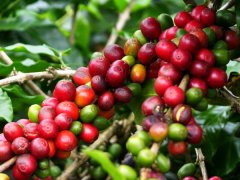
Which countries and regions can grow coffee? Why?
Since coffee trees are tropical plants, they need to be planted in warm places. The main planting area is distributed between latitude 25 south and latitude 25 north with the equator as the center, so this area is also called the coffee belt. However, even in the coffee belt, Arabica and Robeska do not grow in exactly the same area, but grow up in an environment that is more suitable for their own growth.

Which countries and regions can grow coffee? Why?
Since coffee trees are tropical plants, they need to be planted in warm places. The main planting area is distributed between latitude 25 south and latitude 25 north with the equator as the center, so this area is also called the coffee belt. However, even in the coffee belt, Arabica and Robeska do not grow in exactly the same area, but grow up in an environment that is more suitable for their own growth.

Coffee Manor of Incht Manor, Guatemala introduces the characteristics of Antigua Coffee in Guatemala
The closer to the equator, the higher the altitude, the more it can nourish the rich aromatic essence of coffee beans. Vivette Nan Fruit is the driest climate and highest altitude coffee producing area in Guatemala, which is high but not cold, resulting in solid extremely hard beans (SHB, see note below). The climate is dry but there is plenty of water, so the washing method naturally becomes the best choice. Note: like other countries in Central America, Guatemala

Colombia Risaralda Fair Trade Cooperative introduces Colombian water-washed Coca Coffee
For more information on coffee beans, please follow the Coffee Workshop (official Wechat account cafe_style) Colombia is a country with rich products such as sea pearls and vast tropical rain forests. With the Andes to the west, valleys and the equator to the south, this South American country has a unique geographical environment suitable for coffee cultivation. Examination

A brief introduction to the grading system of coffee
Professional coffee knowledge exchange more coffee bean information please pay attention to the coffee workshop (Wechat official account cafe_style) front street-Columbia Highland Linglong, coffee grading system sharing Nalinglong in addition to having the natural conditions to produce high-quality coffee: first, low latitude: near the equator, about 1 degree north latitude, so there is plenty of light throughout the year. 2. High altitude: the Andes begin with Zhi

Introduction to the mild and simple grinding scale of Ugandan coffee beans
Uganda is a landlocked country in eastern Africa, straddling the equator, bordering Kenya to the east, Tanzania and Rwanda to the south, the Democratic Republic of the Congo to the west and Sudan to the north. Most of the territory is located in the Central African Plateau, with lakes, with an average elevation of 1000,000,000 meters above sea level. There are many lakes and plateaus in the mountains, which are known as the water villages of the plateau. The western branch of the East African Rift Valley runs through the western border, with many rivers and lakes at the bottom of the valley. There is a Victor in Uganda.
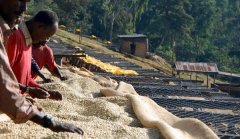
What are the effects of altitude, temperature and dimension on coffee? How do coffee varieties and altitude reflect each other?
For more information on coffee beans, please pay attention to what kind of coffee varieties should be planted in coffee workshops (official Wechat account cafe_style). This involves complex genetic traits and ecosystems, and has become the hottest field of coffee science in recent years. How does Dr. Dr. Bernard Guyot of the French Center for International Agricultural Development affect coffee on altitude and variety
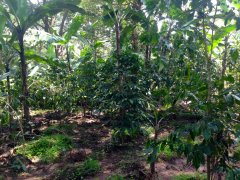
Africa's best Arabica coffee beans-Kenya AA coffee grown at high altitudes Kenya AA
Professional barista exchanges, please pay attention to coffee workshop (Weixin Official Accounts cafe_style) Africa's best Arabica coffee beans are in Kenya Located in Kenya below the equator in East Africa, coffee beans are grown at altitudes of 4,000 - 6,500 feet. The beans are round in thickness and have different grades and specifications according to size and taste from top to bottom.

Kenya Coffee Kenya Kahindu Manor introduction.
For more information on coffee beans, please pay attention to the coffee workshop (Wechat official account cafe_style) located in Kenya below the equator of East Africa. The coffee beans planted are high-quality Arabica beans, thick and round coffee beans with seven grades according to the size of coffee beans, and taste divided into six grades from top to bottom. "Kenya AA" is very popular.

A brief introduction to the treatment method of grinding degree and baking degree of Ecuadorian coffee with unique taste
Ecuador is one of the few countries in South America that produces both Arabica and Robbins. However, as the land suitable for Arabica coffee trees is decreasing, the production of Robbins coffee is gradually increasing. The best Arabica coffee comes from the Andes, especially the Chanchagu Valley (Chanchamgo Valley), which is divided into two mountains, from the south to the south.

An introduction to the characteristics of Ecuador Coffee Flavor Manor with Special aroma
Ecuador is the highest Arabian coffee plantation in the world. Since the coffee tree was first introduced into Ecuador in 1875, the quality of its coffee has remained unchanged for 100 years, especially the coffee harvested in early June every year, which is known as the best coffee in the world. Ecuadorian coffee beans are divided into Galapagos and Segante, both of which have large granules and large quantities.
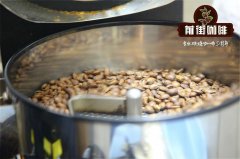
How about Ecuadorian coffee brand Galapagos coffee? is Ecuadorian coffee good?
Professional coffee knowledge exchange more coffee bean information please pay attention to coffee workshop (Wechat official account cafe_style) located in South America between Colombia and Guelu Ecuador, coffee cultivation has a long history, Loha region in southern Ecuador, close to the Andes Mountains, is one of the highest coffee-growing regions in the world, is also the country's important coffee export city

Introduction to Galapagos Coffee in Ecuador Coffee Manor
The Republic of Ecuador is located in northwestern South America. It is bordered by Colombia in the northeast, Peru in the southeast and the Pacific Ocean in the west. It covers an area of 256370 square kilometers and the coastline is about 930km long. The equator runs north of the border, and Ecuador means the Spanish equator. [3] Climate Ecuador is divided into the western coast, the central mountains, the eastern Amazon basin and the Galapagos Group

Introduction to the producing area of high-quality coffee beans in Ecuador coffee manor with balanced acidity
The Republic of Ecuador is located in northwestern South America. It is bordered by Colombia in the northeast, Peru in the southeast and the Pacific Ocean in the west. It covers an area of 256370 square kilometers and the coastline is about 930km long. The equator runs north of the border, and Ecuador means the Spanish equator, which means Guayaquil is Ecuador's largest seaport. It faces the Pacific Ocean and backs against Mount Santa Ana. There is Pune Island nearby.

Overview and Prospect Analysis of World Coffee Market
Coffee is produced in the tropical regions of 20 degrees north and south latitude on both sides of the equator, with an annual global production of about 600 to 700 million tons. Based on the International Coffee Organization's 2004 guidance prices, the total annual world trade in coffee is approximately US $70 billion, while the total retail sales of international coffee products, analysed according to data originating in Italy, are US $140 billion. Brazil is the main producer (34% )

Which countries and regions can grow coffee? Why? Where does coffee come from? Coffee
Since coffee trees are tropical plants, they need to be planted in warm places. The main planting area is distributed between latitude 25 south and latitude 25 north with the equator as the center, so this area is also called the coffee belt. However, even in the coffee belt, Arabica and Robeska do not grow in exactly the same area, but grow up in an environment that is more suitable for their own growth.

Uganda Bukisu Coffee Bean Flavor Taste Description Variety Regional Characteristics Introduction
Uganda is a landlocked country in eastern Africa, straddling the equator, bordering Kenya in the east, Tanzania and Rwanda in the south, Congo (DRC) in the west and Sudan in the north. Most of the territory is located in the Central African Plateau, with many lakes, with an average altitude of 1000-1200 meters. There are many intermountain lakes and plateaus, which are known as plateau water towns. the Great Rift Valley