
"ethnic"
1867 article(s) found

A brief introduction to the flavor and aroma characteristics of Burundian coffee with fruit flavor
Londi Coffee bears a striking resemblance to neighboring Rwanda, where coffee from the two countries is often confused. Burundian coffee is mainly grown in bourbon, with traditional wet processing of coffee cherries. Its boutique coffee is characterized by elegant sweetness and bright citrus aromas. Burundi is a small landlocked country located on the border between eastern and central Africa.

Introduction to the origin of Burundian coffee flavor and taste
Due to ethnic divisions, the chaos of Burundian coffee has been going on for a long time, with a large number of raw beans mixed with the old and new, making this coffee unsuitable for grading. This coffee is rough but mild, and has characteristics similar to Kenyan coffee. The flavor is sweet and fruity, with a slightly spicy finish. Dry aroma (1-5): not suitable for wet aroma

Introduction to the flavor and taste characteristics of coffee from Xidamo Chiso producing area of Ethiopia
Calla lilies. Perennial herbs in places where rainfall and temperature adapt, and deciduous plants in places with calla lilies (9) in the dry season. It can grow to 1 to 2.5 meters high. Underground has a rhizome, heart-shaped ovate leaves basal; early summer fleshy inflorescences, funnel-shaped white or milky bud, shaped like a Corolla, Ethiopia is rectangular, the ratio of length to width is 3:

Thailand "bag Orange" Coffee Manor Coffee Bean Manor in Asia
Because of his love of coffee, Coffee Prince ou Guohao went to Chiang Rai, Thailand last month to visit the Coffee Orange (Tujing Chang) coffee plantation in the high-altitude mountains to spend three nights with local farmers and minority ethnic groups to experience the painstaking process of growing and producing grains. In this episode, because of his love of coffee, Coffee Prince ou Guohao went to Chiang Rai, Thailand, last month to visit the bag orange (Tujing Chang), which is located in the high-altitude mountain area.

Description of Tanzania Coffee Flavor of Dark Chocolate after Rhyme introduction of Grinding degree of varieties in producing areas
About 95 per cent of the total population in Tanzania is Bantu speakers, 4 per cent are Nilot speakers, and another 1 per cent of the population is made up of Arabs, Indo-Pakistanis and Europeans and descendants of the above-mentioned ethnic minorities who intermarry with locals. At present, there are 126 ethnic groups, including SUKUMA, MAKONDE, CHAGA, HAYA and NYAMWEZ

Introduction to Cedar Motad Manor Coffee with suitable mellowness and Fine Coffee
In July 1991, EGF hosted a national conference with the participation of more than 20 political and ethnic organizations. The meeting adopted the Transitional Charter and elected an 87-member House of Representatives, with EGF Chairman Meles Zenawi as President of the Transitional Government and President of the House of Representatives. A transitional government was established. On May 24, 1993, Eritrea (formerly the province of Eritrea, Ethiopia) adopted
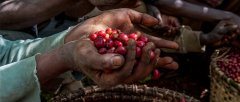
Plum fruit aroma description of Ethiopian single Sidamo washing flavor and aroma
Professional barista communication please pay attention to the coffee workshop (Wechat official account cafe_style) cup test plum aroma to the nostrils, after the entrance lime aroma fresh and smooth, slightly sour embellishment, a touch of cocoa and drupe to add thickness and layers, high sweetness of dates. The overall flavor is as smooth as tea, balanced, mild and clean. Ethiopia [producing area] Sidamo of Sidamo Province [variety]

Burmese Coffee Map introduction of Burmese Coffee varieties what kind of coffee is there in Myanmar?
Professional coffee knowledge exchange more coffee bean information Please follow the coffee workshop (Wechat official account cafe_style) Burma began to grow coffee beans in 1885, but for nearly a hundred years, there has been no sign of export or business. In the middle and late twentieth century, the United Nations Drug abuse Control Program (UNDCP) was launched to encourage Burmese farmers to give up opium poppy cultivation.

Burundian Coffee Flavor with Fruit Flavor; introduction to the characteristics of fine coffee beans in the manor area
Formerly known as Urundi, Burundi formed a feudal kingdom in the 16th century. Since the middle of the 19th century, the forces of Britain, Germany and Belgium invaded. The long-ruled monarchy, which was conquered by Germany in 1890, listed it as the territory of German East Africa and fell under the control of the Belgian army in 1916. After World War I, the League of Nations merged Rwanda-

Taiwan's characteristic literary romantic style cafe: Wenqing blessing characteristic shop ethnic retro style
In recent years, Taipei cafes, like "snacks" in general, have gradually become the highlight of travel to Taipei, and the degree of density should be said to be "the whole city is a cafe"? Today Populayer wants to introduce the specialty coffee shops that have been visited recently. They each have their own style and uniqueness. The process of visiting coffee shops is like conducting a city exploration. Only then can we discover their

Ethiopian Sidamo Coffee introduce the flavor of Sidamo Coffee introduce the characteristics of Sidamo Coffee
Professional coffee knowledge exchange more coffee bean information please pay attention to the coffee workshop (Wechat official account cafe_style) Sidamo Province is one of the important coffee producing areas in Ethiopia, the coffee flavor in Sidamo area is very diverse, due to abundant rainfall, fertile soil, ideal climatic conditions, and then washed coffee beans, clean and mature, sweet and fresh, with a unique style

A brief introduction to the planting Market Price of Yega Xuefei Aduodou Fine Coffee Bean varieties with excellent taste
The mode of production and flavor of coffee here is so outstanding that Ethiopian coffee farmers compete to be proud of the flavor of their coffee, making it the most famous coffee producing area in Africa. At first, Yejassefi's coffee trees were planted by European monks, and later by farmers or cooperatives. Yega Xuefei is actually constructed by surrounding coffee communities or cooperatives.
Introduction to the taste characteristics and geographical location of Yega Xuefei coffee
Following Cafe Review (Wechat official account vdailycom) found that the Beautiful Cafe opened a small shop of its own, Yejia Xuefei, as a well-deserved representative of the third wave of coffee, one of its features is its easily recognizable flavor. Second, it is easy to show its characteristics when the a value is 55, which requires a deeper baking degree than the traditional Central and South American water-washed beans, and the suitable a value is about 25-40.

Introduction to Indonesian Blue Diamond Mantenin Coffee Information Story: the difference between Sapphire Manning and Mantenin
Professional coffee knowledge exchange more coffee bean information Please pay attention to the coffee workshop (Wechat official account cafe_style) now on the market all kinds of Mantenin are competing for beauty, and some friends with choice difficulties are deterred, do not know how to choose. Today, we are going to recommend a famous Mantenin blue diamond (also known as sapphire) to you. Sapphire Mante

A brief introduction to the Origin of Burundian Coffee Flavor description Variety characteristics, Grinding degree and Baking degree treatment
Characteristics of Burundi Coffee: Burundi (Burundian) has the most diverse and successful coffee industry in the world, and has its own characteristics. Burundian coffee is fragrant and has excellent acidity. Flavor: mellow taste, rich aroma, excellent acidity recommended baking method: medium to deep roasting ★★: good Burundian coffee market: Burundian coffee

Introduction to the flavor and taste characteristics of Tanzania coffee manor with pure flavor and fragrance.
Tanzania's main coffee producing area, located at the foot of Mount Kilimanjaro, is rich in volcanic soil. Some coffee trees planted here are more than 100 years old. Coffee was first introduced by Christians from Kenya to grow coffee. Coffee trees must be carefully taken care of, weeded and fertilized. And old branches must be cut off so that new branches can grow to maintain the quality of coffee beans.

Suvira West Island Coffee beans Fine Coffee beans on the oldest Island of Indonesia
For information, please pay attention to the coffee workshop (Wechat official account cafe_style) Sulawesi Coffee often appears on the sacks of Ce1ebes, Toraja, Kalossi three English names. Celebes, the old name of Celebes under Dutch rule, has long been changed to Sulawesi; Toraja is interesting because it is neither a place name, a city name, nor a variety name.

The flavor of Ugandan coffee the characteristics of the manor producing area introduce the fine coffee beans of Uganda
Physical geography: the territorial area is 241000 square kilometers. It is located in eastern Africa, bordered by Kenya to the east, Tanzania and Rwanda to the south, the Democratic Republic of the Congo to the west and Sudan to the north. The territory is mostly about 1200 meters above sea level of the plateau, many lakes, known as the plateau water village. The western branch of the East African Rift Valley runs through the west, with many rivers and lakes at the bottom of the valley. Rift zone and eastern part

Boutique coffee beans: an introduction to Sumatran Mandheling in Sumatra
[introduction] the history of coffee cultivation in Sumatra began in the 18th century, and the origin of the name Mantenin itself is very ethnic. The famous producers of Asian coffee are the islands of the Malay Archipelago: Sumatra, Java, Kalimantan (formerly Borneo Borneo), Sulawesi and Sulawesi.

Introduction to the flavor of grapefruit G1 washed coffee in Yegasuefei Guji, Ethiopia
More information on coffee beans Please follow Coffee Workshop (official Wechat account cafe_style) among the coffee-producing countries, Ethiopia has an almost legendary status, not only because it is the birthplace of Arabica coffee, but also because it is different from most coffee-growing countries, coffee is not a plant that colonizes an alien cash crop. Planting, processing