
"flesh"
2615 article(s) found
Boutique coffee beans Kenyan coffee Kenyan AA coffee with unique flavor and full taste
Kenya AA, round beans, thick flesh, good heat permeability, high precision, French baking, rich and sweet taste, mellow thickness, good expansibility, aroma and sweetness are top grade. People in the coffee industry all think that Kenyan coffee is one of its favorite products because Kenyan coffee contains every feeling we want from a good cup of coffee. It has

Kenyan AA boutique coffee introduces the unique flavor of Kenyan boutique coffee Kenyan coffee
Kenya AA, round beans, thick flesh, good heat permeability, high precision, French baking, rich and sweet taste, mellow thickness, good expansibility, aroma and sweetness are top grade. People in the coffee industry all think that Kenyan coffee is one of its favorite products because Kenyan coffee contains every feeling we want from a good cup of coffee. It has

Boutique coffee beans Kenya coffee Kenya AA coffee taste strong sweet with mellow thickness
Kenya AA, round beans, thick flesh, good heat permeability, high precision, French baking, rich and sweet taste, mellow thickness, good expansibility, aroma and sweetness are top grade. People in the coffee industry all think that Kenyan coffee is one of its favorite products because Kenyan coffee contains every feeling we want from a good cup of coffee. It has

Introduction to the taste of grinding scale varieties of Ethiopian Sidamo coffee flavor description
Ethiopian Sidamo Coffee Flavor description method Grinding scale varieties taste introduction Coffee is Ethiopia's most important export cash crop and the main source of Ethiopia's foreign exchange earnings. Ethiopia's coffee exports account for about 3% of the world market, making it the eighth largest coffee exporter in the world. Coffee exports increased steadily from 58000 tons in 1990 to 1995-1996.
Introduction to the characteristics of Costa Rican coffee bean honey treatment what is the difference between black, red, yellow and white honey
The quality of the selected sunburn method of honey treatment is difficult to control, while the water washing method consumes a lot of water, with an average of 10-20 tons of water per ton of coffee fruit to produce about 200 kilograms of coffee beans, which the producing countries that are not rich in water resources cannot afford. In the 1990s, taking advantage of the unique dry climate, Brazil invented peeling and tanning.

Introduction of Yega Snow Flavor Flavor production area Grinding scale treatment method for taste manor
Yega Snow Flavor Flavor production area Grinding scale treatment method Taste Manor introduction Sun Yega Coffee sets a strict standard for collecting red fruits (as a result of coffee trees). Before exposure to coffee fruits, unripe green fruits or defective fruits are removed manually, and damaged or moldy fruits are removed in the process of sunning. after two weeks, the flesh sugar and essence are all infiltrated into the coffee beans, and the water content is reduced to 12%.

The flavor and taste of Tanzanian coffee the characteristics of manor producing area introduction to Mundu Manor Coffee in Tanzania
Tanzanians still maintain a lot of coffee tradition, and most of the time they collect ripe and fallen fruit under coffee trees, which will somewhat damage the quality of coffee. They have been using the sun method to treat the coffee beans, rarely using the water washing method, which allows the coffee beans to absorb the aromatic substances of the flesh, so the fruit flavor is stronger. Kilimanjaro coffee is very characteristic, it emits fineness
Production method of coffee beans the production process of coffee beans
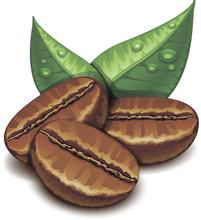
First of all, the coffee bean is a red coffee fruit that is picked from the coffee tree and ripe by fermenting flat beans and round beans, as shown in the figure. The pale green core with a little blue in the middle is the coffee bean. In general, the core of a coffee fruit is oval. When two kernels are opposite to each other, flat beans are formed; sometimes a single kernel grows and forms.

Brand characteristics of Brazilian Emerald Yellow bourbon Coffee Bean planting Base
Brazilian emerald yellow bourbon coffee planting base map brand features Central American honey treatment, this mixed treatment is newly popular, it is simply the twin brother of Brazilian peel tanning. It first became popular from Costa Rica and El Salvador, where the peel, flesh and pectin were removed by machine. (note that colloid is usually removed by machine rather than washing.

Brief introduction of Grinding scale for description of Standard Flavor of washed Cochell Coffee beans
A brief introduction to the Grinding scale for describing the Standard Flavor of washed Cochel Coffee beans A strict standard of Jiji red fruits (as a result of coffee trees) is set by sun exposure. Unripe green fruits or defective fruits are manually removed before exposure, and damaged or moldy fruits are removed in the process of tanning. After two weeks, the flesh sugar and essence are all infiltrated into the coffee beans, and the water content is reduced to 12%. Then harden the fruit.

What is the difference in flavor and taste between water washing and sun treatment of coffee beans?
The difference in flavor and taste between washed and tanned coffee beans lies in where the peel and Skin/Pulp are: the outermost layer of the coffee bean is covered with berry-like skin and pulp. In addition to the natural sun method, coffee beans treated by other methods must remove the skin and flesh within a few hours after picking. It is similar to the cherries we often eat, but the difference is that we are in

What process does it take to process coffee fruit to coffee beans?
A fresh, green coffee bean obtained by removing its red flesh and peel and silver skin from a coffee cherry. The structure of coffee cherry is composed of outer skin, pulp, endocarp, silver skin and seeds. The shape is oval, usually the fruit of coffee is composed of two oval seeds opposite each other, and the other side is flat, so it is called flat bean, but there is also one.

Yega Xuefei Red Cherry hand-made Coffee Yega Chefe Coffee can be made at home
Professional coffee knowledge exchange more coffee bean information please follow the coffee workshop (Wechat official account cafe_style) front street-Yejia Xuefei sun red cherry introduction about the Red Cherry Project (Operation Cherry Red): the Red Cherry Project (Operation Cherry Red) referred to as OCR, is a program launched by the Dutch trading company Trabocca BV to provide producer expertise.

Description of Flavor Flavor of Costa Rican Yellow Honey Coffee Bean introduction of planting environment
Costa Rica Yellow Honey Coffee Manor: Laminita Conqueror country of Origin: Costa Rica Costa Rica producing area: multi-tower Dota varieties: Caturra,Catuai altitude: 1200-1900 Meters treatment: washed Washed Flavor description: dark chocolate, rich oil, creamy taste, quite thick Costa Rica through honey-treated coffee beans

The production and processing of coffee beans the Panamanian Jade Manor
1. Skin/Pulp: the outermost layer of coffee beans is covered with berry-like skin and pulp. In addition to the natural sun method, coffee beans treated by other methods must remove the skin and flesh within a few hours after picking. Similar to the cherries we often eat, the difference is that when we eat cherries, we mainly eat the pulp and peel of berries. For coffee.

Introduction to the production process of coffee beans it is better to drink juice or coffee
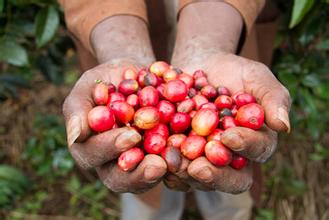
After the fruit is harvested, the skin and flesh must be removed. The endocarp and silver peel are removed to form coffee beans. There are two kinds of methods: drying (natural drying, non-washing) and washing. Dry type, the operation is relatively simple, the harvested fruit will be spread on the dry ground and basked in the sun for a week or two. The sound of rattling can be heard when it is turned, which means it is dry. Then use the sheller to remove the pulp of the dried fruit

There are several seed treatment methods in coffee berries.
There are several seed processing methods in coffee berries or the use of an automated harvester can not distinguish ripe berries from green berries. The ripe coffee berries are bright red with sweet flesh and contain a pair of seeds, namely coffee beans (Coffee Beans). Coffee varieties can be divided into small, medium and large seeds, and the former contains caffeine.

Boutique Coffee-- introduction of Kenyan Coffee Taste Kenya Coffee
Kenya AA, round beans, thick flesh, good heat permeability, high precision, French baking, rich and sweet taste, mellow thickness, good expansibility, aroma and sweetness are top grade. People in the coffee industry all think that Kenyan coffee is one of its favorite products because Kenyan coffee contains every feeling we want from a good cup of coffee. It has

Description of Yejia Coffee washing Flavor introduction to the regional treatment method of manor production
Yejia Coffee Cochel washing Flavor description of the taste the so-called Yejia Snow Flavor refers to the strong aromas of jasmine, lemon, peach, almond and tea. The author's tasting experience has only one sentence: coffee entrance, flowers in full bloom! Just like a flower touches the comfort of taste buds and olfactory cells in the nasal cavity. In addition to the fragrance of the flowers, the delicate mellow thickness (body) is especially

Flavor characteristics of Yejia Coffee beans how to brew G2 and how to make it by hand will taste better
The flavor characteristics of Yejia snow coffee beans G2 how to brew by hand will be better to drink in the sun Yega snow coffee sets a strict standard for collecting red fruits (as a result of coffee trees). Before exposure to coffee fruits, the unripe green fruits or defective fruits are removed manually, and then the damaged or moldy fruits are removed during the sun drying process. After two weeks, the flesh sugar and essence are all infiltrated into the coffee beans, and the water content is reduced to 12%.