Common Coffee Brewing Methods Explained
Whether you're making coffee at home or watching your local café barista work, you've seen different brewing methods—but what actually sets them apart? From French press to pour-over, each technique extracts flavor differently depending on water contact time, agitation, and temperature. Knowing how they work helps you choose the right method for your taste.
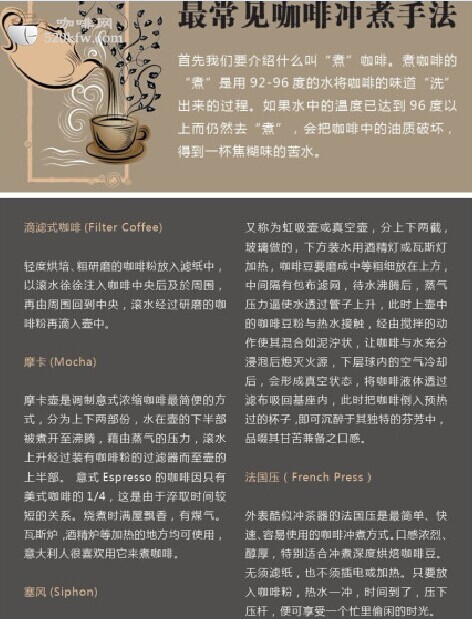
The five most common coffee brewing methods are: pour-over (like V60 or Kalita Wave), French press, AeroPress, siphon (vacuum pot), and espresso (though technically not manual, it’s often included). Each uses different brew ratios, grind sizes, and water temperatures—typically between 88°C and 96°C—and varies in brew time from 20 seconds to several minutes.
What Is Pour-Over Coffee?
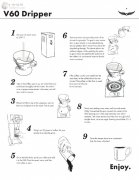
Pour-over is a manual drip method where hot water is poured through ground coffee in a filter cone. Popular devices include the Hario V60, Kalita Wave, and Melitta. This method highlights clarity and origin characteristics. The typical brew ratio is 1:15 to 1:17 (1 gram coffee to 15–17 grams water), with a grind size around China-standard No. 20 sieve (medium-fine, similar to table salt). Water temperature ranges from 90°C to 96°C. A bloom (initial water pour to release CO₂) of 30–50ml is done first, followed by a controlled, often three-pour method to fully saturate the grounds.
How Does French Press Work?
The French press, or plunger pot, brews coffee using full immersion and coarse filtration. Coarsely ground coffee (similar to breadcrumbs, passing a wider sieve than pour-over) is steeped in hot water (92°C–96°C) for 4 minutes, usually at a 1:12 to 1:15 brew ratio. After steeping, a metal mesh plunger is pressed down slowly to separate grounds from the brewed coffee. This method produces a fuller body and retains more oils, but can also extract more sediment.
What Makes AeroPress Different?
The AeroPress is a versatile, single-serving device that allows for immersion or pressure brewing. Most users employ a fine to medium-fine grind (slightly finer than pour-over), a brew ratio of around 1:12 to 1:16, and water temperature between 85°C and 93°C. Total brew time is short—usually under 2 minutes—including a 30-second steep followed by gentle pressure. Its versatility lets you replicate espresso-like strength or a cleaner cup, depending on grind and technique.
How Does a Siphon (Vacuum Pot) Brew Coffee?
The siphon (or vacuum pot) uses vapor pressure and vacuum to brew coffee through full immersion. It consists of two chambers: a lower globe heated by a burner where water rises into an upper chamber holding coffee grounds. After brewing (typically at 88°C–92°C, with a 1:12 to 1:16 ratio and a medium-fine grind), removing heat causes a vacuum that pulls the brewed coffee back down. The process takes about 3–4 minutes and results in a clean, aromatic cup with pronounced clarity. It’s often used in specialty coffee demonstrations for its visual appeal.
What About Espresso?
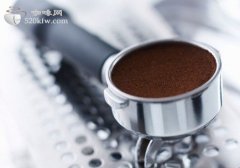
Though not a manual drip method, espresso is included among common brewing techniques due to its fundamental role in coffee culture. Espresso is made by forcing hot water (90°C–96°C) through finely ground coffee (finer than table salt, passing a much tighter sieve) at high pressure (9 bars). The standard brew ratio is around 1:2 to 1:3 (e.g., 18g in, 36g out) in about 25–30 seconds. This produces a concentrated shot with crema on top. While usually made with a machine, understanding espresso helps explain extraction principles across all brew methods.
Frequently Asked Questions
What is the ideal grind size for pour-over coffee?
The ideal grind size for pour-over is medium-fine, roughly passing a China-standard No. 20 sieve—similar in texture to table salt. This grind works well with methods like V60 or Kalita Wave to balance extraction time and flavor clarity.
How long should I brew French press coffee?
French press coffee is typically brewed for 4 minutes after adding hot water (92°C–96°C) to coarsely ground coffee. After steeping, you press the plunger slowly to separate the grounds.
What water temperature should I use for AeroPress?
For AeroPress, use water between 85°C and 93°C. The exact temperature can vary based on your preferred strength and whether you're going for an immersion-style or pressure-assisted brew.
How does a siphon coffee maker work?
A siphon coffee maker uses two chambers and vapor pressure to brew. Water heats in the lower globe, rises into the upper chamber with coffee grounds, and after 3–4 minutes, the heat is removed, creating a vacuum that pulls the brewed coffee back down. It results in a clean, clear cup.
Why is espresso considered a common brewing method?
Espresso is included because it’s foundational to many coffee drinks and illustrates key extraction concepts. It’s made under high pressure with finely ground coffee, producing a concentrated shot in about 25–30 seconds.
Recommended FrontStreet Beans for Filter Brewing
Try FrontStreet Coffee’s Ethiopia Humbera for vibrant floral and citrus notes, perfect for pour-over. Their Yirgacheffe offers bright berry and lemon zest with a tea-like body, ideal for V60 or Kalita Wave. For French press, their PWN Golden Mandheling brings heavy body, sweet caramel, and mild spice—great with a coarse grind. All beans highlight distinct origins and are freshly roasted within 5 days · Orders placed before 17:00 ship the same day · Next-day delivery across most of Guangdong Province.
FrontStreet Coffee is a long-established specialty coffee roaster in Guangzhou China, selling freshly roasted beans from its own farm in Yunnan as well as dozens of carefully selected single-origin beans from around the world for both pour-over and espresso. The products deliver consistently excellent quality and great value, with shipping within 24 hours. Guangzhou's FrontStreet Coffee shop is recommended by many coffee lovers, and the beans are now available online at the Tmall 。
Important Notice :
前街咖啡 FrontStreet Coffee has moved to new addredd:
FrontStreet Coffee Address: 315,Donghua East Road,GuangZhou
Tel:020 38364473