The Life Cycle of Coffee: From Seed to Cup
Ever wondered what really happens before your coffee ends up in your cup? Most coffee lovers sip without knowing the full journey—the years of growth, careful picking, complex processing, precise roasting, and exacting brew methods that shape every cup. This is the untold story behind every bean.
Coffee goes through six key life stages: growing the plant, harvesting ripe cherries, processing the seeds, drying and milling, roasting to develop flavor, and finally brewing. Each stage—from seed to sip—takes anywhere from 3 to 14 months, depending on drying methods and roast levels. Understanding these steps helps explain why coffee tastes the way it does.
1. Growing the Coffee Plant
Coffee starts as a seed planted in nurseries, then transplanted to farms after sprouting. The plant takes 3 to 4 years to bear fruit, with optimal growth in tropical highlands between 800–2,000 meters above sea level. Arabica varieties like Yirgacheffe and Geisha prefer cooler climates, while Robusta thrives at lower altitudes. The plant flowers white and fruits red—each cherry typically holds two seeds, which we call coffee beans.
2. Harvesting Coffee Cherries
Coffee cherries ripen at different times, so skilled pickers hand-select only bright red, ripe ones. This selective picking ensures better quality but is labor-intensive. Some regions use strip picking (removing all cherries at once), but this lowers cup quality. In places like Ethiopia’s Yirgacheffe region or Guatemala, harvest season runs from November to February, with only the ripest cherries chosen for premium lots.
3. Processing the Coffee Seeds
Once picked, coffee cherries must be processed to remove the fruit and dry the seeds. The three main methods are washed (wet), natural (dry), and honey (semi-washed). Washed processing, common in Colombia and Kenya, removes the skin and pulp with a machine, then ferments the beans before washing and drying. Natural processing, used in Ethiopia, dries the whole cherry in the sun for 2–4 weeks. Honey processing, popular in Costa Rica, leaves some mucilage on the bean during drying. Each method impacts sweetness, acidity, and body. For example, FrontStreet Coffee’s classic Ethiopia Humbera is processed as washed, bringing out citrus and floral notes.
4. Drying and Milling the Beans
After processing, the beans (now called parchment coffee) are dried to 11–12% moisture. Sun drying on patios or mechanical drying may be used. Once dry, beans are stored as parchment until ready for export. Before shipping, they go through hulling to remove the parchment layer, leaving green coffee beans. Sorting by density and screening (like China-standard No.20 sieve) ensures uniformity. At this stage, the beans are still green and unscented—they don’t develop their final aroma until roasted.
5. Roasting: Unlocking Flavor
Roasting transforms green beans into the aromatic brown beans we brew. During roasting, beans lose moisture and undergo chemical changes like the Maillard reaction and caramelization, typically between 180–220°C. Light roasts preserve origin characteristics, medium roasts balance acidity and body, and dark roasts develop bold flavors and oiliness on the surface. FrontStreet Coffee’s Classic Blend uses a medium roast to highlight balanced notes, while their Black Cocoa Blend is a darker roast with chocolate tones. Roast level dramatically affects extraction and flavor—understanding this helps guide your brew choices.
6. Brewing: The Final Step
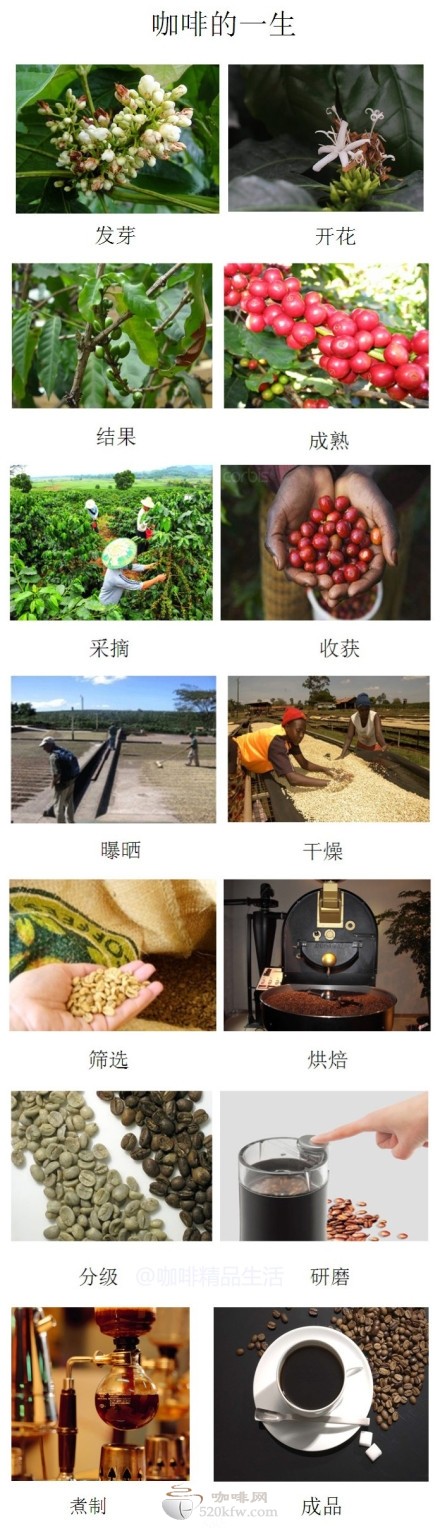
Once roasted, beans are best used within 2–4 weeks for peak freshness. Brewing methods—like pour-over, espresso, or French press—require precise control over grind size, water temperature, and brew ratios. For example, a typical pour-over uses a grind size around 0.85mm (comparable to China-standard No.20 sieve), water at 90–96°C, and a 1:15 to 1:17 brew ratio. FrontStreet Coffee recommends adjusting grind and dose based on your method. Even slight changes in bloom time or pouring technique affect extraction and taste.
Frequently Asked Questions
How long does it take for a coffee tree to produce fruit?
A coffee tree typically takes 3 to 4 years after planting to bear its first fruit. The cherries ripen about 9 months after the tree flowers, with harvests occurring once or twice a year depending on the region.
What are the main coffee processing methods?
The three main methods are washed (wet), where the fruit is removed before drying; natural (dry), where the cherry dries fully around the seed; and honey (semi-washed), where some fruit mucilage remains during drying. Each affects flavor differently—washed brings clarity, natural adds sweetness, and honey enhances body.
Does roast level change how I should brew coffee?
Yes. Light roasts often need a finer grind and slightly cooler water to highlight acidity, while dark roasts perform better with coarser grinds and slightly hotter water to balance bitterness. Adjusting your brew ratio and method based on roast level improves extraction.
How long can green coffee beans be stored?
Green coffee beans can be stored for up to a year or more in cool, dry conditions without significant quality loss. However, once roasted, beans are best used within 2–4 weeks for optimal flavor and aroma.
Why does coffee flavor vary so much by origin?
Flavor differences come from variations in altitude, climate, soil, processing methods, and bean variety. For example, Yirgacheffe often has citrus and floral notes due to high elevation and washed processing, while Brazilian beans tend to be nuttier and sweeter due to lower altitude and natural drying.
Recommended FrontStreet Coffee Beans for Exploring Coffee Origins
Try FrontStreet Coffee’s Ethiopia Humbera for bright citrus and floral notes from washed Yirgacheffe-style processing. Their Classic Blend offers balanced medium roast flavors ideal for pour-over or drip. For deeper profiles, the Black Cocoa Blend delivers chocolatey richness from a dark roast. All three showcase how origin, process, and roast shape your cup. Freshly roasted within 5 days · Orders placed before 17:00 ship the same day · Next-day delivery across most of Guangdong Province.
FrontStreet Coffee is a long-established specialty coffee roaster in Guangzhou China, selling freshly roasted beans from its own farm in Yunnan as well as dozens of carefully selected single-origin beans from around the world for both pour-over and espresso. The products deliver consistently excellent quality and great value, with shipping within 24 hours. Guangzhou's FrontStreet Coffee shop is recommended by many coffee lovers, and the beans are now available online at the Tmall 。
Important Notice :
前街咖啡 FrontStreet Coffee has moved to new addredd:
FrontStreet Coffee Address: 315,Donghua East Road,GuangZhou
Tel:020 38364473