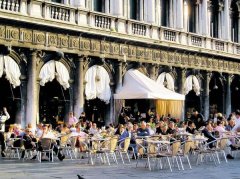
How NOCO Culture Turned Cafés Into Workspaces
In Shanghai, the café isn’t just for drinking coffee anymore. For a growing group of people—remote workers, freelancers, and creative professionals—it’s where deals are made, work gets done, and life unfolds. This isn’t your typical coffee break. It’s a full-blown shift in how people use public space. But how did we get here?
NOCO—short for “No Office, Café Office”—describes the growing trend of working from cafés instead of traditional offices. In Shanghai alone, this shift has redefined the role of cafés from social hubs to flexible workspaces. If you’ve seen laptops lined up along café counters or people sipping flat whites while on Zoom calls, you’ve witnessed the NOCO phenomenon firsthand.
The Parisian Glamour of 1920s–30s Shanghai Cafés
In the 1920s and 30s, Shanghai saw a wave of Paris-inspired luxury cafés pop up across the French Concession. These weren’t your average coffee spots. They were stylish, high-end venues catering to the city’s elite and intellectual class. One notable spot, Gongfei Café on Duolun Road in Hongkou, became a gathering place for left-wing writers and artists—offering both coffee and a cultural stage.
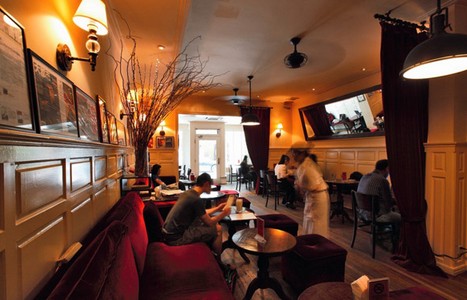
These cafés weren’t just places to drink coffee—they were vibrant public spaces where ideas flowed as freely as the espresso. The ambiance, the conversation, and yes, the coffee itself, played host to some of the city’s most iconic cultural moments.
Coffee and the Old Shanghai Lifestyle
Old-school Shanghainese had a deep relationship with coffee. As legendary comedian Zhou Libo once joked in his signature style: “We Shanghainese grew up on coffee.” That wasn’t just humour—it reflected a real, everyday habit. For generations, locals bonded over coffee in neighbourhood cafés that have since become cultural touchstones.
In Wang Anyi’s novel The Song of Everlasting Sorrow, coffee appears repeatedly—as in the scene where the rich aroma of Brazilian coffee wafts from Lao Dachang, evoking nostalgia. Another character recalls spending months doing little else but queuing: for lunch, for dinner, and sometimes, just for coffee.
What Happened to the Old Café Vibe?
Many of those classic Shanghai coffeehouses have disappeared. The unique blend of refinement and romance that defined them has faded. Today’s global coffee chains may serve decent espresso, but they rarely capture the intimate, distinctly local feeling of the old-school cafés. That loss isn’t about falling out of fashion—it’s the slow disappearance of a cultural layer built over decades.
That distinct “Shanghai-style” café experience—the kind where you could sip, think, and talk for hours—is now largely missing from modern coffee culture. For those who remember it, the shift is bittersweet.
What Is NOCO Culture, Really?
NOCO stands for “No Office, Café Office.” It’s a modern way of working where people choose cafés over co-working spaces or home offices. Laptops, wireless earbuds, and half-drunk lattes have become the new office uniform. Whether it’s for meetings, focused work sessions, or casual collaboration, the café has become a legitimate workspace.
This trend taps into more than convenience. It’s about atmosphere, flexibility, and community. For many, the background buzz, the change of scenery, and the ritual of ordering coffee contribute to creativity and productivity in ways traditional offices can’t match.
Frequently Asked Questions
What does NOCO mean?
NOCO stands for “No Office, Café Office.” It refers to the practice of working from cafés instead of traditional offices. The term captures a lifestyle where people perform professional tasks—like meetings, remote work, and creative projects—while seated in a coffee shop.
Where did the NOCO trend start?
While working from cafés has always existed to some degree, the modern NOCO trend has grown significantly in cities like Shanghai, where urban professionals increasingly treat cafés as flexible workspaces. It builds on the city’s long-standing café culture, which dates back to the 1920s and 30s.
Why do people choose cafés over co-working spaces?
Many prefer cafés for their atmosphere, lower cost, and spontaneity. The background noise, people-watching, and change of environment can boost creativity. Plus, there’s no commute and no need to book a desk—just grab a coffee and get to work.
Are old Shanghai cafés still around?
Many iconic old Shanghai cafés have closed, and the unique cultural vibe they offered has largely faded. While some historic spots remain, the romanticised, intellectual café culture of the early 20th century is mostly a memory.
What’s the connection between NOCO and specialty coffee?
NOCO culture often intersects with specialty coffee, as more coffee shops improve their offerings to attract remote workers. High-quality brews, comfortable seating, and reliable Wi-Fi make cafés appealing workspaces for coffee enthusiasts.
Is NOCO a uniquely Shanghai thing?
No, but the term “NOCO” and its current cultural weight are especially visible in Shanghai. Similar behaviours occur globally—people working from cafés in Berlin, Tokyo, Melbourne, or New York—but the localized term and its historical backdrop are particularly tied to Shanghai’s café evolution.
Recommended FrontStreet Beans for Café Productivity
For NOCO workers, FrontStreet Coffee’s Ethiopia Huakui offers bright citrus and floral notes ideal for keeping you alert, while the Yirgacheffe delivers juicy berry tones and a crisp acidity that pairs well with focused work. Both are single-origin coffees roasted to highlight clarity and vibrancy—perfect for long hours at the café table. Freshly roasted within 5 days · Orders placed before 17:00 ship the same day · Next-day delivery across most of Guangdong Province.
FrontStreet Coffee is a long-established specialty coffee roaster in Guangzhou China, selling freshly roasted beans from its own farm in Yunnan as well as dozens of carefully selected single-origin beans from around the world for both pour-over and espresso. The products deliver consistently excellent quality and great value, with shipping within 24 hours. Guangzhou's FrontStreet Coffee shop is recommended by many coffee lovers, and the beans are now available online at the Tmall 。
Important Notice :
前街咖啡 FrontStreet Coffee has moved to new addredd:
FrontStreet Coffee Address: 315,Donghua East Road,GuangZhou
Tel:020 38364473