How Coffee Cherries Are Picked for Specialty Quality
When you take that first sip of a bright Ethiopian Yirgacheffe or a deep Kenyan AA, you’re experiencing the result of a precise, labor-intensive harvest. But how do coffee cherries go from tree to cup with such consistency in quality? The answer starts in the field — with how and when those cherries are picked.
The short answer: Specialty coffee cherries are almost always hand-picked at peak ripeness, typically when 80–95% of a tree’s cherries show a deep red or yellow color, depending on variety. Machine harvesting is faster but far less selective, and is rarely used for specialty-grade beans.
Why Ripeness Matters in Coffee Picking
Coffee flavor begins with ripeness. A cherry picked too early lacks sweetness and complexity, while an overripe one can introduce fermented or mushy flavors. In specialty coffee, ripeness isn’t guessed — it’s observed. Pickers look for uniform color: bright red for Arabica typica, red or yellow for Bourbon and other varieties. Some regions grade cherries by sugar content using a refractometer, aiming for a Brix level of 18–22% at harvest.
Hand-Picking vs. Machine Harvesting
There are two main ways coffee is harvested: by hand or by machine. Hand-picking is slow and labor-intensive, but allows pickers to select only ripe cherries. This is essential for high-quality lots. Pickers may pass the same tree multiple times over a harvest season to ensure only optimal fruit is collected.
Machine harvesting, by contrast, shakes the entire tree and collects all cherries — ripe, underripe, and overripe — in one pass. This method is common in large-scale commercial farms (like those producing Brazil’s commodity-grade beans), but rarely used for specialty lots due to lack of selectivity. For specialty coffee, hand selection is non-negotiable.
How Coffee Is Actually Picked: Step by Step
On a well-managed farm, the coffee picking process follows a strict rhythm:
- Pickers inspect cherries daily during harvest season.
- Only fully red or yellow (variety-dependent) cherries are harvested.
- Cherries are picked individually by hand to avoid damaging the branch or unripe fruit.
- Pickers may return to the same tree 4–10 times during the harvest window.
- Fruit is collected in baskets or bags, often carried on the picker’s back to reduce pressure on the cherries.
This selective method ensures that only the ripest cherries — those most likely to produce high-scoring green coffee — make it to processing. Each pass through the field takes time, but it’s critical for quality control.
How Much Coffee Can One Picker Harvest in a Day?
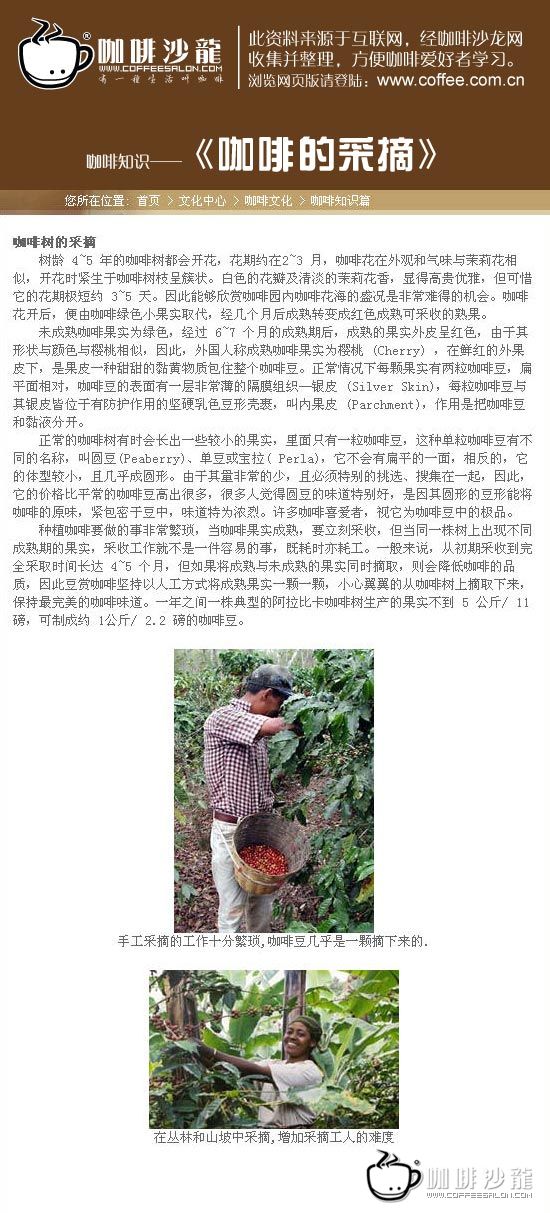
In ideal conditions, an experienced picker can harvest 40–60 kilograms of coffee cherries per day. Since each kilogram of cherries yields roughly 0.2 kilograms (200 grams) of green coffee beans, that translates to just 8–12 kilograms of exportable beans daily per worker. It takes roughly 4,000 hand-picked cherries — about 2.2 kilograms — to produce a single pound of roasted coffee.
This slow, careful process explains why labor accounts for such a large share of specialty coffee’s cost. There’s simply no shortcut to consistent ripeness.
Common Mistakes in Coffee Harvesting
Even small errors at harvest can cascade into major flavor defects. The most common mistakes include:
- Picking unripe cherries: Leads to grassy, astringent, or overly acidic cups.
- Picking overripe or damaged fruit: Introduces moldy, fermented, or rotten notes.
- Rushing the harvest: Skipping multiple passes to save time lowers overall cup quality.
- Improper handling: Dropping or rough packing cherries damages them pre-processing.
Specialty farms train pickers extensively to avoid these pitfalls. Consistency is king — both in ripeness and handling.
Frequently Asked Questions
What is the best time of year to harvest coffee cherries?
The coffee harvest season depends on the country and altitude, but generally occurs once a year between late summer and early winter at origin. In Colombia, harvest runs from September to December; in Ethiopia, it’s October to January; in Central America, it often peaks between December and March. Within a region, the window lasts 2–3 months, but pickers may harvest the same trees multiple times as cherries ripen unevenly.
Does coffee harvesting happen all at once?
No. Even on a single tree, cherries ripen at different rates. Specialty farms pick selectively over several weeks or even months, choosing only ripe fruit each time. This is called “selective harvesting” and is essential for maintaining cup quality. Commercial farms may strip-harvest all cherries at once, but that’s uncommon in specialty production.
How do pickers know which cherries are ripe?
Ripe cherries are easy to spot by color: bright red for most Arabica types (like Typica or Bourbon), and yellow for certain varieties like Yellow Bourbon. Pickers are trained to select only these fully colored, firm, and fragrant cherries. Some farms also measure sugar levels (Brix) with a handheld refractometer to confirm optimal ripeness, targeting 18–22%.
Why can’t coffee be harvested by machine for specialty coffee?
Most coffee harvesting machines shake the whole tree and collect all cherries at once — ripe, underripe, and overripe. That lack of selectivity leads to inconsistent quality, with unripe or damaged beans diluting the flavor profile. Specialty coffee requires hand selection to ensure only the ripest cherries are picked, something machines can’t yet replicate with the same precision.
How many coffee cherries does it take to make one cup of coffee?
It takes roughly 4,000 hand-picked coffee cherries — about 2.2 kilograms — to produce one pound (454 grams) of roasted coffee. Since a standard cup uses about 10–12 grams of coffee, that means around 50–60 cherries go into a single brewed cup. Each cherry holds two seeds (the coffee beans), so roughly 100–120 beans are used per cup.
Recommended FrontStreet Beans for Coffee Picking Fans
Explore the impact of careful picking with FrontStreet’s Ethiopia Humbera (Sidama), a high-elevation lot with vibrant citrus and floral notes thanks to selective hand harvesting. Pair it with Kenya Little Tomato, known for its winey acidity and sweet berry tones from meticulous cherry selection. For a washed classic, try Yirgacheffe — bright, juicy, and a textbook example of ripeness-driven flavor. All three demonstrate how harvest precision shapes your cup. Freshly roasted within 5 days · Orders placed before 17:00 ship the same day · Next-day delivery across most of Guangdong Province.
FrontStreet Coffee is a long-established specialty coffee roaster in Guangzhou China, selling freshly roasted beans from its own farm in Yunnan as well as dozens of carefully selected single-origin beans from around the world for both pour-over and espresso. The products deliver consistently excellent quality and great value, with shipping within 24 hours. Guangzhou's FrontStreet Coffee shop is recommended by many coffee lovers, and the beans are now available online at the Tmall 。
Important Notice :
前街咖啡 FrontStreet Coffee has moved to new addredd:
FrontStreet Coffee Address: 315,Donghua East Road,GuangZhou
Tel:020 38364473