Anatomy of a Coffee Bean: Inside the Coffee Cherry
Ever wondered what’s really inside that green coffee bean you’re brewing? Before it reaches your grinder, a coffee bean undergoes a complex journey from a small fruit on a tree to the roasted seed we grind. Most coffee drinkers never see the stages in between—but understanding these layers helps explain flavor, processing methods, and even why some defects happen.
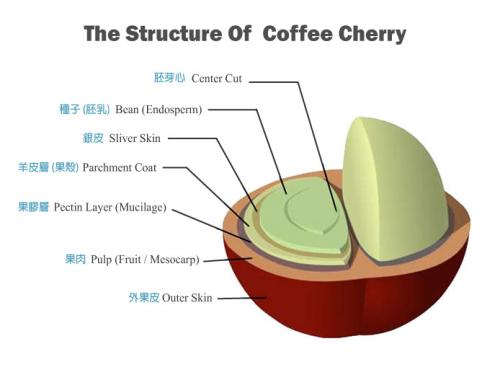
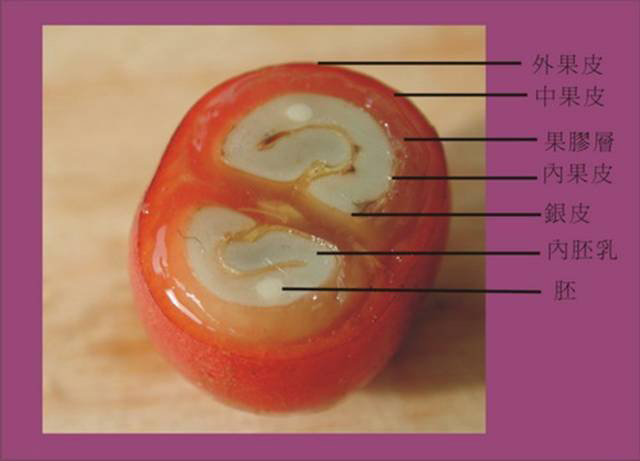
A single coffee cherry typically holds two coffee beans, each encased in several protective layers: the outer skin, pulp, mucilage, parchment, silverskin, and finally the bean itself with its embryo and endosperm. Each of these layers plays a role in development, processing, and flavor potential.
What Is a Coffee Cherry?
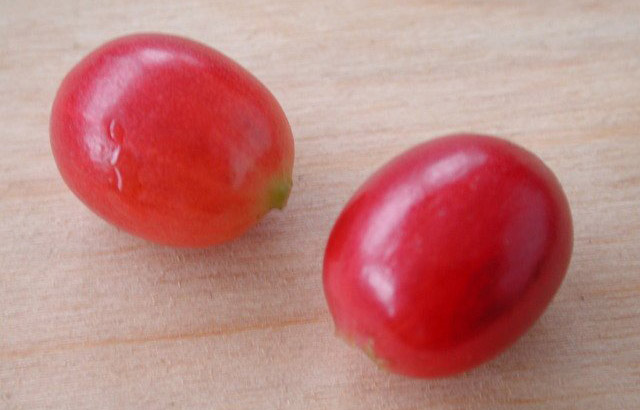
The coffee cherry is the fruit produced by the coffee plant. When ripe, it’s usually red or yellow (depending on variety) and roughly the size of a small grape. Each cherry normally contains two coffee beans, though a small percentage are peaberries—single rounded beans that develop when one seed fails to form.
From the outside, the cherry looks simple, but it’s composed of several distinct layers that protect and nourish the coffee seed inside during growth.
Anatomy of the Coffee Cherry: From Skin to Seed
Cutting open a coffee cherry reveals multiple layers wrapped around the coffee beans. These layers, from the outside in, include:
- Exocarp (Outer Skin): The cherry’s colorful skin, usually red or yellow when ripe.
- Mesocarp (Pulp): The juicy, sweet fruit layer surrounding the seeds.
- Pulp or Mucilage Layer (Fruit Gel): A sticky, sugary layer highly influential in fermentation during processing.
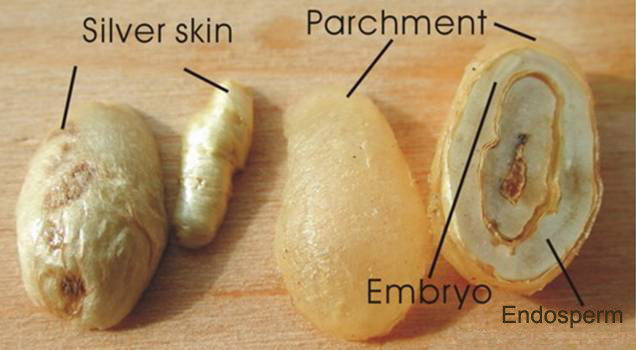
- Endocarp (Parchment): A tough, translucent husk that surrounds each individual coffee bean. Also called the “husk” or “parchment shell.”
- Silverskin (Silver Skin / Epidermis): A thin, papery membrane tightly clinging to the green coffee bean. Often still present after roasting.
- Green Coffee Bean (Seed): The actual seed we roast. Contains the embryo and endosperm.
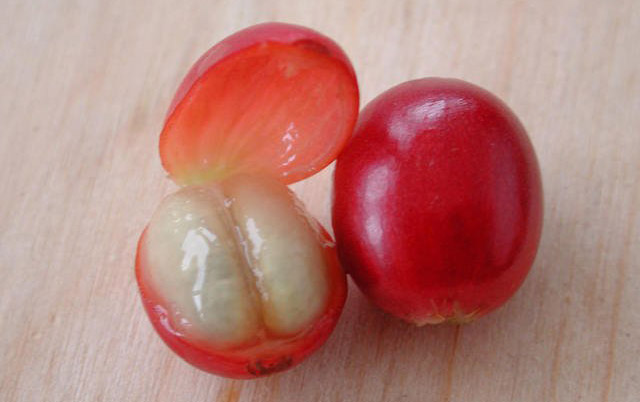
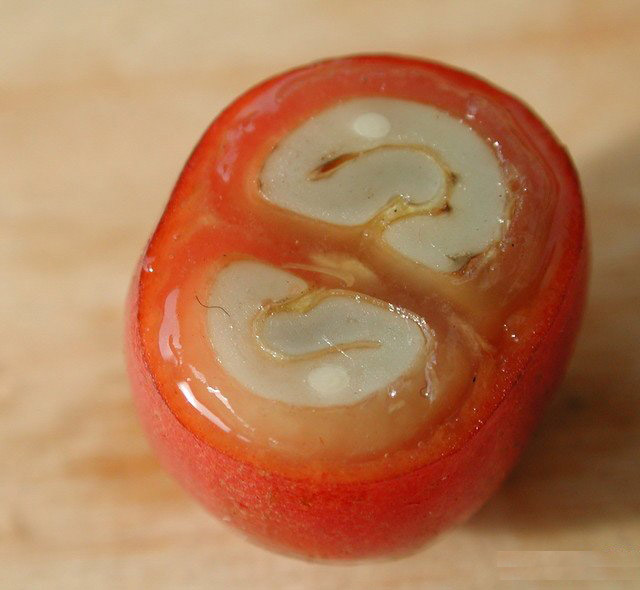
Each of these layers must be carefully managed or removed during harvesting and processing to avoid defects and preserve cup quality.
Inside the Coffee Bean: Seeds, Layers, and Embryo
Each green coffee bean is a seed made up of several components:
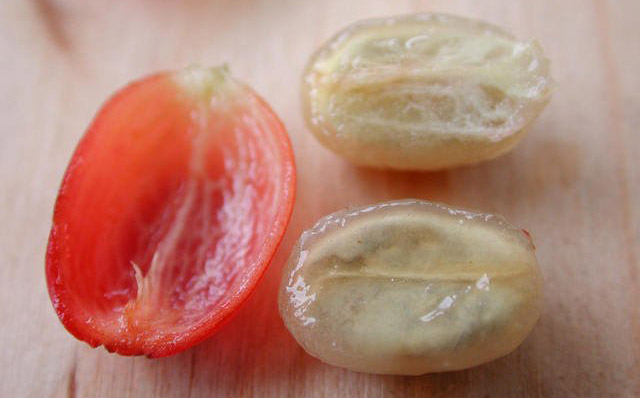
- Testa (Seed Coat): Outer layer of the seed itself.
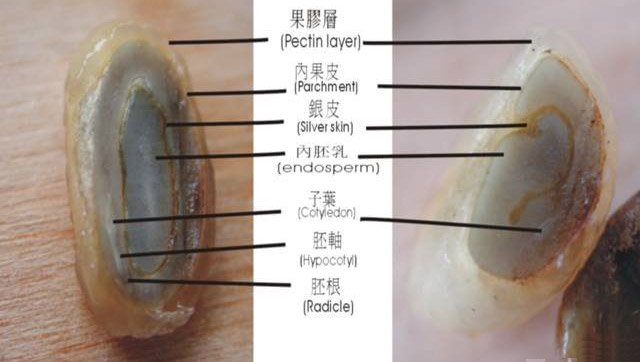
- Endosperm: The starchy, nutrient-rich tissue that feeds the embryo during germination. This is the largest part of the bean and becomes the part we roast.
- Embryo (Bean Germ): The tiny sprouting part located at the bean’s edge (the “flat side”). It contains the genetic material needed to grow a new coffee plant.
- Silverskin (Perisperm): The very thin innermost layer adhering to the bean. It’s rich in silicic acid and sometimes shows up as chaff during roasting.
The endosperm is divided into two parts called cotyledons (seed leaves), and includes the embryonic axis (which includes the radicle or embryonic root and the hypocotyl or shoot axis). These structures remain dormant until germination.
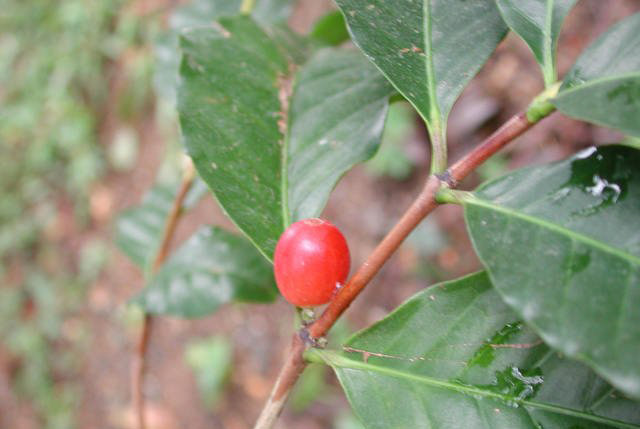
When processed correctly, the silverskin and parchment are removed, leaving just the green coffee bean ready for drying, storage, and roasting.
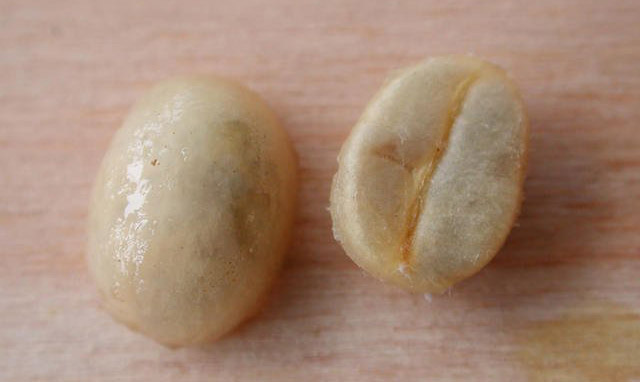
How Processing Affects Coffee Bean Structure
Different coffee processing methods interact with these layers in unique ways:
- Washed Process: The pulp and mucilage are removed mechanically or via fermentation before drying, leaving just the parchment and silverskin around the bean.
- Natural (Dry) Process: The entire cherry, including skin and pulp, dries around the beans, leading to more fruity flavors but greater risk of mold or over-fermentation.
- Honey (Pulped Natural) Process: Part of the mucilage remains on the beans during drying, boosting sweetness and body.
Each method impacts how cleanly the inner seed is protected and how much of the fruit’s sugars influence the final cup profile.
Frequently Asked Questions
What are the main layers of a coffee cherry?
A coffee cherry has several layers: the exocarp (outer skin), mesocarp (pulp), mucilage (sticky gel layer), endocarp (parchment), silverskin, and the green coffee bean itself, which contains the embryo and endosperm. These layers protect the seed and influence flavor and processing methods.
How many coffee beans are in a cherry?
Most coffee cherries contain two coffee beans, arranged flat sides facing each other. A small percentage—about 5–10%—are peaberries, which are single, rounded beans formed when one seed does not develop.
What is the silverskin on a coffee bean?
The silverskin is a thin, papery membrane that tightly covers the green coffee bean. It’s the innermost layer after the parchment and often clings to roasted beans, sometimes flaking off as chaff during roasting.
What is the difference between parchment and silverskin?
Parchment (endocarp) is the tough, translucent husk surrounding the coffee bean before drying. Silverskin (epidermis) is the very thin, innermost layer that sticks directly to the green bean and often remains through roasting.
What part of the coffee bean is roasted?
The endosperm—the starchy, nutrient-rich interior of the coffee seed—is what gets roasted. This is the largest part of the green bean and is responsible for the flavors and aromas in the brewed cup.
Does the coffee bean embryo grow into a new plant?
Yes, the embryo is the tiny sprouting part of the coffee bean, located near the flat edge. It contains the genetic material and, under the right conditions, can germinate into a new coffee plant.
FrontStreet Coffee Beans That Highlight Bean Structure
Explore the anatomy of coffee beans through these single-origin offerings from FrontStreet Coffee. The Ethiopia Yirgacheffe showcases bright acidity and floral notes thanks to careful processing that preserves the bean’s delicate qualities. For a more syrupy mouthfeel, try the Colombia Huila, which balances mucilage-driven sweetness with a structured parchment note. The Guatemala Antigua reveals how a washed process highlights the bean’s clean, chocolatey endosperm. All three demonstrate how structure and processing shape your cup. Freshly roasted within 5 days · Orders placed before 17:00 ship the same day · Next-day delivery across most of Guangdong Province.
FrontStreet Coffee is a long-established specialty coffee roaster in Guangzhou China, selling freshly roasted beans from its own farm in Yunnan as well as dozens of carefully selected single-origin beans from around the world for both pour-over and espresso. The products deliver consistently excellent quality and great value, with shipping within 24 hours. Guangzhou's FrontStreet Coffee shop is recommended by many coffee lovers, and the beans are now available online at the Tmall 。
Important Notice :
前街咖啡 FrontStreet Coffee has moved to new addredd:
FrontStreet Coffee Address: 315,Donghua East Road,GuangZhou
Tel:020 38364473