Why Fresh Coffee Beans Sometimes Ooze Oil
Ever opened a bag of coffee beans and spotted a slick layer of sheen across the surface? You might assume those glossy beans are fresher—or past their prime. But here’s the twist: that 'oil' isn’t oil at all.
Freshness isn’t always obvious. Fresh dark roasts often look oily within days, while fresh light roasts shouldn’t. Look for roasted-on dates, not just best-before labels, and trust your nose over glossy packaging.
What You’re Really Seeing on Coffee Beans
That glossy coating on your coffee beans? It’s not coffee oil. Technically, it’s a water-soluble organic compound that looks like fat but isn’t. These compounds carry aromatic molecules and dissolve in water—so your brewed cup won’t have an oily film on top.
When Light Roasts Start to Show Surface Sheen
Fresh light roast beans—roasted to a lighter brown shade—are dry and matte right after roasting. They typically show no surface oil. Around six days post-roast, you may notice tiny dot-like oil spots (isolated oil beads on part of the bean). This slight spotting doesn’t mean the beans are stale—in fact, it can signal peak flavour for some light roasts. But once two weeks pass, the whole bean surface may develop a uniform shine. By then, flavour begins declining, and you should avoid buying beans in that state.
Why Dark Roasts Look Oily Right Away
Dark roast beans, darker in colour due to heavier roasting, often appear slightly shiny right after roasting. Within two to five days post-roast, they typically develop heavy surface oil. That shiny look in fresh dark roasts isn’t a freshness warning—it’s normal. However, after about three weeks, that glossy surface fades and the beans turn dry. So if you see a dark-coloured bean that’s dry and not oily, check the roast date. It could already be stale.
How to Judge Coffee Bean Freshness by Sight

Here’s the rule of thumb: freshly roasted light roasts should be dry and oil-free; freshly roasted dark roasts should have a shiny surface. But don’t rely solely on looks. Always buy from reputable roasters that clearly print the roast date. Avoid bags without visible roast dates or brands that don’t highlight freshness.
Also, check the packaging. Good coffee bags have a one-way valve (the small button-like vent on the front). Give the bag a gentle squeeze toward your nose. If you smell rich, fragrant coffee, it’s fresh. If the aroma is weak or smells rancid, the beans are likely past their best.
Freshness Myths and Long-Term Changes
Even stale light roasts that turned oily will eventually dry out again after several months. That means oil on the surface is just one clue—not a foolproof test. The real indicators combine appearance, aroma, roast date, and packaging design.
Frequently Asked Questions
What is the shiny stuff on coffee beans if it’s not oil?
The glossy layer you see on coffee beans is a water-soluble organic compound created during roasting. It looks like oil but isn’t. It carries aromatic compounds and dissolves in water, so it doesn’t leave a greasy layer in your cup.
Are oily coffee beans always stale?
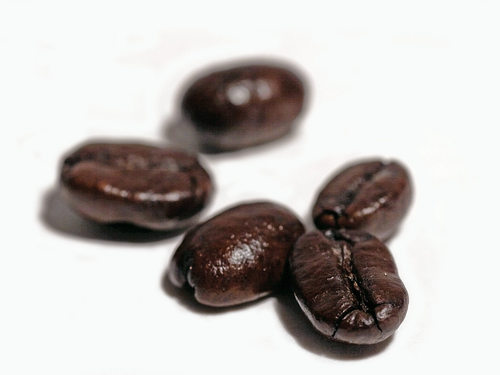
No. Fresh dark roast beans often look oily within two to five days of roasting—that’s normal. Conversely, fresh light roast beans shouldn’t look oily. Only after around two weeks do some light roasts develop a slight sheen, and by three weeks they may decline in flavour.
How can I tell if my coffee beans are fresh without a roast date?
If there’s no roast date on the package, it’s hard to judge. Instead, buy from roasters who clearly print the roast date on the bag. You can also smell the beans through the bag’s one-way valve—if the aroma is weak or off, they’re likely stale.
Why do some light roasts look oily after two weeks?
After around two weeks, some light roasts may develop a uniform oily shine. This indicates that their flavour peak has likely passed. Slight spotting at six days is normal and can even mean the beans are at peak flavour—but widespread oil after two weeks is a freshness warning.
Do dark roast beans stay oily forever?
No. Dark roast beans often appear shiny two to five days after roasting. But after roughly three weeks, the surface oil evaporates, leaving the beans dry. A dry-looking dark roast bean may already be stale, especially if it lacks a roast date.
Can I trust the “best before” date on coffee packaging?
Not reliably. Many coffee bags print a generic shelf life, but freshness depends on the actual roast date. Always prioritise seeing the roasted-on date rather than relying on “best before” or “expiry” labels.
FrontStreet Coffee Picks for Freshness Testing
Try FrontStreet’s Ethiopia Guji Huakui for bright, juicy notes of tropical fruit and citrus—ideal as a fresh light roast benchmark. For dark roast, their Brazil Cerrado offers cocoa and nut flavours with a smooth, low-acid profile, showing how a proper dark roast develops surface oils. Both come with clear roast dates. Freshly roasted within 5 days · Orders placed before 17:00 ship the same day · Next-day delivery across most of Guangdong Province.
FrontStreet Coffee is a long-established specialty coffee roaster in Guangzhou China, selling freshly roasted beans from its own farm in Yunnan as well as dozens of carefully selected single-origin beans from around the world for both pour-over and espresso. The products deliver consistently excellent quality and great value, with shipping within 24 hours. Guangzhou's FrontStreet Coffee shop is recommended by many coffee lovers, and the beans are now available online at the Tmall 。
Important Notice :
前街咖啡 FrontStreet Coffee has moved to new addredd:
FrontStreet Coffee Address: 315,Donghua East Road,GuangZhou
Tel:020 38364473