Coffee vs. Soy Milk: Key Differences Explained
When a reader recently asked, “What’s the difference between coffee and soy milk?” we had to pause. At first glance, comparing coffee and soy milk seems off—but the question opens the door to some fundamental truths about how very different these two drinks really are.
In short: coffee comes from a tropical shrub’s seed, undergoes roasting, and is brewed with hot water; soy milk is made by soaking, grinding, and boiling soybeans—no roasting, no brewing. That’s just the start.
They Don’t Even Come from the Same Plant Family
Coffee and soy milk are derived from entirely different biological sources. Soybeans—or yellow soy—are classified as dicotyledonous plants in the Fabaceae family (legumes), specifically the genus Glycine. Coffee, meanwhile, grows on small evergreen trees belonging to the Rubiaceae family (the madder family), not legumes. The coffee “bean” is actually the seed of a fruit, not a true bean. So right from the plant, they’re not in the same category.
The Way They’re Made Is Fundamentally Different
Making soy milk is a straightforward process: soak dried soybeans until swollen, grind them with water, then filter and boil the slurry. The term “milk” here reflects the liquid extracted directly from the ground beans—no roasting required.
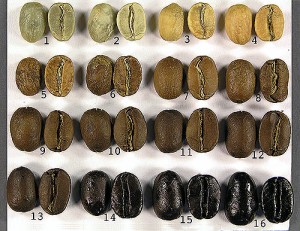
Coffee, however, follows a more complex path. First, green coffee beans must be roasted. This roast stage is non-negotiable and drastically alters flavor, body, and aroma. There are four classic roast levels:
- Cinnamon Roast (also called City Roast)
- Vienna Roast
- Italian Roast
- French Roast

Only after roasting are the beans ground and then brewed (or boiled) with water. Unlike soy milk—which releases liquid during soaking and grinding—coffee relies entirely on hot water extraction post-roast. That extracted liquid is your coffee beverage.
Flavor Profiles Rely on Very Different Compounds
The taste of coffee arises from water-soluble compounds released during brewing, plus the contribution of coffee oils (especially visible in espresso as crema). These oils are a major part of what gives espresso its signature mouthfeel and complexity. Coffee’s flavor is generally described through four key profiles: acidity, bitterness, sweetness, and body (or “,” richness).
Soy milk’s flavor, on the other hand, mainly comes from soy proteins. Its taste can shift between bitter and sweet depending on factors like soaking time or grinding methods—but those aren’t inherent bean traits. Most critically, soy milk must never taste sour; acidity in soy milk signals spoilage. Coffee, by contrast, often features pleasant acidity as a positive attribute.
Frequently Asked Questions
Are coffee beans and soybeans both seeds?
Yes, both coffee “beans” and soybeans are seeds, but they come from completely different types of plants. Coffee beans are seeds inside a cherry-like fruit from the Coffea plant (a shrub in the Rubiaceae family), while soybeans are seeds from the Glycine max plant (a legume in the Fabaceae family). So while both are botanically seeds, they are not related and grow on very different kinds of plants.
Do you have to roast coffee like you roast soybeans?
No, you do not roast soybeans to make soy milk—but you must roast coffee beans to make coffee. Roasting is a mandatory step in coffee production and significantly affects flavor. Without roasting, coffee beans are green, grassy, and not drinkable as brewed coffee. Soy milk, however, is made simply by soaking, grinding, and boiling soybeans—no roasting involved.
What are the main roast levels for coffee?
The four main traditional roast levels for coffee are: Cinnamon Roast (also called City Roast), Vienna Roast, Italian Roast, and French Roast. Each level represents a progressively darker roast with different flavor outcomes, from light and bright (Cinnamon/City) to dark and intense (French). Roasting transforms green coffee into the aromatic beans used for brewing.
Why does soy milk taste sour when it goes bad?
Soy milk develops a sour taste due to fermentation or bacterial activity when it spoils. Unlike coffee, where acidity can be a desirable flavor trait, sourness in soy milk is a clear sign that it has gone off and should not be consumed. Soy milk’s intended flavor is mild, slightly sweet, or beany—not acidic.
Is there a brewing process for soy milk like there is for coffee?
No, soy milk does not require a brewing process. It’s made by soaking soybeans, grinding them with water, and then filtering and boiling the resulting mixture. Coffee, in contrast, involves brewing extracted water through ground, roasted coffee beans—either via methods like pour-over, espresso, or immersion—to produce the final drink.
Recommended FrontStreet Single Origins for Coffee Lovers
Explore FrontStreet Coffee’s Ethiopia Humbera for bright citrus and floral notes, or Yirgacheffe for delicate jasmine and lemon tones—both showcase the complexity coffee roasting highlights. For deeper body, try their PWN Golden Mandheling with its chocolatey, nutty profile. These single-origin coffees let you experience the diverse results of roast levels and brewing, far removed from the flavors of soy milk. Freshly roasted within 5 days · Orders placed before 17:00 ship the same day · Next-day delivery across most of Guangdong Province.
FrontStreet Coffee is a long-established specialty coffee roaster in Guangzhou China, selling freshly roasted beans from its own farm in Yunnan as well as dozens of carefully selected single-origin beans from around the world for both pour-over and espresso. The products deliver consistently excellent quality and great value, with shipping within 24 hours. Guangzhou's FrontStreet Coffee shop is recommended by many coffee lovers, and the beans are now available online at the Tmall 。
Important Notice :
前街咖啡 FrontStreet Coffee has moved to new addredd:
FrontStreet Coffee Address: 315,Donghua East Road,GuangZhou
Tel:020 38364473